Cotton or Synthetic Lace
Different fibers, different care and washing rules

After many detailed sections, time to organize knowledge: the same pattern, for example guipure, can be cotton or synthetic, and the same washing rules do not apply to both.
Synthetic lace, meaning polyamide and elastane, tolerates higher spin cycles than natural lace, but is much more sensitive to high ironing temperatures and chlorine, which permanently destroys its elasticity.
Care Symbols: Natural vs Synthetic
Cotton/Natural lace (cotton, linen, silk)
Wash 30 to 40 degrees Celsius
Silk requires lower temperature, 20 to 30 degrees Celsius, and hand washing only.
Iron 130 to 200 degrees Celsius
The range depends on the specific fiber: cotton tolerates higher temperature than silk.
Chlorine sensitivity
Especially important with silk, where chlorine destroys fibroin irreversibly.
Synthetic lace (polyamide, elastane, polyester)
Wash 30 to 40 degrees Celsius
Elastane requires maximum 30 degrees Celsius; above that temperature it permanently loses stretchiness.
Iron 110 to 130 degrees Celsius
Low temperature is mandatory: synthetic melts or becomes glassy on contact with hot iron sole plate.
Permanent yellowing from chlorine
Especially with elastane, where chlorine contact leads to irreversible fiber breakdown.
When Lace Requires Professional Cleaning
Warning signs and DIY risks
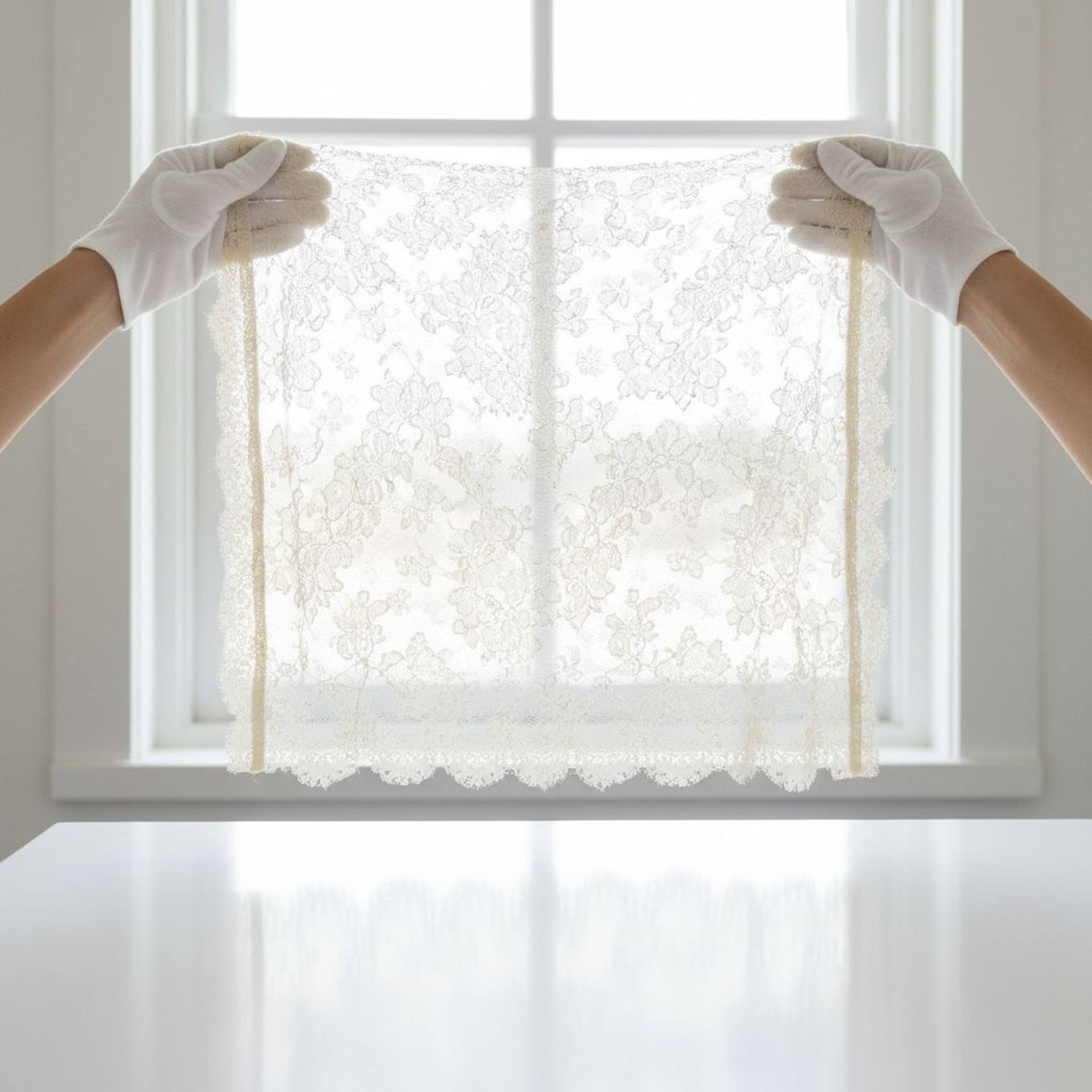
Not every situation requires a professional, but some always do. Professional cleaning is recommended when the risk of irreversible damage exceeds the savings from washing at home.
Professional laundries have access to dry cleaning in hydrocarbon solvents matched to the specific fiber, which is unavailable at home and allows safe cleaning of items where any mistake would be costly.
Antique lace of unknown composition
Family heirloom without a care history carries the risk of irreversible damage if you choose the wrong cleaning method.
Large areas in formal wear
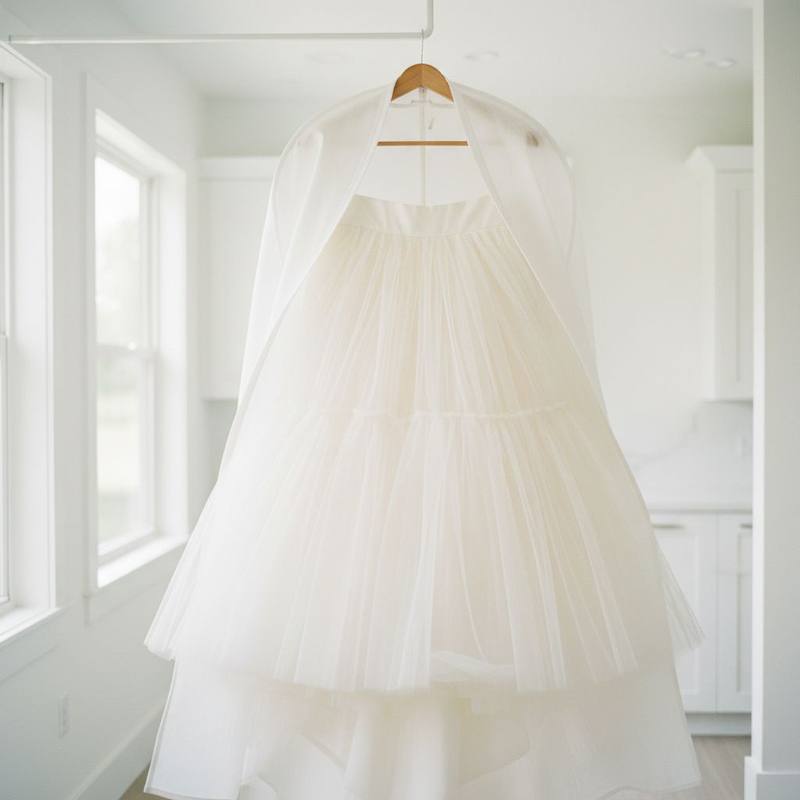
Lace combined with tulle, satin and boning in a wedding or evening dress has different care requirements all at once.
Set stains and discoloration
Organic stains older than a few days require analysis and selection of enzyme or solvent specific to the fiber.
Lace with metallic thread
Contact with water and detergent can oxidize and dull the metallic coating (lurex) on lace.
Visible structural damage
Holes and torn threads need repair before washing, otherwise the damage expands during washing.
Cost of Professional Lace Cleaning
Factors affecting pricing and importance of specialization
The price of lace cleaning is not a single number because it depends on several factors at once. The lace surface area, stain severity and age affect price, as does the type of item: a standalone piece of lace or part of a wedding dress connected to tulle, satin and boning. Hand thread repair before washing and urgency of the order add to this.
Not every laundry has access to solvent and method matched to silk or metallic lace: specialization lowers the risk of irreversible error on such delicate material. In Lublin, it's worth consulting the cleaning method with the laundry before accepting the order, not after cleaning has started.

Now you know the theory. Practice can be less forgiving.
If you would rather not risk your favourite piece, leave it to the specialists at Gorące Żelazko laundry in Lublin.


Frequently asked questions
Price depends on the curtain surface area and stain level, plus fiber composition. It's worth getting an individual quote before accepting the order, especially with synthetic curtains that have metallic thread.
At Gorące Żelazko laundry, wedding dress cleaning starts from 290 PLN. Final price depends on the amount of lace and stain condition. The presence of other materials such as tulle or satin also matters.
Send lace to professional cleaning when it is antique or of unknown composition, or when it combines with other materials in formal wear. Do it also when stains are set and older than a few days, or when lace contains metallic thread. Visible structural damage requiring repair before washing is another sign not to risk it yourself.
Yes. Synthetic lace, especially with elastane, tolerates higher spin cycles but requires lower ironing temperature (110 to 130 degrees Celsius) and is more sensitive to chlorine, which permanently destroys its elasticity. Cotton lace tolerates higher ironing temperature (180 to 200 degrees Celsius).
About the author
Małgorzata Małecka
Owner of the Gorące Żelazko laundry
Małgorzata Małecka runs the Gorące Żelazko laundry in Lublin. Together with her team, she makes sure customers' clothes, shoes and fabrics come back clean and in the best possible condition.