Lace
Your knowledge compendium on the most delicate fabric: types, fibers and care

What Is Lace
Types: bobbin, needle, Chantilly, guipure and raschel lace
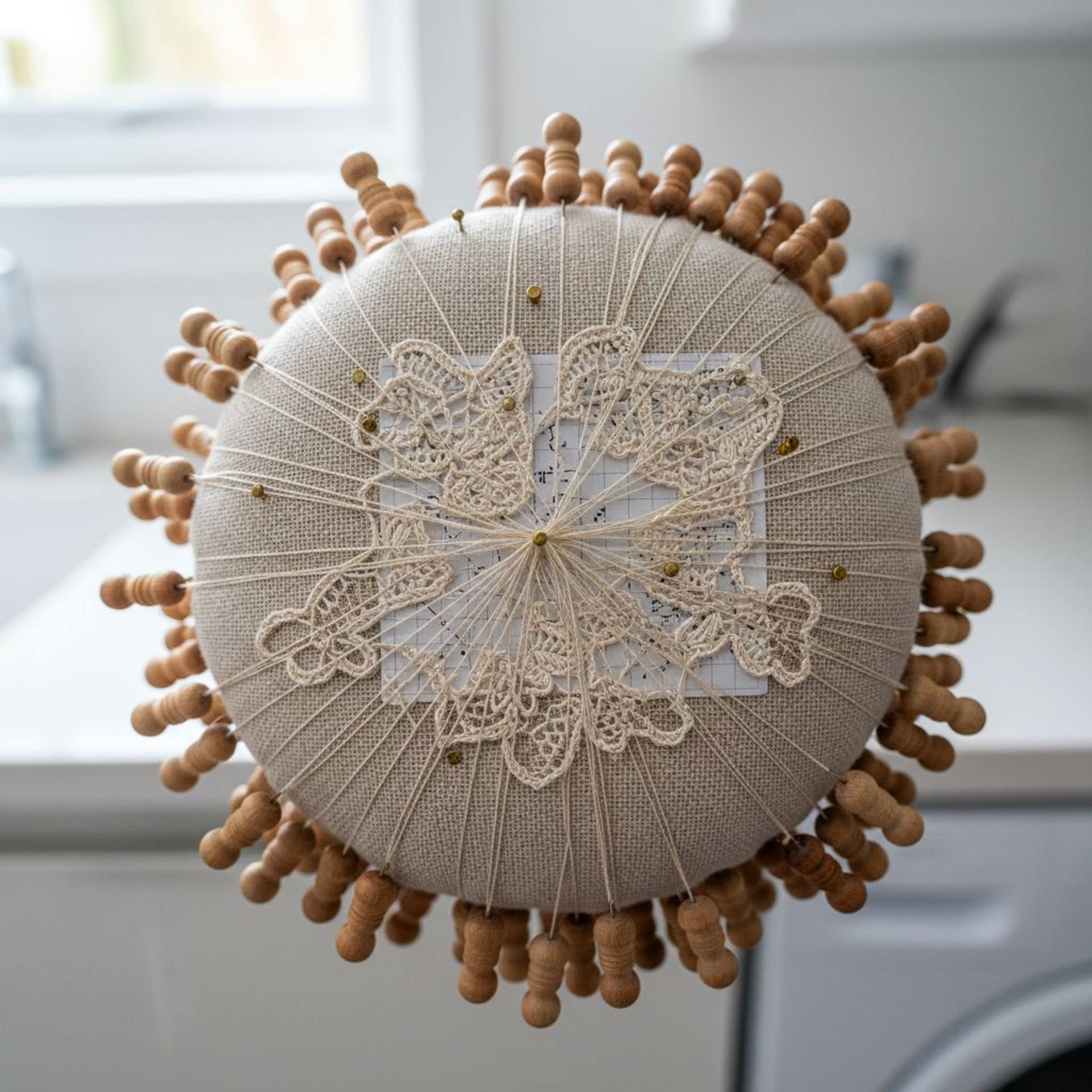
The fundamental distinction that determines all further care rules is handmade lace versus machine-made lace. Recognizing which side of this divide your lace is on is worth doing before you reach for any cleaning method.
Handmade lace (historical) is created without a machine using two main techniques:
- Bobbin lace: thread guided using wooden bobbins wound with thread (called bobbins) around pins stuck into a pillow (lace pillow). The technique originates from Flanders and Italy in the 16th century.
- Needle lace: even more difficult and time-consuming, made entirely with needle and thread using a technique similar to embroidery on a paper template. A skilled lace maker typically completes just a few square centimeters per day using this method.
Machine-made lace has been produced industrially since the 19th century, primarily using two methods:
- Leavers lace: produced on a machine built in England in 1813 by John Leavers and still considered the best reproduction of handmade work. The Calais-Caudry region in France has held the status of Indication Géographique (official INPI designation) for "Dentelle de Calais-Caudry" since January 26, 2024.
- Raschel lace: knitted on a Raschel machine developed in Germany in the mid-19th century. It is faster and cheaper to produce, which is why it dominates in lingerie and mass-market clothing.
A separate category is Schiffli embroidery. Technically it is not true lace, but machine embroidery done on dissolving or removable backing, such as tulle or organza. The visual effect resembles lace, hence the popular name "guipure lace" (chemical lace), though the production process is completely different.
Types of Lace
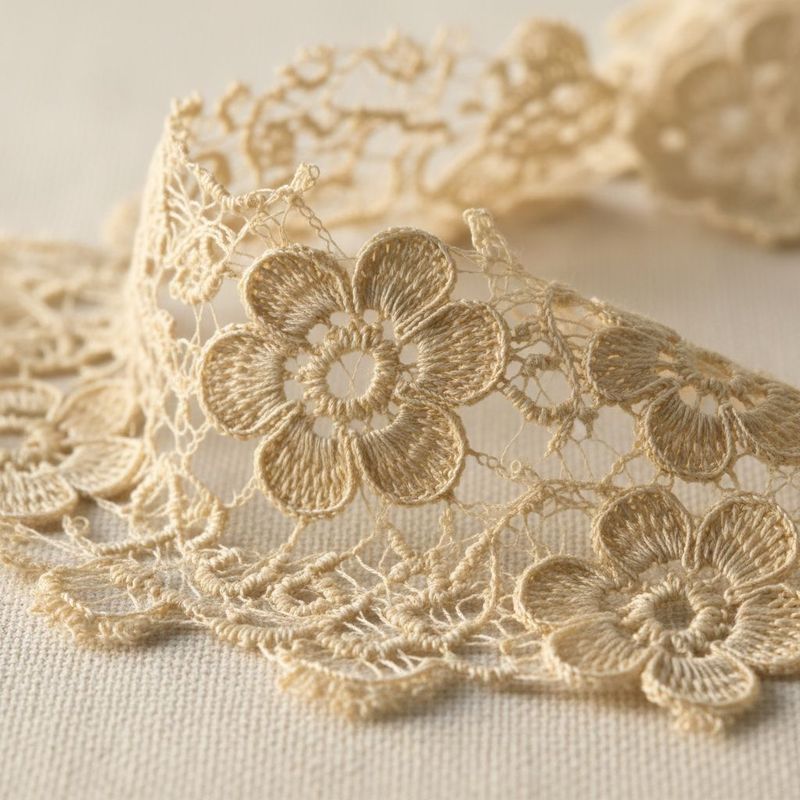
Bobbin / Needle (Antique, Vintage)
Bobbin lace / Needle lace
Irregular, unique, often brittle with age.
Created without a machine, bobbin by bobbin or needle by needle. Each piece is unique because the lace maker's hand does not repeat the pattern with mathematical precision. This is the most delicate and valuable category: often a family heirloom, a wedding veil or an insert in a dress from decades past.
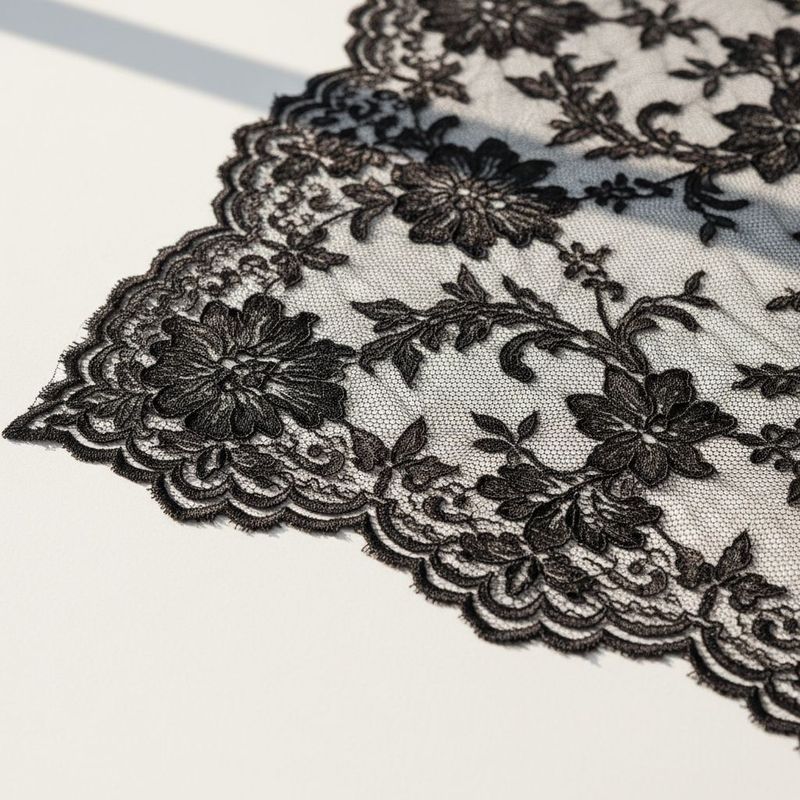
Chantilly
Machine-made (Leavers)
Delicate hexagonal mesh, floral motifs outlined with thicker thread.
A classic for wedding veils and evening gowns. The thin mesh and contrasting outline look almost like handmade lace, but are created on a Leavers machine, making it more affordable while maintaining high pattern refinement.
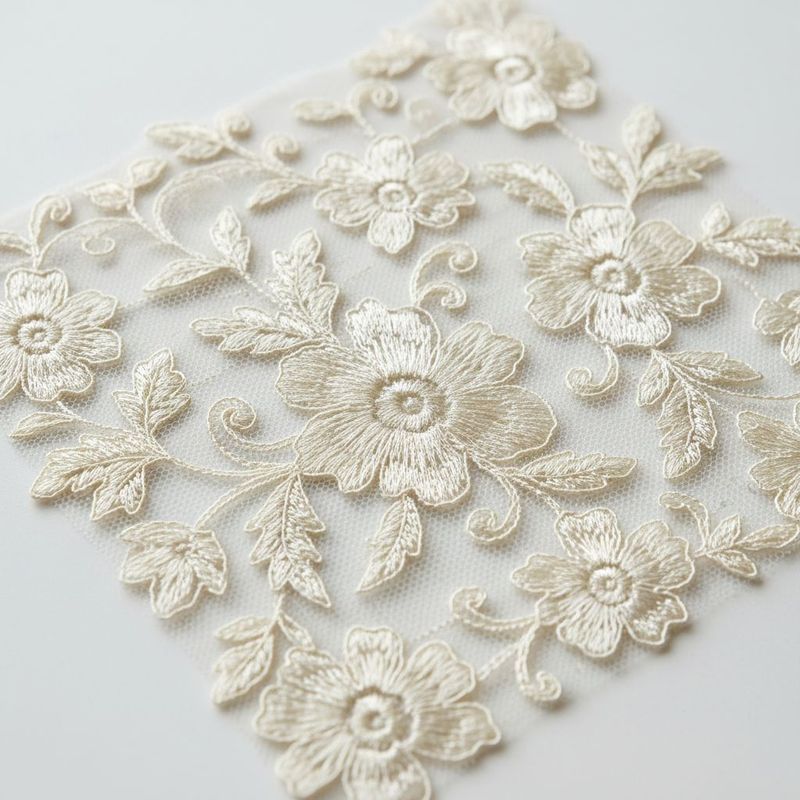
Alençon
Historically needle-made, today also machine-made
Raised outline embroidered onto a mesh base.
You recognize it by its tactile, raised motif outline laid on a sheer tulle mesh. Historically a purely needle technique, today more often reproduced by machine, but always with the same relief effect.
Guipure
Machine-made / Schiffli embroidery
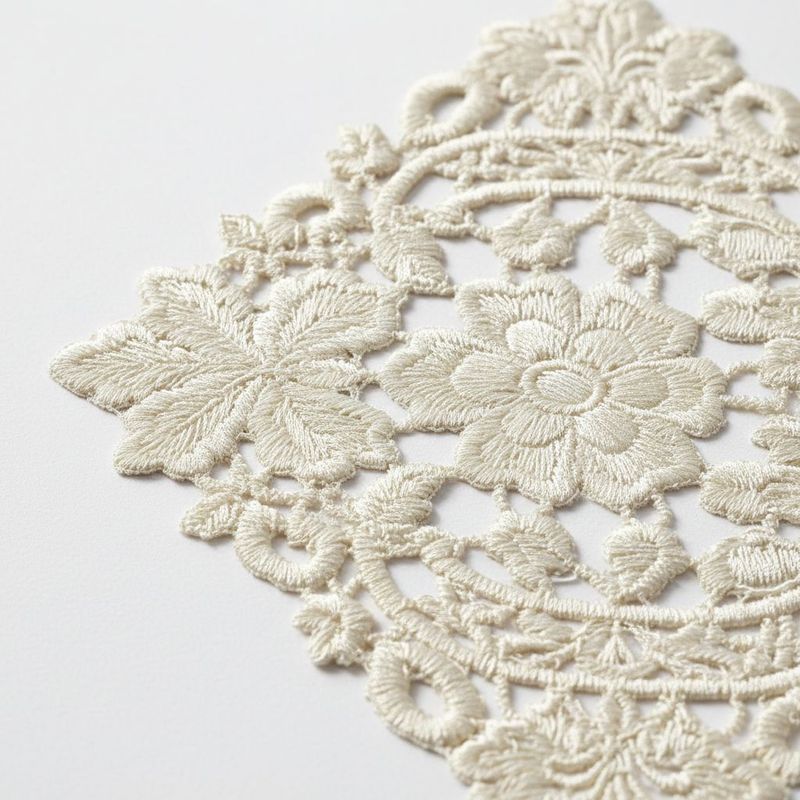
Stiff, raised, no mesh background: motifs connected by thread bridges.
The most durable of lace families because it has no delicate mesh background, which is most prone to tearing when snagged. Motifs hold together on thin thread bridges. This is what you most often find in curtains and decorative accents on outerwear.
Stretch Raschel Lace
Knitted (Raschel)
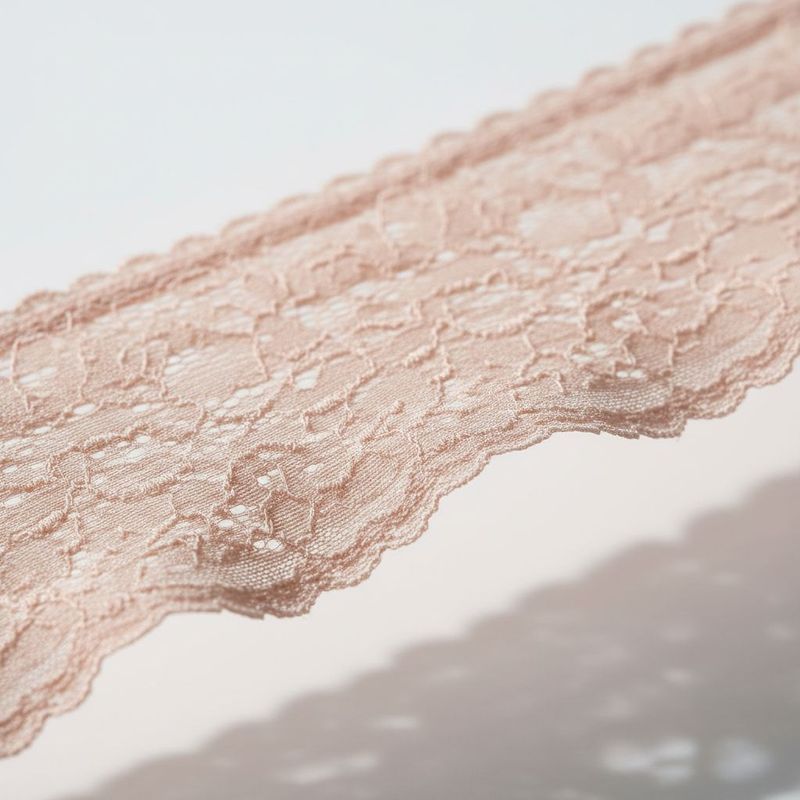
Stretchy, used in lingerie and shapewear.
This lace is designed to stretch with the body, which is why it dominates in lingerie and shapewear. The elastane blend provides comfort of wear but also sets a much lower limit on washing and pressing temperatures than purely cotton lace.
Embroidery on Tulle
Schiffli embroidery on backing
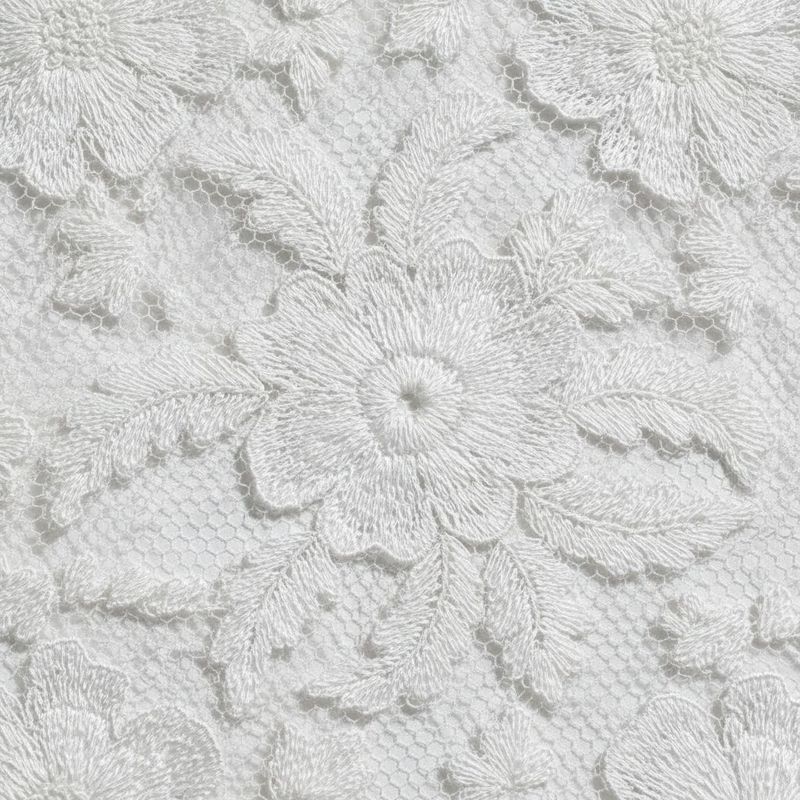
Pattern stitched, background transparent.
Technically embroidery rather than lace, but the visual effect is similar enough that it usually falls into this category in practice. The pattern is stitched onto transparent tulle backing, so the risk here is not so much the openwork itself but the delicacy of the thin backing.
If the label is missing and you want to know what you're dealing with, a few visual details will tell you more than might seem possible.
Irregularity of the openings is your first clue: in handmade lace, the spacing and shape of mesh openings are never perfectly repeatable, whereas in machine-made lace, especially Raschel, the mesh is mathematically regular. Your second clue is knots: bobbin and needle lace contains visible, though carefully hidden, knots where thread connections occur when switching spools, while machine-made lace has no knots because the threads are continuous across the entire width of the band. Your third is the edge, called a galloon: Leavers lace has a characteristic strip along the border, visible on close inspection as a slightly different weave, a remnant of the process of weaving on wide lengths of fabric that are later cut into narrower sections.
The practical consequence is simple: if you're uncertain about the origin of lace, for example because it's a family heirloom or a second-hand purchase, treat it by default as handmade and antique. Apply the most conservative care protocol you'll read about in the sections that follow.
Why Lace Is So Fragile
Openwork structure, cordonnet and areas of highest risk
It might seem that fragility is simply a general property of the fabric, but behind the fear of damaging lace lies a very specific structural mechanism.
Openwork, a mesh of holes, combined with the cordonnet (the denser outline surrounding the motif), creates the pattern using far fewer threads than a full fabric. This means fewer support points: each individual thread carries more mechanical stress than in a tight weave of cotton or linen. One pulled thread or loop threatens to unravel the entire pattern, and in handmade lace, which is by definition irreparable on a large scale, such damage means tedious hand restoration or permanent loss of a section.
The most common causes of such damage are very mundane: contact with hook-and-loop fasteners, jewelry and fingernails, as well as too vigorous spin cycles in the washing machine, which pull loosely connected mesh openings much harder than full fabric.
Structural Risk Scale for Lace
High
The more open the weave, the higher the risk of snagging on hook-and-loop, jewelry or fingernails. Open mesh has nowhere to 'escape' from a hook, so thread breaks or stretches almost instantly on contact.
Low to moderate
Low with handmade and silk lace, where knots and thin protein fibers cannot withstand mechanical tugging from water. Moderate with synthetic Raschel lace, which due to elastane and continuous knit structure better absorbs drum movement.
Very high in handmade lace
Very high with needle and bobbin lace because there is no continuous thread running through the entire width of the fabric as in machine-made lace. Pulling one element can unravel the structure over a large area before you realize what's happening.
What Fiber Is Your Lace Made From
How to identify composition by label, touch and fiber burn test
Here we come to the key thesis of this article: the way you care for lace depends almost entirely on what fiber it's made from, not on the simple fact of being "lace."
The same pattern, for example guipure, can be made from cotton or entirely from synthetics such as polyester or viscose. They look nearly identical, yet washing rules are completely different: different safe temperatures, different sensitivity to chlorine, different ironing parameters. So before you reach for any cleaning method, it's worth establishing what you're actually dealing with.
How to Diagnose Lace Fiber
- 1
Check the label
Care symbols according to ISO 3758 standard on the sewn-in label are the fastest and most reliable way. If the label is readable, diagnosis ends there and you can proceed directly to the appropriate washing procedure.
- 2
Perform a touch test
Silk feels cool to the touch and slightly slippery, almost like metal at room temperature. Polyamide and polyester are smooth but with a characteristic 'plastic' sheen and springiness. Cotton is matte, warmer to the touch and slightly rough.
- 3
Do a fiber burn test
Pull out one invisible thread (for example from an inside seam) and hold it over a sink or metal bowl and ignite it. Cellulose fiber, meaning cotton or viscose, burns quickly and evenly like paper, leaving light gray ash. Protein fiber, meaning silk, smolders more slowly with a distinct burnt hair smell and forms brittle, dark ash. Synthetic fiber, meaning polyamide or polyester, does not burn evenly but melts into a hard ball, often with a burnt plastic smell.
If after these three steps you're still unsure about the result, apply the safety rule: by default, choose the most conservative protocol, which is hand washing in cold water, no spinning, with flat drying.
When uncertain about composition, especially if you plan any chemical intervention (whitening, stain removal), it is wiser to consult with a professional before acting than to experiment on something you cannot buy again.
Care Parameters by Fiber
Six fibers most commonly found in lace, in one reference place.
Cotton
Hand wash in 30 to 40 degrees Celsius. Above 40 degrees without prior stabilization, the fabric shrinks. Iron at 180 to 200 degrees Celsius, always through a protective cloth.
Silk
Hand wash only, 20 to 30 degrees Celsius. Above 30 degrees, the fiber yellows and stiffens. Iron at 130 to 150 degrees Celsius through a damp cotton cloth.
Polyamide (Nylon)
Wash at 30 to 40 degrees Celsius. Contact with a hot surface removes elasticity from the fiber and causes yellowing. Iron at low temperature, 110 to 120 degrees Celsius.
Polyester
Wash at 30 to 40 degrees Celsius. Above 150 degrees Celsius with direct iron contact, the fiber becomes glassy or melts. Iron at 110 to 130 degrees Celsius.
Elastane (Spandex/Lycra)
Maximum 30 degrees Celsius. Above 40 degrees Celsius and under chlorine exposure, the fiber permanently loses elasticity and yellows. Do not iron directly, maximum 110 degrees Celsius through fabric.
Viscose
Hand wash at 30 degrees Celsius. When wet, the fiber loses even half of its dry strength, so every movement during washing should be very gentle. Iron at 150 degrees Celsius, on damp material.
We cover each aspect of lace care separately, in short guides, so you reach a specific answer faster instead of scrolling through one long text. Below is the whole series:
- How to wash lace
- Drying and ironing lace
- Lace washing mistakes
- Stains on lace
- Vintage lace and curtains
- When to take lace to a laundry

Now you know the theory. Practice can be less forgiving.
If you would rather not risk your favourite piece, leave it to the specialists at Gorące Żelazko laundry in Lublin.


