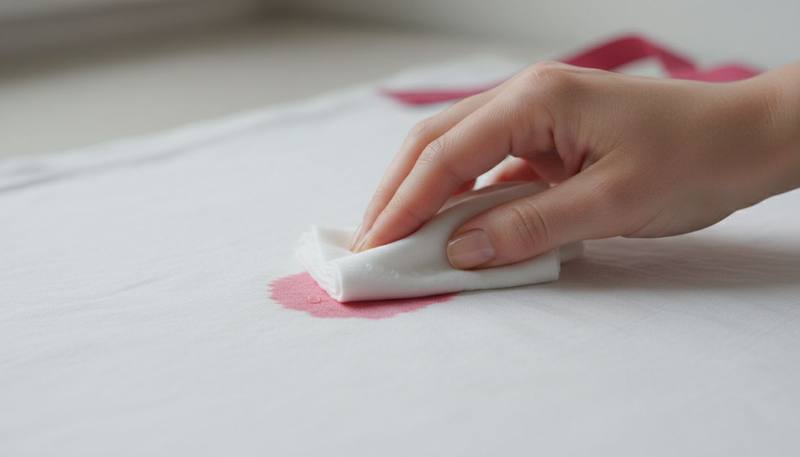
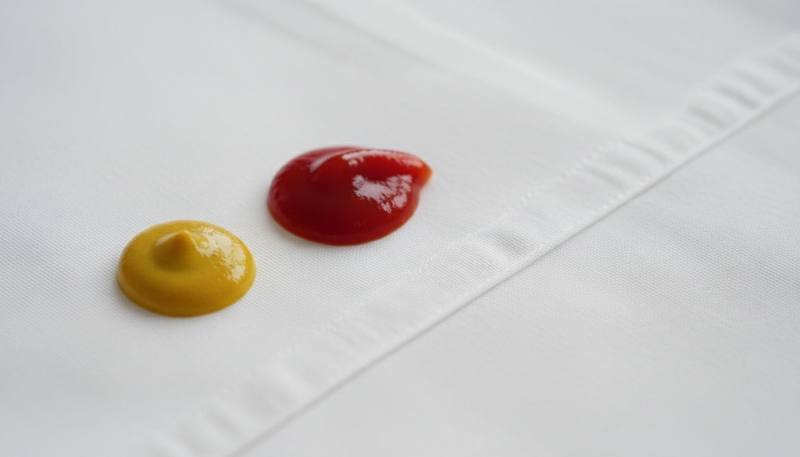
When home stain removal fails: what to do with the stain
Different stains need different methods. A single home product rarely works on all of them.

You've tried salt, baking soda, dish soap, or a commercial stain remover. The stain disappeared when wet, came back when dry, got bigger, or left a tougher mark.
It's not chance: different stains need different removal mechanisms, and one home product rarely works on every type. Below: why your attempt failed, what not to do now, and when taking your clothes to a laundry is the only sensible step.
Four mistakes in home stain removal
temperature, sequence, and timing
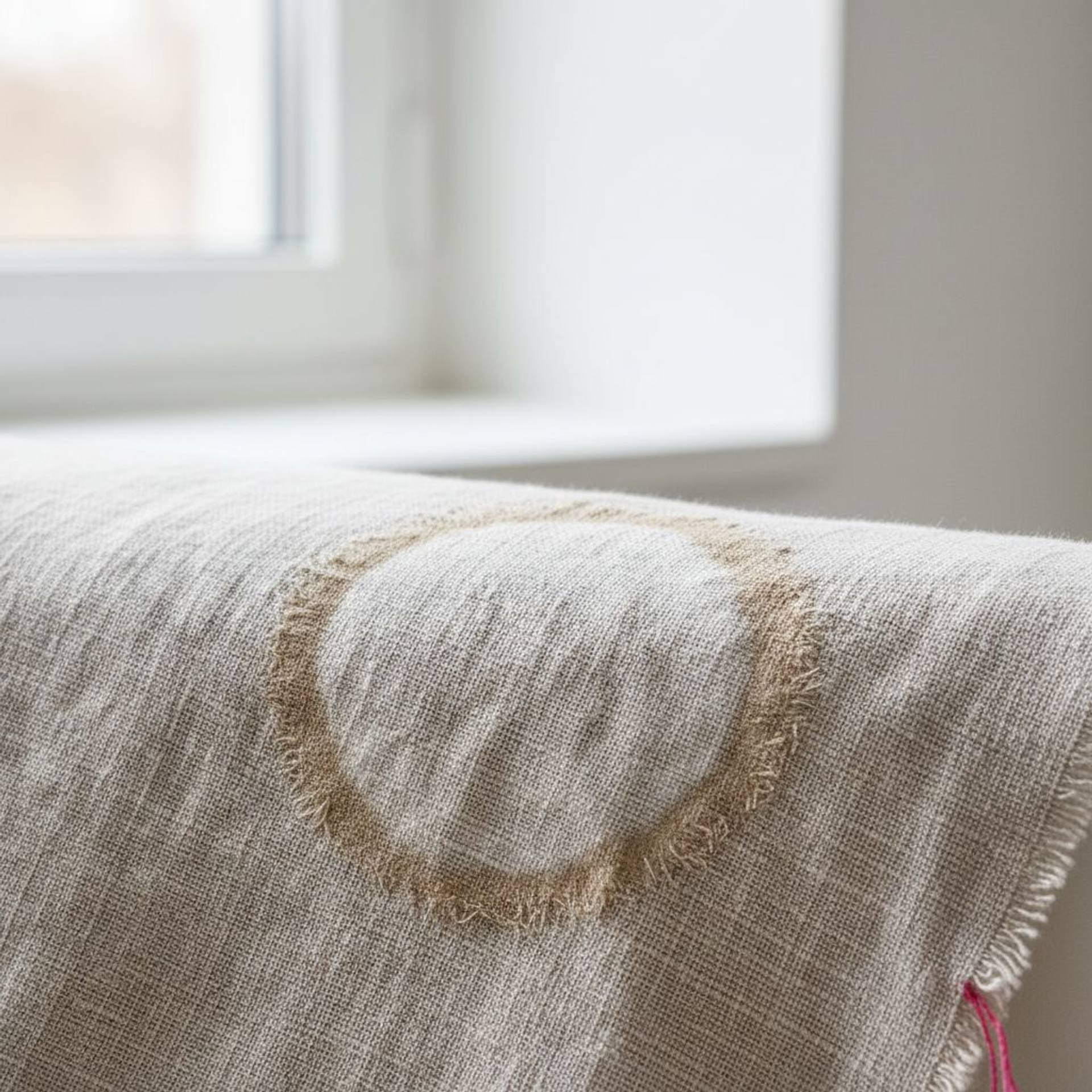
Stains fall into four chemical groups, each reacts differently.
- Protein stains (blood, milk, egg, sweat): coagulate in hot water and permanently bind to the fibre.
- Tannin stains (coffee, tea, wine, juice): wash away when fresh but oxidise over time into harder dyes.
- Grease stains (oil, grease, cosmetics): won't budge with water alone, need a solvent.
- Pigment stains (ink, paint, grass): sink deep into the fibre and often need a bleach matched to the specific pigment.
That's why one universal stain remover rarely hits all four at once: what removes a protein stain can set a tannin stain, and vice versa.
Do
- Rinse an unknown stain with cold or cool water.
- Rinse gently instead of rubbing.
- Test on a hidden part of the fabric.
- Stop and take the clothes to a laundry if your first attempt doesn't work.
Don't
- Wash a protein stain in hot water: protein denatures around 40 degrees Celsius and binds permanently to the fibre.
- Rub a pigment or grease stain hard: it pushes the particles deeper instead of removing them.
- Mix chlorine bleach with ammonia or vinegar.
- Reach for acetone or strong bleach without checking the fabric first: risky for silk and wool.
If your first product didn't work and you reach for another without thinking, don't mix chlorine bleach with ammonia or vinegar. The reaction releases toxic chloramine and chlorine gas, dangerous to breathe in a closed room. Ventilate and stop the treatment.
If you've already made one of these mistakes, all is not lost, but another home attempt isn't the answer. Each new layer of product on a changed stain makes it harder for a technician to identify the dirt and choose the right method.
What professional laundry does differently
equipment, temperatures, and chemicals
Dry cleaning in solvent
works at room temperature, doesn't set protein stains with heat, and dissolves fats without swelling water-sensitive fabrics like silk.
Wet cleaning
controlled water wash with detergent matched to the fibre, regulated drum action and cycle time, where standard home washing would be too harsh.
Spotting
targeted stain removal before the main wash, a separate product and technique for each of the four categories instead of one universal remedy.
The difference boils down to three things: choosing a product for the specific stain instead of one universal remover, precise temperature control, and lower risk for delicate fabrics.
It's not a promise of 100 per cent success. Older stains have better odds in a laundry than at home, but not always guaranteed, which is why inspecting before treatment matters.
- 1
Stop experimenting
another home product only makes stain diagnosis harder later.
- 2
Don't dry or iron
heat sets most stains.
- 3
Don't rub
if needed, rinse away excess stain with cool water.
- 4
Take the clothes to a laundry with a description
what the stain is, when it happened, and what you've already tried: this speeds up method selection.

Now you know the theory. Practice can be less forgiving.
If you would rather not risk your favourite piece, leave it to the specialists at Gorące Żelazko laundry in Lublin.


Frequently asked questions
Depends on the stain type and how long it's been set. Proper diagnosis and method choice give better odds than home attempts, but no laundry promises 100 per cent removal.
Sometimes, depending on the extent of the damage. Discolouration or stiffness is worth checking at a laundry instead of trying to fix it with another home product.
Depends on the fabric, stain type, and how long it's been set, which is why a laundry quotes after inspecting the item. A fresh, simple stain usually fits the standard washing price for that garment. A set or stubborn stain needing extra spotting may cost more than that standard rate. The most accurate quote comes from showing the garment to a technician and telling them what you've already tried to clean it with.
A care label marked dry clean only rules out water methods. Take that garment to a laundry right away, for example to the silk washing service.
About the author
Małgorzata Małecka
Owner of the Gorące Żelazko laundry
Małgorzata Małecka runs the Gorące Żelazko laundry in Lublin. Together with her team, she makes sure customers' clothes, shoes and fabrics come back clean and in the best possible condition.