Sodium percarbonate: how oxygen bleach works
A safe alternative to chlorine that bleaches through oxidation instead of aggressive chemicals.

You tried chlorine once, and the fabric came out worse than the stain itself: discoloration, stiff fibers, a yellow tint on white. Or when washing a baby's diapers or onesies, you would rather not bring into your home something that smells like a swimming pool and irritates the airways.
The label “chlorine-free” sounds like a marketing promise. Before you trust it, let's check what actually happens in the water with this white granulate.
Sodium percarbonate is an adduct of sodium carbonate and hydrogen peroxide (2Na2CO3·3H2O2, CAS 15630-89-4), a white granulate soluble in water. On contact with water it breaks down into sodium carbonate, meaning soda, and hydrogen peroxide.
It is the hydrogen peroxide that bleaches: it oxidizes the bonds responsible for color in the stain molecule, instead of scrubbing it away mechanically. The soda raises the pH of the bath and softens the water, which further helps remove grease.
This is not the same as the hydrogen peroxide solution from the pharmacy: the granulate is a solid carrier that releases hydrogen peroxide only after dissolving, and it works gradually, at a pace that depends on contact time, not instantly like chlorine.
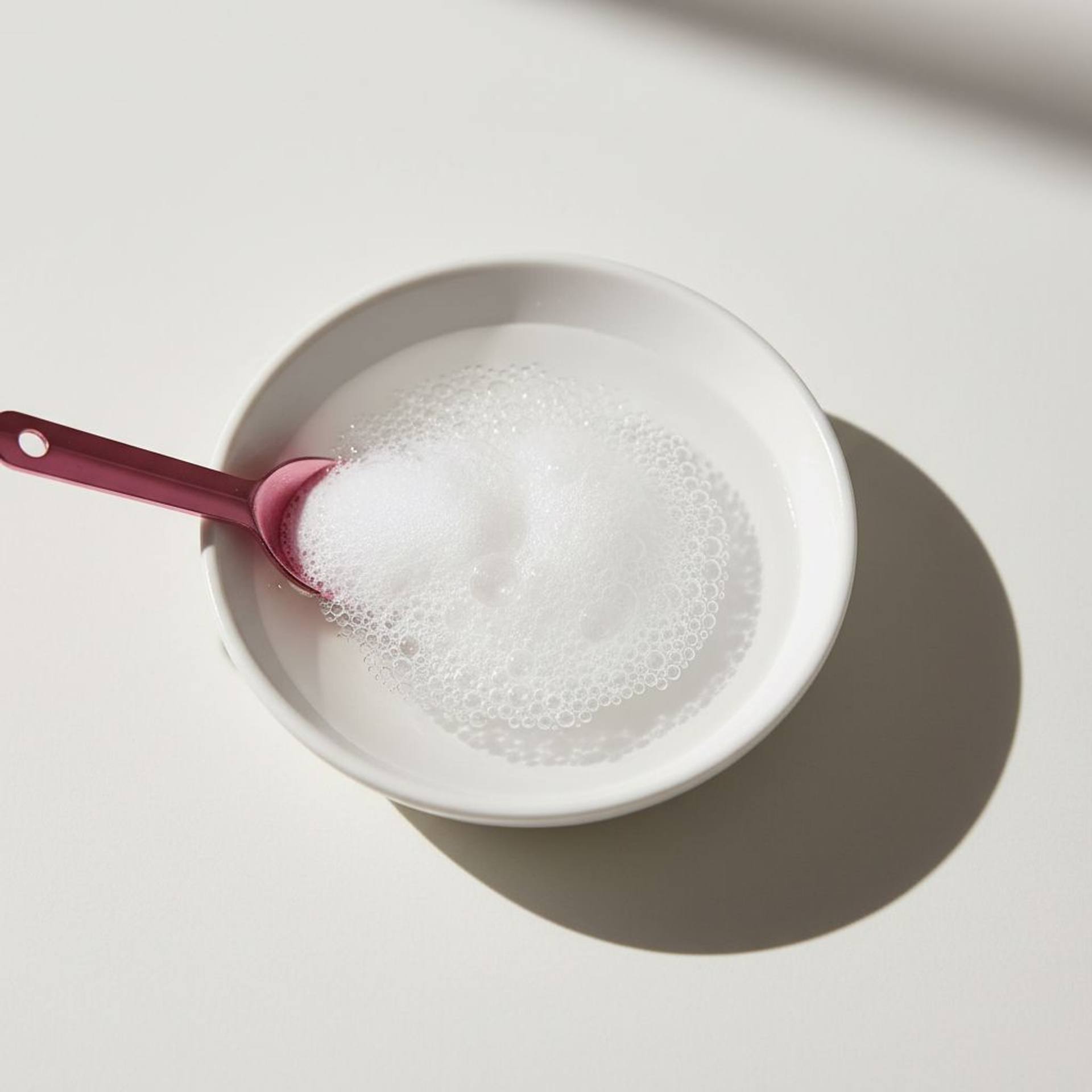
It really is a gentler bleach, not just in name. The breakdown products are water, oxygen, and soda, not the organic chlorides that burden wastewater. You notice it during washing too: there is no sharp, chemical smell associated with chlorine.
The difference is clear side by side.
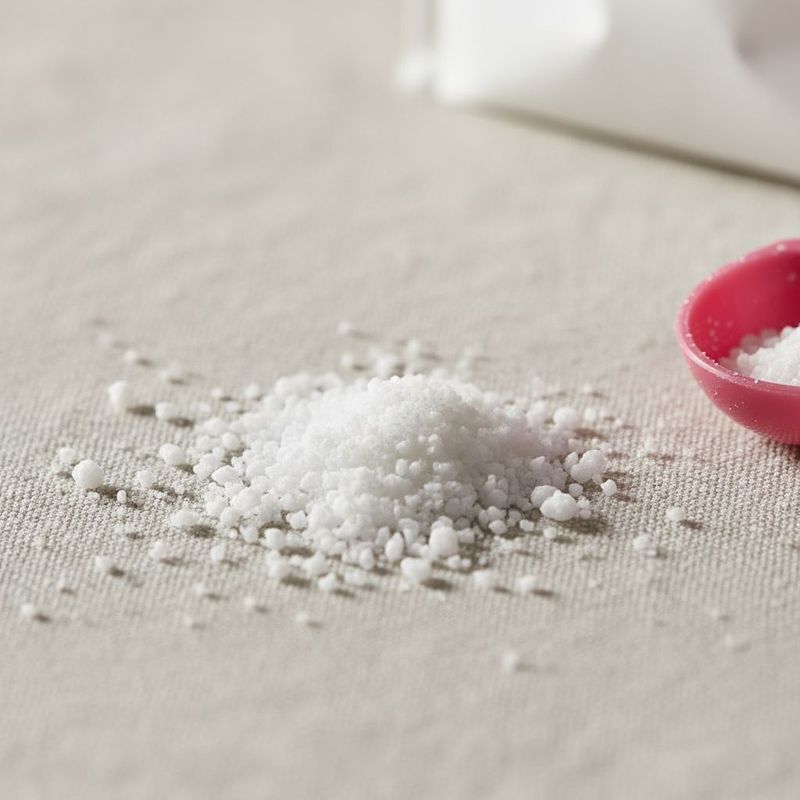
Sodium percarbonate
Oxygen bleach, CAS 15630-89-4
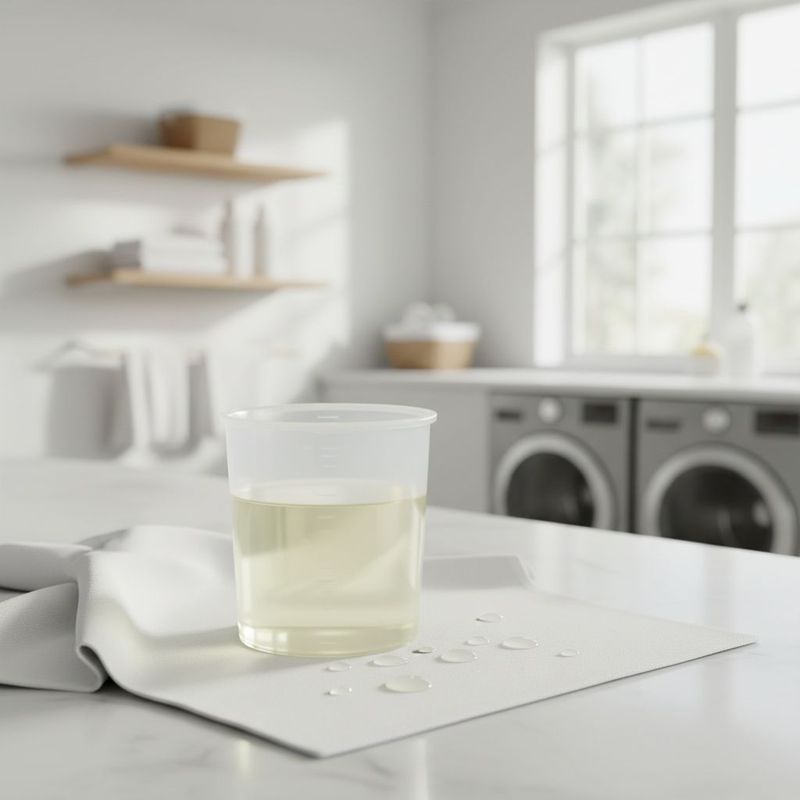
Sodium hypochlorite
Chlorine bleach, CAS 7681-52-9
Never combine with chlorine or vinegar
Do not mix oxygen bleach with chlorine bleach, or with vinegar or another acid, in the same wash. Such a combination is both dangerous and ineffective, and the risk of respiratory irritation increases.
How to use sodium percarbonate safely
Dosage, temperature, and contact time
Effectiveness depends above all on temperature. Below 30°C the reaction is very slow. Without an additional activator, a clear effect only appears from around 60°C. With a TAED activator, present in some laundry powders, you can achieve a similar effect at a lower temperature.
- 1
Dissolve the granulate in water
Pour the granulate into warm water and stir until it disappears. Undissolved particles leave light spots on dark fabrics.
- 2
Add to the wash or prepare a soak
Pour the solution into the drum or a bowl of water above 30°C, so the reaction proceeds effectively.
- 3
Wait out the contact time
Leave the fabric in the soak for 30 minutes to a few hours. Old stains need more time, not a higher temperature.
- 4
Rinse thoroughly
Rinse several times with clean water so no residue that irritates the skin is left behind, especially with children's underwear.
A good product most often fails because of bad habits, not its own flaws. Here are the mistakes we hear about most often from laundry customers.
The most common mistakes with oxygen bleach
Do
- Measure the dose in a ventilated room, avoid raising dust
- Test wool or silk on a hidden section
- Extend the soaking time for old stains, not the temperature
- Store the package tightly closed in a dry place
Don't
- Don't use boiling water: it speeds up oxygen breakdown before it reaches the stain
- Don't keep an open package in a humid room
- Don't soak wool or silk without testing: the alkaline environment weakens the fiber
- Don't shorten the contact time for old, set-in stains
When home bleaching falls short
Limits and constraints of the method
Wool and silk do not tolerate an alkaline environment well, and some reactive dyes fade with longer contact with active oxygen. Grease stains additionally need a surfactant, while ink or certain dyes require a completely different approach.
At home, without pH control and TAED-type activators, effectiveness mostly comes down to patience. A laundry has industrial dosing, controlled pH, and activators, plus enzymes: proteases for protein stains, lipases for grease, all in one cycle, with the temperature matched to the material.

Now you know the theory. Practice can be less forgiving.
If you would rather not risk your favourite piece, leave it to the specialists at Gorące Żelazko laundry in Lublin.


Frequently asked questions
Usually yes, it fades colors less often than chlorine. With intense reactive dyes, however, do a test on a hidden section.
It is a solid granulate that only releases hydrogen peroxide, the same solution sold at the pharmacy, once it is in water. It is a carrier, not another form of the same product.
Yes, after thorough rinsing. When measuring the dry powder, work in a ventilated room and avoid contact with eyes and sensitive skin.
As a rough guide, 30 minutes to a few hours, longer for old stains. Watch the fabric and extend the time instead of the temperature.
About the author
Małgorzata Małecka
Owner of the Gorące Żelazko laundry
Małgorzata Małecka runs the Gorące Żelazko laundry in Lublin. Together with her team, she makes sure customers' clothes, shoes and fabrics come back clean and in the best possible condition.