Seven stain removal mistakes that set stains permanently
A stain on your shirt five minutes before leaving home. Seven of the most common mistakes that don't remove stains, they bake them into the fabric for good.

A stain on your child's shirt five minutes before leaving home. A wine stain on the tablecloth in the middle of dinner. That's when it's easiest to make a mistake that doesn't remove the stain, but bakes it into the fabric for good.
Below are seven of the most common stain removal mistakes: hot water, rubbing, delay, wrong stain remover, dryer before you're done, dangerous chemical mixtures, and no test on a seam. Each one can be avoided if you know what to do in the first few minutes.
Rubbing drives the stain deeper
instead of removing it, spreads the soiling and scratches the fabric fibres
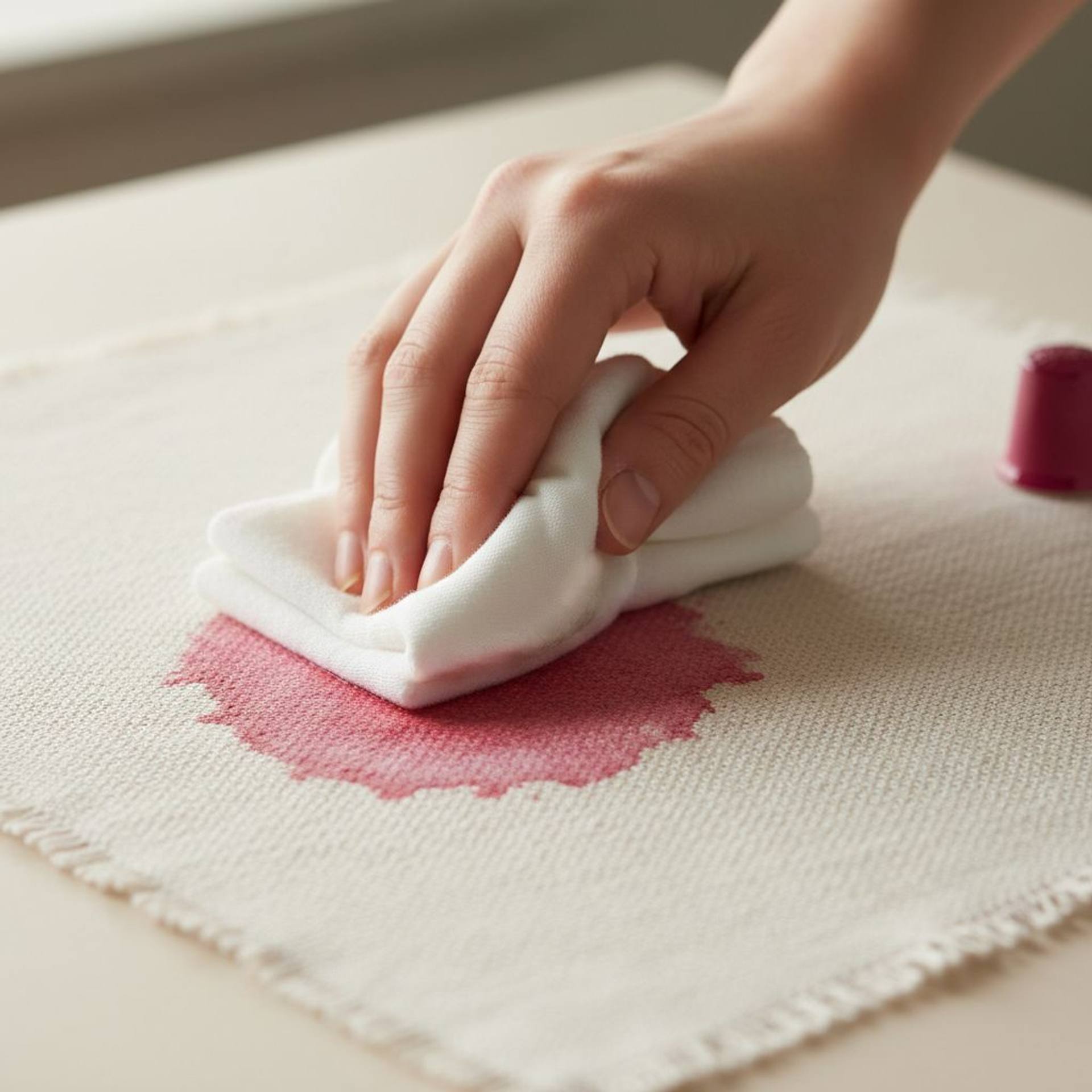
Rubbing a stain with a cloth seems logical: more force, the stain goes away faster. In practice, the opposite happens. The soiling spreads to a larger area, and its particles get rubbed deeper into the fibres instead of coming out.
Additionally, you mechanically scratch the fabric itself, which later shows as pilling, those little balls on the surface of the material. The correct technique is blotting: gently touch the stain with a clean, absorbent cloth from the edges toward the centre so you don't spread the soil to a clean part of the garment.
Heat sets the stain in the fabric
how dye solubility changes and protein denaturation occurs
A protein stain, like blood or egg, when exposed to water above around 40°C undergoes coagulation: the protein curdles and bonds permanently to the fibre, just like egg white hardens on a frying pan. After this stage, ordinary washing no longer works, a proteolytic enzyme or professional treatment is needed.
A tumble dryer and iron work on the stain exactly like hot water does: they bake it deep into the fibre. Before putting clothes in the dryer, check the care label with ISO 3758 symbols, where you'll find the maximum washing and drying temperature allowed.
Hot water and rubbing are just two of the seven mistakes. The rest in short form, do and don't.
Do
- Cold water up to 30°C, if needed use a proteolytic enzyme
- Blot from the edges of the stain to the centre with a clean cloth
- React immediately, especially with wine, coffee, or fruit stains
- Use a product matched to the stain category: enzyme for protein, solvent for grease
- Dry and iron only after the stain is completely gone
- Test on an invisible seam or flap before using the product
Don't
- Pour hot water on blood or egg stains or wash at 60°C
- Rub the stain in circular motions with a cloth
- Leave stained clothes sitting for a week before washing
- Use the same universal stain remover for every stain
- Use a dryer or iron on clothes with a visible stain
- Use a strong stain remover directly on visible fabric
Don't mix chemicals blindly
<p><strong>Never mix chlorine bleach with ammonia.</strong> The reaction produces toxic chloramine fumes, a real threat to your airways, not just an effectiveness problem.</p><p>Be careful also with mixing hydrogen peroxide and vinegar: this creates peracetic acid, which irritates skin and eyes. With stronger products, ventilate the room well and wear gloves, especially if you're prone to contact allergies.</p>
Instead of remembering seven prohibitions, one correct order of action will do. It does exactly the same as the list of mistakes above, just in reverse.
Correct order step by step
Four steps that avoid all seven mistakes at once.
- 1
Identify the stain category
Blood, egg, milk, or sweat is a protein stain. Coffee, wine, tea, and fruit is a tannin stain. Oil, grease, or cosmetics is a grease stain. The source of the soiling tells you which water to use.
- 2
Blot, don't rub
With a clean, absorbent cloth, gently touch the stain from the edges toward the centre in cold or lukewarm water. Do it right away, before the substance dries and oxidizes.
- 3
Pick a stain remover and test it
Proteolytic enzyme for protein, solvent product for grease. Before applying it to the stain, check how it works on an invisible seam or flap.
- 4
Dry and iron only after the stain is gone
A dryer and iron set what's left just like hot water does. If the stain is still visible, the garment can wait.
When home methods aren't enough
Silk, wool, and fabrics with elastane don't tolerate home stain removers well, stronger chemistry easily damages them. An old stain, already set with heat, rarely comes out at home either, even with careful attention to all the rules above. Rust or an old wine stain is usually a sign it's worth taking the garment to a laundry where they can match the product to the specific fabric and type of soiling, rather than experimenting yourself.

Now you know the theory. Practice can be less forgiving.
If you would rather not risk your favourite piece, leave it to the specialists at Gorące Żelazko laundry in Lublin.


Frequently asked questions
Act immediately, use cold or lukewarm water, and blot from the edges of the stain to the centre. Avoid hot water and rubbing, those are what most often set the stain in the fabric for good.
Usually because it went into hot water or the dryer before removal. High temperature sets protein and bakes grease deep into the fibre, so ordinary washing stops being enough.
No. An iron works on the stain the same way hot washing or a dryer does: it sets it in the fabric. Iron only when the stain is completely gone.
It depends on the stain type. Protein stains (blood, egg, milk) need cold water up to 30°C, tannin stains (coffee, wine) need cool to lukewarm, and grease stains need warmer water with a degreasing detergent.
When the stain is old and already set with heat, or the fabric is delicate like silk or wool. Then professional product selection gives you a much better chance of full removal.
About the author
Małgorzata Małecka
Owner of the Gorące Żelazko laundry
Małgorzata Małecka runs the Gorące Żelazko laundry in Lublin. Together with her team, she makes sure customers' clothes, shoes and fabrics come back clean and in the best possible condition.