Mustard and Ketchup Stains: Why They're Stubborn
Yellow and red stains return after washing. It's dye, not grease. Learn why and how to really remove them.

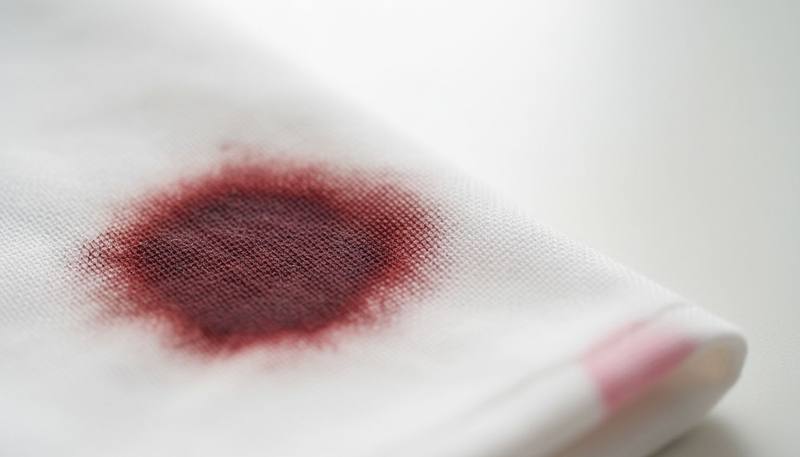
You pull your shirt out of the wash, and the yellow mustard stain is still there, sometimes even more visible than before. Ketchup behaves similarly: the red mark fades, but doesn't disappear, even though the fabric went through a full washing machine cycle.
This isn't ordinary grease staining, which breaks down under detergent. This is dye: curcumin in mustard and lycopene in ketchup bind to the fibre differently than grease or dust. Below I explain the mechanism and show what actually works on fresh and already set stains.
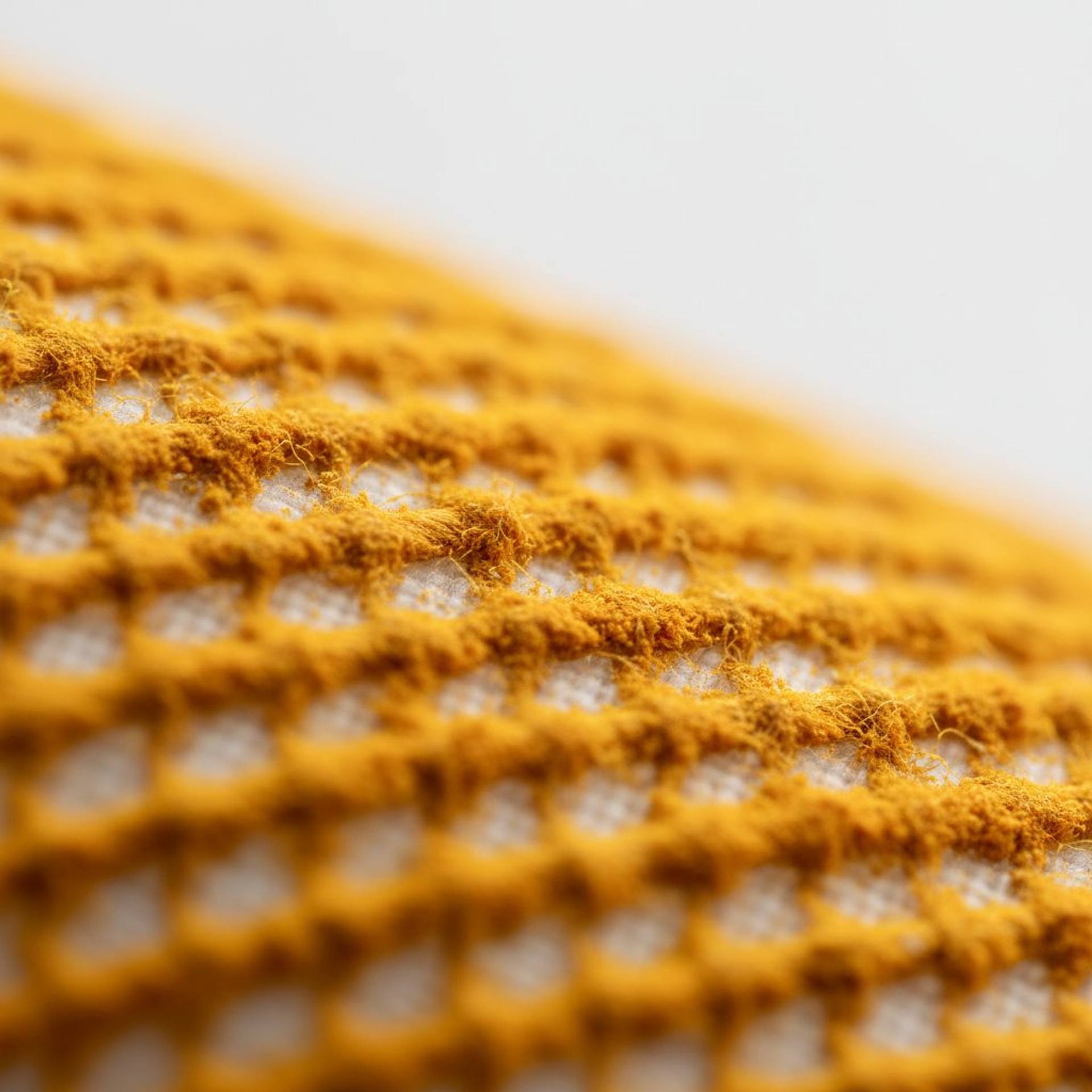
Curcumin (C21H20O6, CAS 458-37-7) is a natural dye from turmeric rhizome, added to mustard for colour. Its molecule has an extended system of conjugated double bonds. This is responsible for the intense yellow and for its strong affinity to cellulose fibres: cotton and linen.
Curcumin binds to fabric through hydrogen bonds and hydrophobic interactions. It works exactly like direct dye in dyeing, which is why it holds on much stronger than typical food staining.
The red stain from ketchup is mainly lycopene (CAS 502-65-8), a fat-soluble carotenoid, not water-soluble. Rinsing with water alone removes only part of it. Ketchup also contains acetic acid and citric acid, which lower the pH of the mixture and help the pigment penetrate deeper into the fibre weave.
Most laundry powders and soaps are alkaline. For curcumin this is a problem: in alkaline environment the dye changes colour from yellow to red-brown, instead of dissolving. In practice, normal washing without pre-treatment often doesn't remove the stain. Instead it discolours it to a hard-to-identify rusty shade, which then becomes difficult to tackle with any chemical.
How to remove fresh and old stains
Step by step: what to do right away, and what to do when the stain is already washed and set
Fresh stains and old, already washed and dried ones need different approaches. The sooner you act, the less dye has had time to bind to the fibre.
- 1
Remove excess and rinse in cold water
Scrape off excess mustard or ketchup with a blunt edge, without rubbing. Rinse the stain in cold water from the back of the fabric, never in hot or warm water, as heat speeds up dye penetration.
- 2
Fresh stain: glycerin or enzymes
Soak the stain in glycerin (CAS 56-81-5) for about 30 minutes, or use an enzymatic stain remover with protease and lipase. Both methods break down the fat-soluble pigment before it has time to set.
- 3
Old stain: sodium bicarbonate
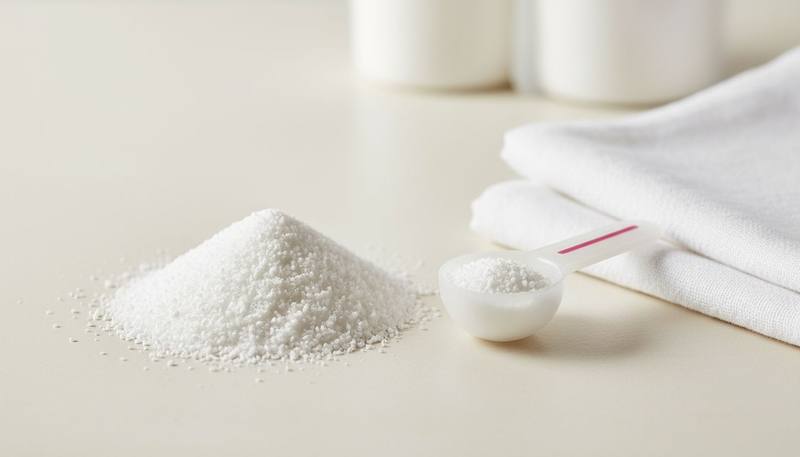
Soak the set stain in a solution of sodium bicarbonate (CAS 15630-89-4) in warm water, roughly 30 to 60 minutes, checking results as you go. Oxidation breaks the conjugated bond system of curcumin. Always test on an inconspicuous area first, never on wool or silk.
- 4
Wash separately and check the result
Wash the item separately in low temperature, following the care label. Check the stain on wet fabric before you dry anything.
- 5
Stain still visible? Don't dry or press
If the stain hasn't disappeared completely, leave the item wet and take it to the laundry before heat from the tumble drier or iron sets the dye permanently.
The final step, soaking in sodium bicarbonate, is also a source of new mistakes if you rush it. Below are the most common errors that make mustard and ketchup stains harder to remove.
Common mistakes with mustard and ketchup stains
Do
- Act immediately: the longer dye sits on fabric, the stronger it binds
- Check the care label before reaching for a stain remover or oxidiser
Don't
- Don't rub the stain dry with a cloth: it drives the pigment deeper into the weave
- Don't use chlorine bleach on coloured or delicate fabric
Never mix these chemicals
Never mix chlorine bleach with ammonia. The reaction produces toxic chloramine vapours, dangerous to your breathing. Ammonia in aqueous solution (CAS 1336-21-6) is classified as caustic H314, so treat it and chlorine bleach as chemicals you never combine in one container or on the same fabric without thorough rinsing between them.
Professional techniques and when home methods no longer work
On delicate fabrics like silk, wool, or elastane blend, it's better not to reach for sodium bicarbonate or other oxidisers. The risk of fibre damage is real. Similarly, when the stain is already set by heat, after a tumble drier or pressing, another home attempt usually only makes it worse.
In both situations, professional solvent cleaning breaks the dye-fibre bond without the risk of colour shift from pH, which comes with mixing home chemicals. This isn't a failure of home methods, it's simply the safer choice for that particular fabric.

Now you know the theory. Practice can be less forgiving.
If you would rather not risk your favourite piece, leave it to the specialists at Gorące Żelazko laundry in Lublin.


Frequently asked questions
Do pre-rinsing and pre-treatment always in cold water. Set the final wash temperature according to the care label, but no higher than needed, until you confirm the stain is gone, as heat sets the dye.
Chlorine bleach works only on white cotton and destroys colour and delicate fabrics. Never mix it with ammonia: the reaction produces toxic chloramine vapours.
Harder, but possible. Sodium bicarbonate or professional solvent cleaning can break the already bound dye, whereas simple re-washing usually does nothing at this point.
Mustard is mainly curcumin dye sensitive to pH, which can discolour to rusty from alkaline detergent. Ketchup is a fat-soluble dye, lycopene, strengthened by acids that lower pH and help the pigment penetrate deeper into the fabric.
About the author
Małgorzata Małecka
Owner of the Gorące Żelazko laundry
Małgorzata Małecka runs the Gorące Żelazko laundry in Lublin. Together with her team, she makes sure customers' clothes, shoes and fabrics come back clean and in the best possible condition.