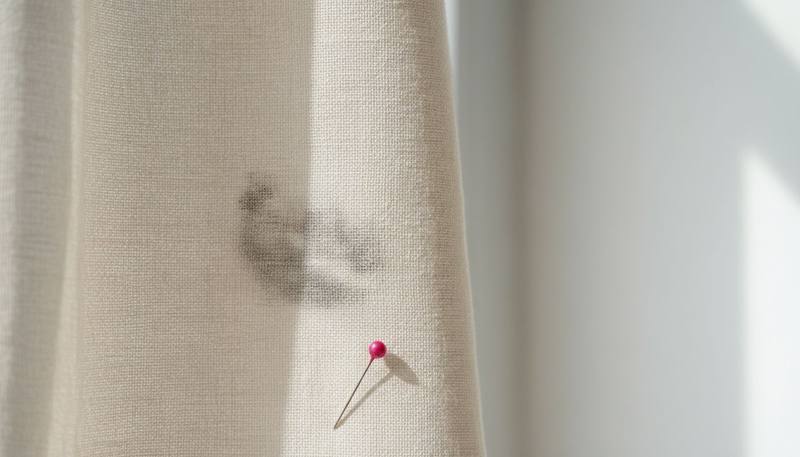
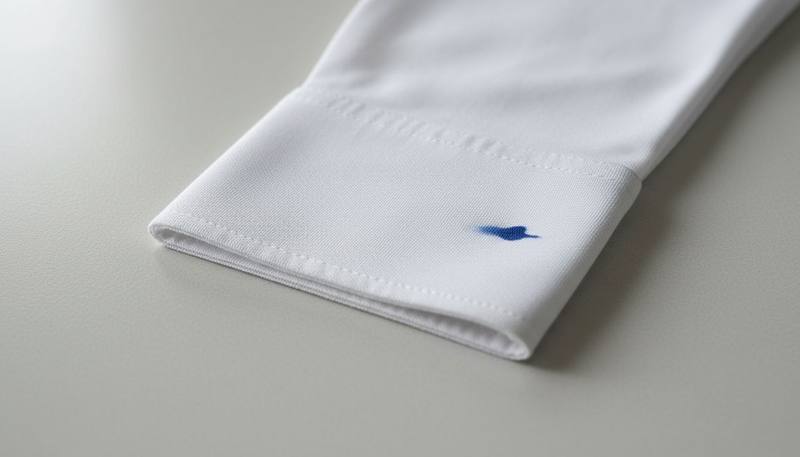
What to blot a stain with: paper or cotton
Before you choose material, the motion matters most: blotting, not rubbing

Stains soak into fabric before you can think. Wine on a tablecloth, sauce on a shirt, coffee on a skirt: what you do in the next few seconds counts.
Your first choice has nothing to do with the material. What matters is the motion: press, don't rub. Only then do you choose what to blot with, how to move your hand, and when to stop trying on your own.
Below in order: paper versus cotton, step-by-step technique, and the moment when it's time to hand your clothes to professionals.
Press, don't rub
Do
- Press the material straight down on the stain, without sliding it to the sides.
- Start blotting at the stain's edge and work toward the centre.
- Change to a clean layer as soon as it becomes saturated.
Don't
- Don't rub the stain, even gently.
- Don't slide the material across the fabric.
- Don't start at the stain's centre and work outward to clean fabric.
Rubbing spreads soil across the fibres and pushes it deeper into the weave. Blotting limits contact to a single pressure point, so the stain can't spread.
Paper towel or cotton cloth
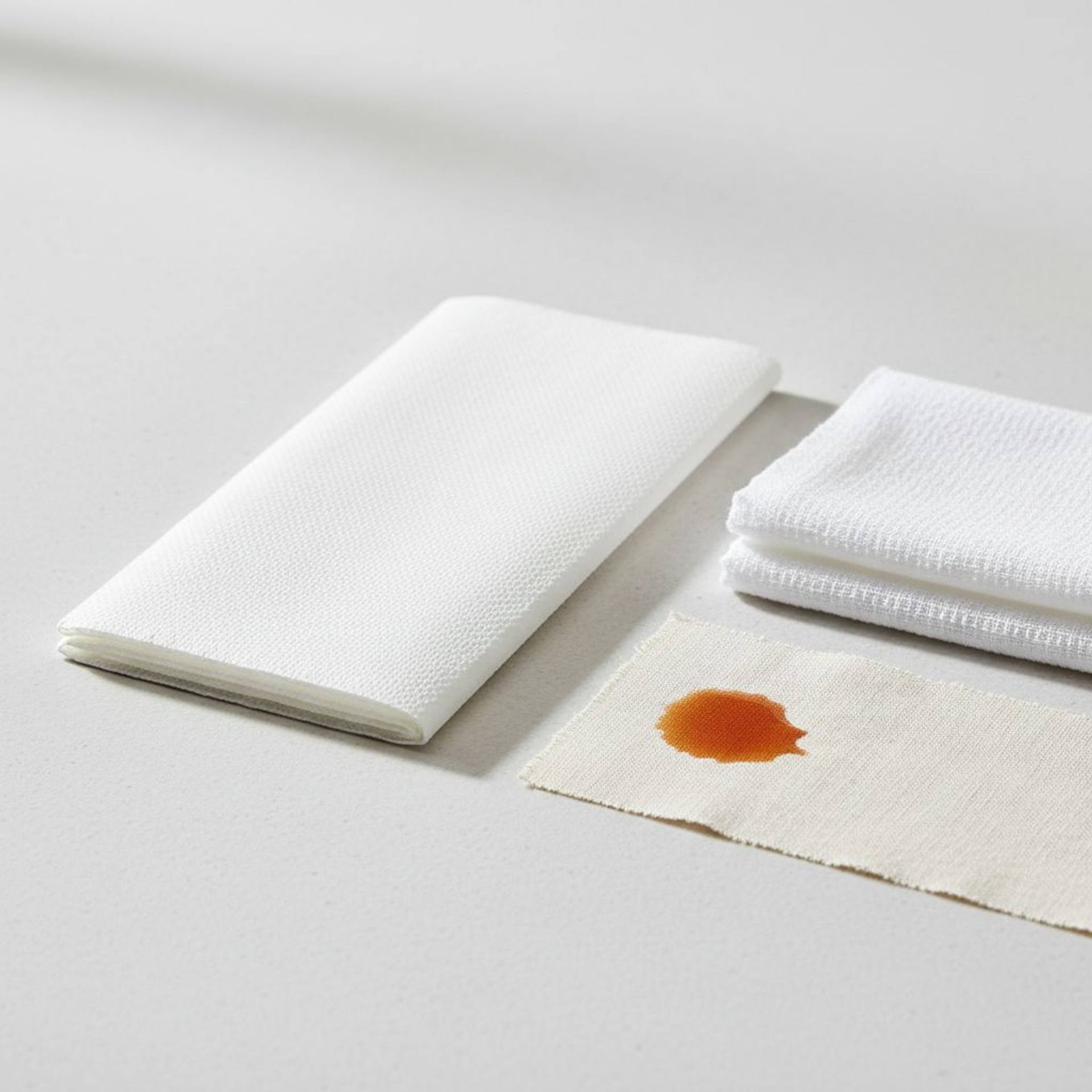
Both materials have advantages and disadvantages. Which works better depends on the stain type and the fabric it landed on.
See the differences in practice.
Paper towel
quick, disposable
Best for dye and protein stains.
Cotton cloth
thicker, reusable
Works well for grease, if it's clean and white.
For protein stains (blood, milk, egg, sweat), reach for a white paper towel and cool water, no warmer than about 40°C. Hot water sets protein into the fabric.
Grease (oil, cosmetics) needs a different approach: start dry. Both paper and cotton work, as long as they're clean and haven't touched fabric softener, which reduces absorbency.
Dye stains (wine, coffee, juice) are best removed with a white unprinted towel: a coloured cloth might add its own dye to the stain.
How to blot without making a stain worse
Pressing not rubbing is half the battle. The other half is consistent motion from start to finish.
- 1
Prepare your material
Fold a clean white towel or cloth into several layers. Thicker material absorbs more before you need to switch.
- 2
Press from the edge
Place the material straight down on the stain, from the edge toward the centre. Hold the pressure for a moment.
- 3
Lift straight up
Lift the material straight up, never to the side. When the layer is saturated, switch to a clean one and repeat until the stain stops transferring.
Three mistakes that ruin the result
Blotting from outside the stain spreads dirt onto clean fabric. Hot water sets protein stains. And pressing too hard with thin paper on rough textures (denim, corduroy, wool, terry cloth) tears the paper and leaves fibres behind.
At-home blotting limits the stain from spreading and helps with further cleaning, but it's not a substitute for professional stain removal.
You don't have solvents for tar, ink, or some cosmetics at home, and you can't be sure silk, wool, or spandex will tolerate the pressure and moisture. A laundry identifies the stain and tests the treatment on a hidden part before starting.
When to stop trying yourself
If a stain doesn't budge after 2-3 tries, especially on silk, wool, or spandex, stop. More attempts risk setting the stain or damaging the fibre. Take your clothes to the laundry: they'll choose the method and treatment for that specific fabric and stain type, instead of guessing again.

Now you know the theory. Practice can be less forgiving.
If you would rather not risk your favourite piece, leave it to the specialists at Gorące Żelazko laundry in Lublin.


Frequently asked questions
Risk increases on rough textures (denim, corduroy, wool, terry cloth) with firm pressure. On smooth fabric and light touch, the risk is low.
Always from the stain's edge toward the centre, never outward. Blotting outward pushes dirt into clean fabric and enlarges the stain instead of containing it. The same rule applies each time you change the layer, until the stain stops transferring.
Usually this results from rubbing or the wrong motion direction. Don't try further on your own; take the clothes to professional stain removal.
Best to avoid: when wet, they can transfer dye to the fabric. Tissues work like paper, but tear even faster.