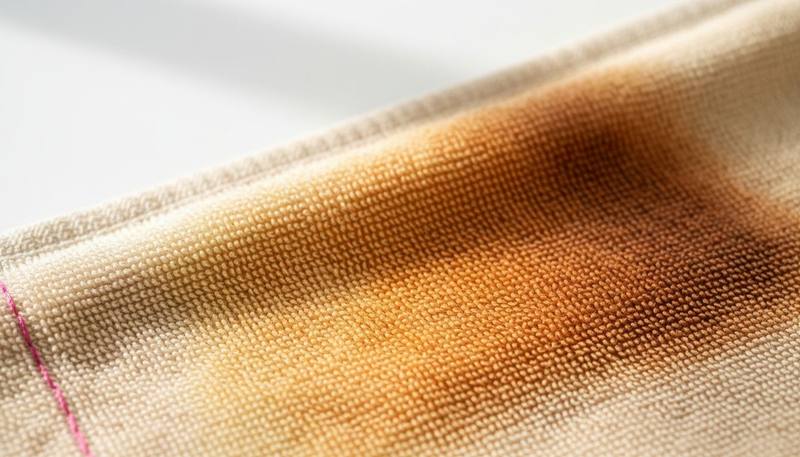
Why rubbing makes stains worse
Rubbing pushes a stain deeper into the fabric and makes it larger, not smaller.

A stain appears at the worst moment: on a shirt right before leaving, on a dress in a restaurant. Your instinct is always the same. You grab a napkin and start rubbing hard, in circles.
Almost everyone does this, it's not a character flaw. The problem is that this reflex works backwards: instead of removing the stain, it pushes it deeper and makes it bigger.
Why stains get bigger
How fabric structure breaks down as stains spread from rubbing
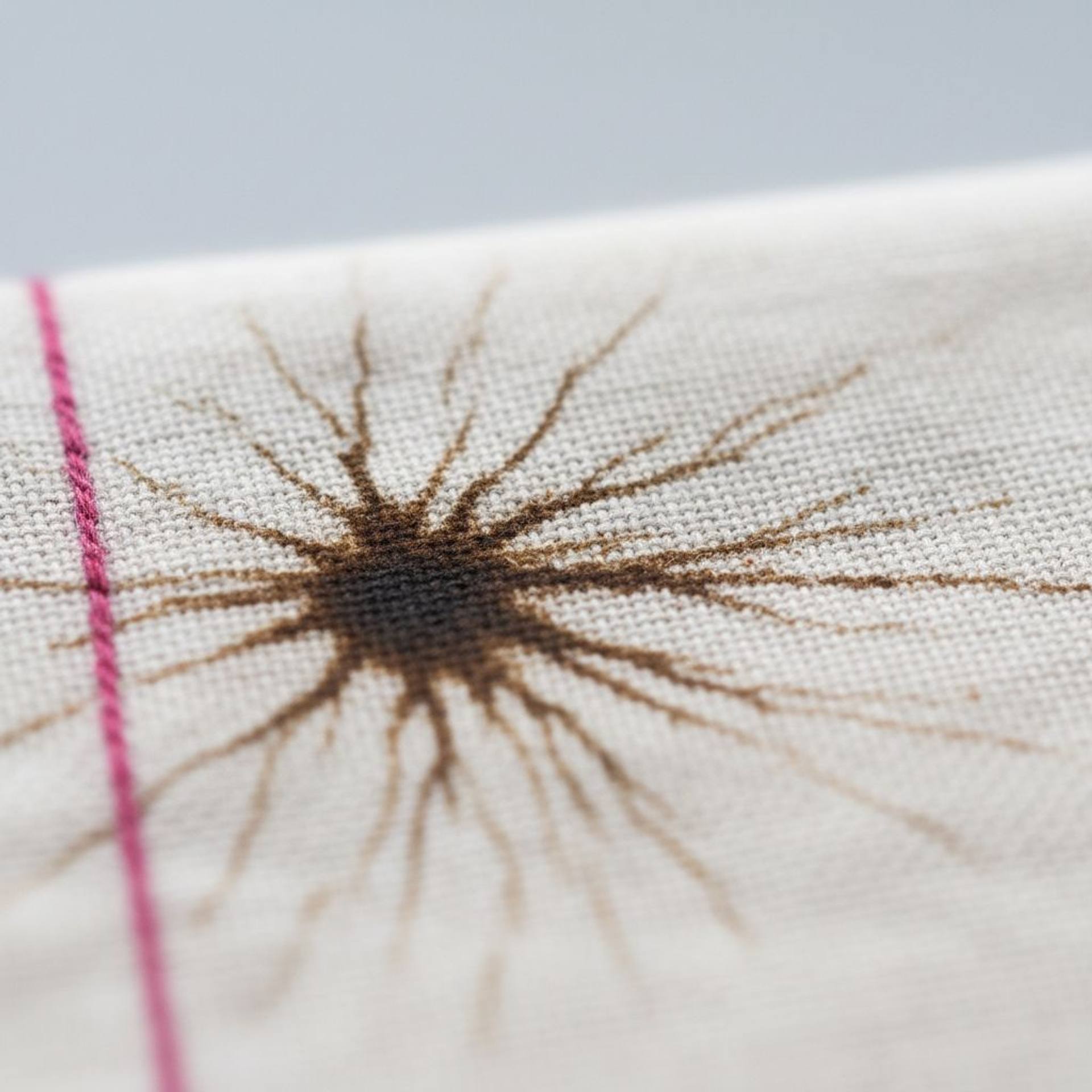
Fabric under magnification is a network of microscopic channels. Pressure from your fingers pushes dirt deeper into those channels, where cleaning solution can't reach easily.
Then there's the wick effect. Cotton, linen, and viscose absorb water along fibres capillary-wise, like a candle wick. Rubbing adds moisture and mechanical energy, which pumps liquid sideways. Result: a bigger stain with blurry, feathery edges instead of a single sharp point.
Cold water, not hot
It's not the heat from friction that sets protein stains (blood, egg, milk, sweat). It's the hot water from the tap that you instinctively reach for. Protein denatures, which means it permanently changes structure and stops dissolving, already at 60 to 70°C. Friction from your hand generates heat that's too weak to reach that on its own. The danger is hot water: always treat protein stains with cold.
Rubbing also stresses the fibre mechanically. Wool in water lifts its scales, so friction felts it easily, often permanently. Silk loses strength when wet, so the risk of tearing increases.
Velvet and corduroy have a nap that rubbing flattens permanently, leaving marks separate from the stain itself. Dyed fabrics can lose colour where you rub. None of these effects can be reversed at home.
Blotting instead of rubbing
Correct blotting technique: pressure, direction, rhythm
The rule is simple: press, don't rub. Always work from the outside edge of the stain toward the centre so you don't spread dirt onto clean fabric around it. And act fast, because the longer a stain sits, the harder it is to remove.
- 1
Place absorbent material underneath
Under the stain, on the underside of the fabric, place a clean paper towel. It will catch what you push through the fibres.
- 2
Press, don't rub
With a clean cloth, press the stain straight down, with no circular motions. Short pressing motion and release, never sideways.
- 3
Work from edge to centre
Start at the outer edge of the stain and move inward, shifting the cloth contact point to a clean area.
- 4
Match water temperature to the stain type
For protein stains, always use cold water, never hot from the tap.
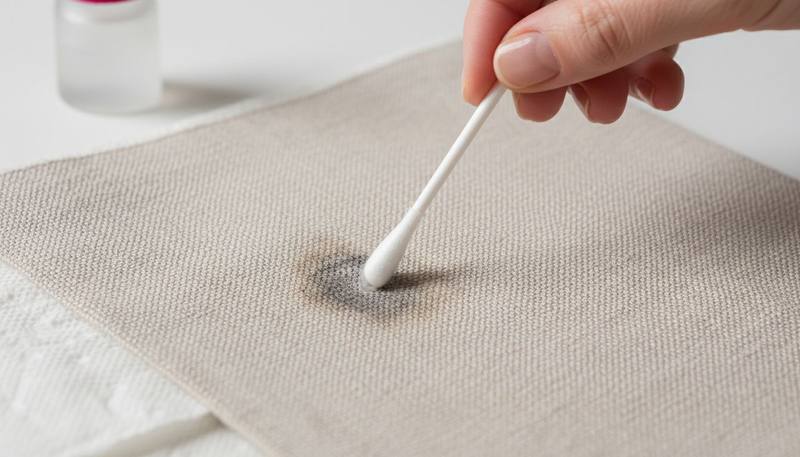
Before using a new cleaning product
Test a new stain remover on a small, hidden area of fabric, like an inner seam. It takes just a few seconds and protects against discolouring on dyed fabrics and contact allergies.
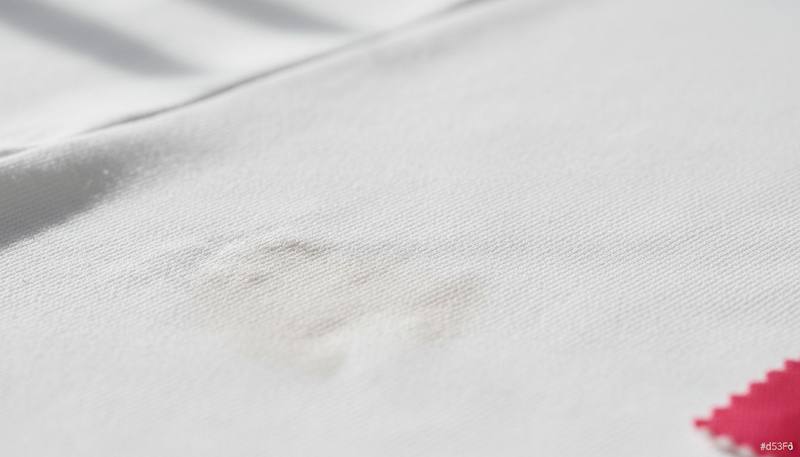
Sometimes the damage is already done. Signs that a stain has set or the fabric is damaged: pilling or tearing where you rubbed, a lighter ring from lost colour, flattened nap on velvet or corduroy.
No home method reverses nap damage or stains set in the washing machine. Even a professional laundry can't guarantee removing old stains or ones pressed on high heat multiple times, but they match the treatment to the stain category, so your chances are better than at home.
The quick version
Do
- Act immediately while the stain is fresh
- Press with absorbent material from edge to centre
- Test new products on a hidden area of fabric
Don't
- Rub in circular motions
- Mix chlorine bleach with ammonia: it creates toxic chloramine fumes
- Try home methods on fabric with visible pilling or on old stains pressed multiple times

Now you know the theory. Practice can be less forgiving.
If you would rather not risk your favourite piece, leave it to the specialists at Gorące Żelazko laundry in Lublin.


Frequently asked questions about rubbing stains
Almost always. It pushes dirt deeper and spreads it capillary-wise sideways. Even gentle rubbing increases the stain area, so blotting is always better than rubbing.
Because the washing machine applies the same two factors as hand rubbing: heat and fabric friction against itself, only stronger. An unremoved stain gets locked in permanently that way, which is why pre-wash temperature matters.
That's mechanical fibre damage, not chemical, so stain remover won't reverse it. Sometimes professional restoration helps, depending on the damage scale. It's best assessed in person.
When a stain is old or has been pressed on high heat multiple times, DIY attempts rarely change anything. The same applies to delicate fabrics like silk or wool, where extra damage is easy. Other signs to take it to professionals: visible traces from earlier attempts like pilling, tearing, or a lighter ring from lost colour.
About the author
Małgorzata Małecka
Owner of the Gorące Żelazko laundry
Małgorzata Małecka runs the Gorące Żelazko laundry in Lublin. Together with her team, she makes sure customers' clothes, shoes and fabrics come back clean and in the best possible condition.