Tulle
Complete compendium of knowledge about transparent mesh: types, care and washing

Tulle that really matters to you
Why fear of washing wedding dresses, veils or tutus is justified and how to handle it.
Four concerns come up most often when tulle is involved:
- Pilling and tearing of the mesh during spin cycles in a washing machine, because the delicate loops seem to have no chance against the drum spinning at full speed.
- Yellowing, especially painful with white veils or dresses that were supposed to remain pristine.
- Loss of stiffness: tulle that once stood proudly in a bell shape after washing suddenly "droops" and stops holding its form.
- Hard-to-identify stains, because you're not always sure if it's wine, makeup or something completely different, and each requires a different approach.
Let's start by reassuring you about the third concern, as it causes the most unnecessary guilt. Stiffness in tulle comes from sizing, which is a thin finishing coating applied to the finished fabric, not from the fiber weave itself. Loss of this stiffness after home washing is normal, predictable and results from the properties of the process, not material defect and not your mistake.
The rest of the concerns also have clear, predictable solutions. In the sections below you'll find exact temperature thresholds, specific washing and drying steps, and proven methods for salvaging results, so you don't have to guess or rely on intuition with something that matters to you.
What exactly is tulle?
Structure of bobbinet mesh, history of the name and why loops don't unravel.
The name tulle comes from the French city of Tulle in the Correze region, where this fabric was produced as early as the 18th century. It was from there that the name entered dictionaries of many languages, including English.
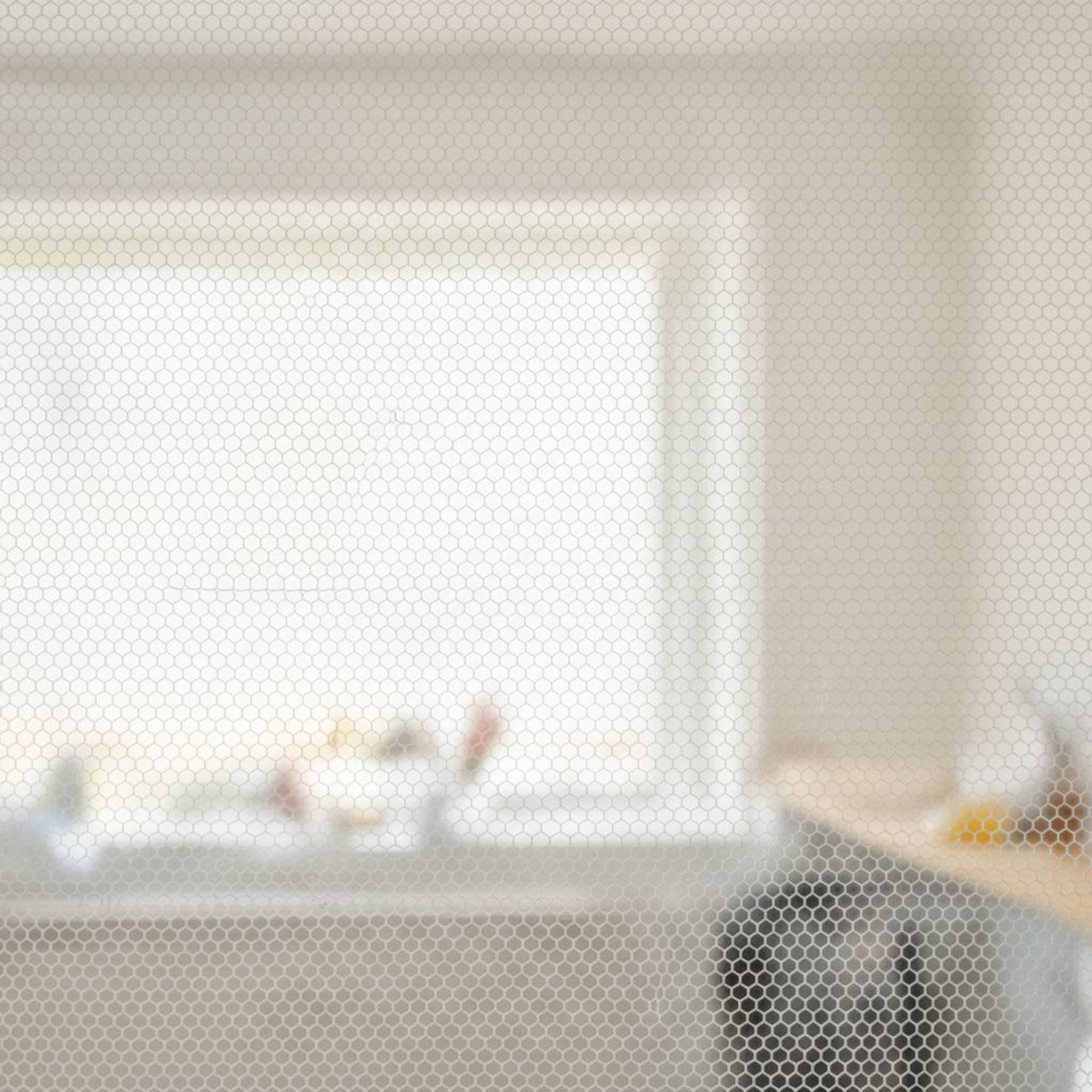
The structure of tulle is called bobbinet, literally "block mesh," and is created by twisting, rather than simply crossing, warp threads around weft threads. This process creates a stable, hexagonal pattern of loops resistant to unraveling. Unlike ordinary gauze or gauze woven with linen, damage to one thread in bobbinet remains localized in one place rather than causing the entire surface to unravel. This is precisely why a single snag on a ring or fingernail rarely ends in disaster for the entire dress.
Behind the mechanization of this technology is a specific person and date. John Heathcoat patented the bobbinet machine, also called a twist lace machine, in England in 1808, under patent number 3151. A year later, in 1809, he improved it with another patent, number 3216. The machine was created as a mechanical imitation of hand-made bobbin lace, hence the close terminological and technological relationship between tulle and lace, which you can read more about in the separate lace guide.
It's worth immediately distinguishing tulle from two fabrics with which it's often confused. Organza is a fully woven fabric, woven classically from warp and weft, without mesh loops, while tulle is always a mesh with visible hexagonal openings. Lace, on the other hand, typically has ornamental patterns placed on or woven into the mesh, while tulle itself remains a uniform, transparent mesh without decorative motif.
Raw materials that make up tulle
Washing temperature 30°C, moisture regain about 4 to 4.5%, high susceptibility to static electricity at air humidity below 30% RH
Washing temperature 30 to 40°C, moisture regain about 0.4%, high resistance to UV radiation
Hand washing only at 20 to 30°C, moisture regain about 10 to 11%, low UV resistance, yellows in sunlight
Starch: non-durable, washes out with each cleaning. Synthetic resins PVA or acrylic: more durable, typical for tutus and curtains, also gradually wear out
Types of tulle
Soft, rigid, illusion, curtain and silk: how they differ and what they're used for.
Below you'll find five types of tulle that you most commonly see in stores, in closets or on windows. Each behaves differently when washed, so recognizing your own specimen is the first step to safe care.
There's one simple principle organizing everything else in this article: the higher the stiffness, the more sizing on the fiber. The more sizing, the greater sensitivity to moisture and high washing temperatures. Soft tulle forgives more, rigid tulle demands greater caution.
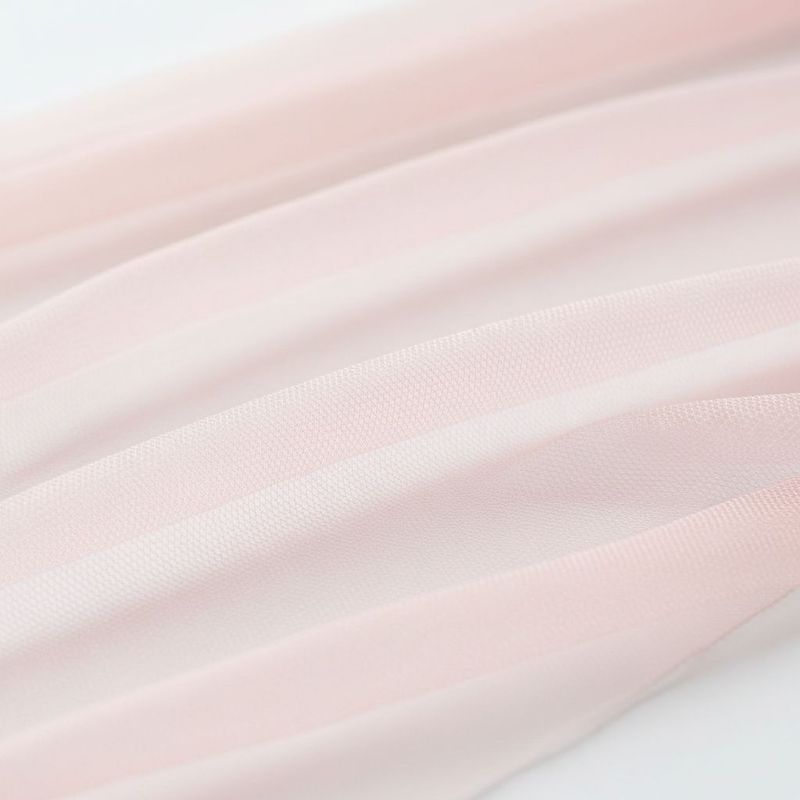
Soft dress tulle
Delicate mesh with high softness (gossamer / millinery tulle)
Most susceptible to snagging and tearing due to fiber thinness.
Thin, softly draping tulle used in cocktail dresses, layered skirts and light decorations. Low stiffness means less sizing on the fiber, so it tolerates delicate washing better, but its thinness makes it most prone to snagging and tearing.
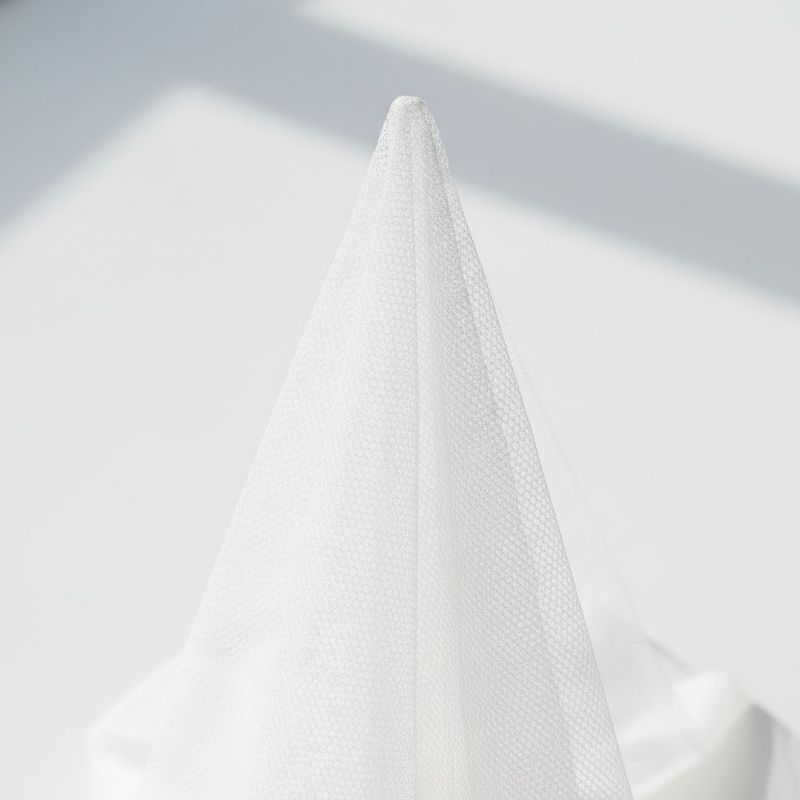
Rigid tulle / tutu
High stiffness due to sizing (bridal tulle, ballet tulle)
Sizing sensitive to moisture and temperatures above 30°C, loses stiffness faster than other types.
This type of tulle holds its shape because of a thick layer of sizing, which is why you see it in ballet tutus and layered wedding dress skirts. It's also the most demanding in care: each wash at too high a temperature speeds up loss of this characteristic stiffness.
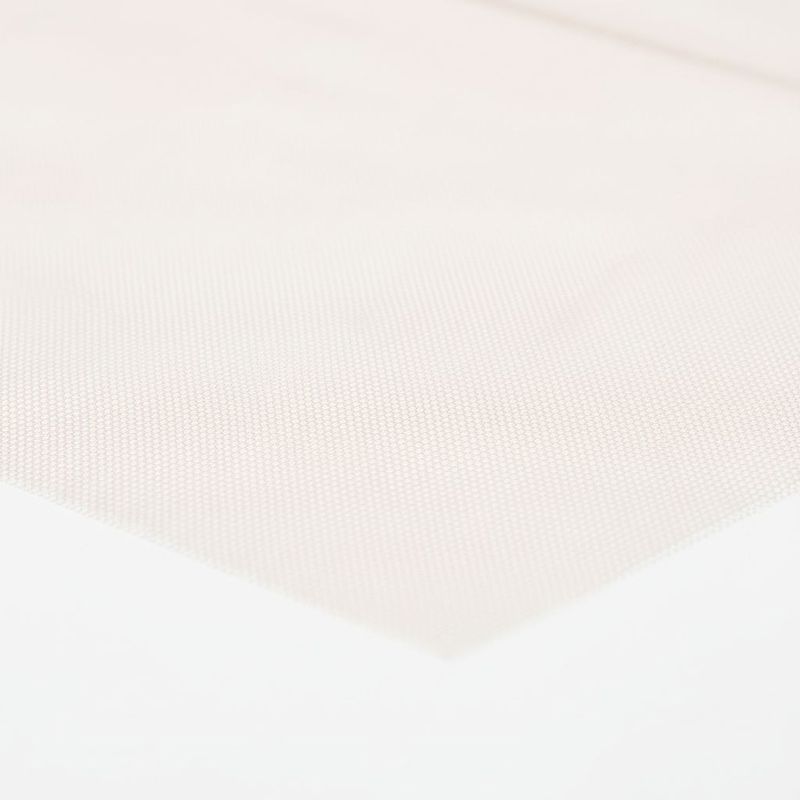
Illusion tulle
Rarest weave, highest transparency (illusion tulle)
Rarest weave of all five types, highest risk of snagging.
Illusion tulle owes its name to an almost invisible structure that creates the illusion of exposed skin under a neckline or insert. It dominates in wedding veils. The rare weave of threads means the greatest delicacy of all five types, so it requires special care with every contact with jewelry or fingernails.
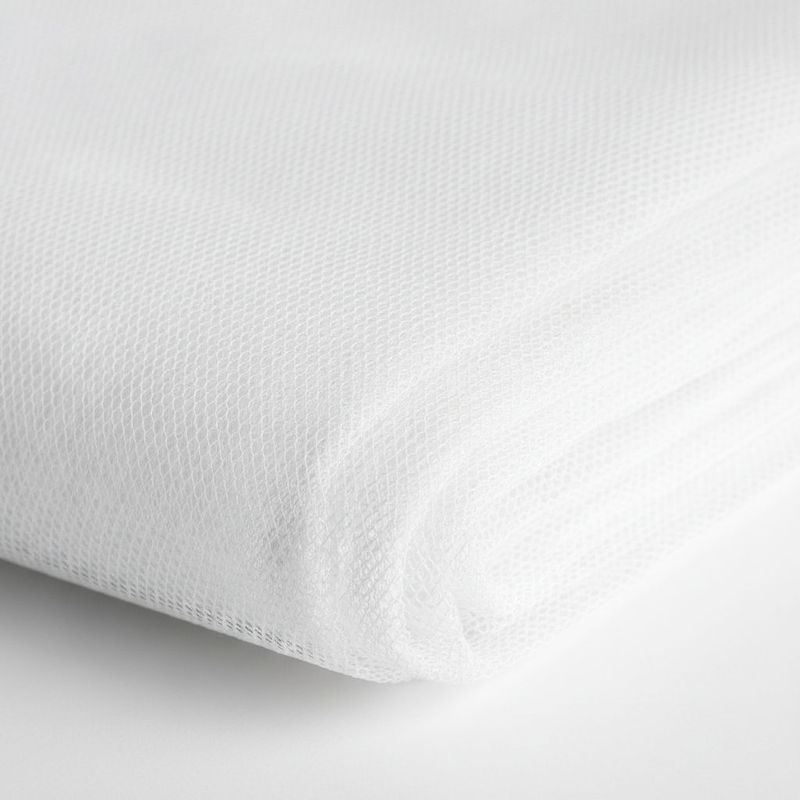
Curtain tulle
Denser weave for decorative applications (curtain tulle)
Usually denser weave, sometimes with antistatic or dirt-resistant finish.
Curtain tulle differs from dress tulle in weave density, adapted for large window surfaces and everyday exposure to dust and sun. Manufacturers often apply additional finishes that make it easier to keep clean between washings.
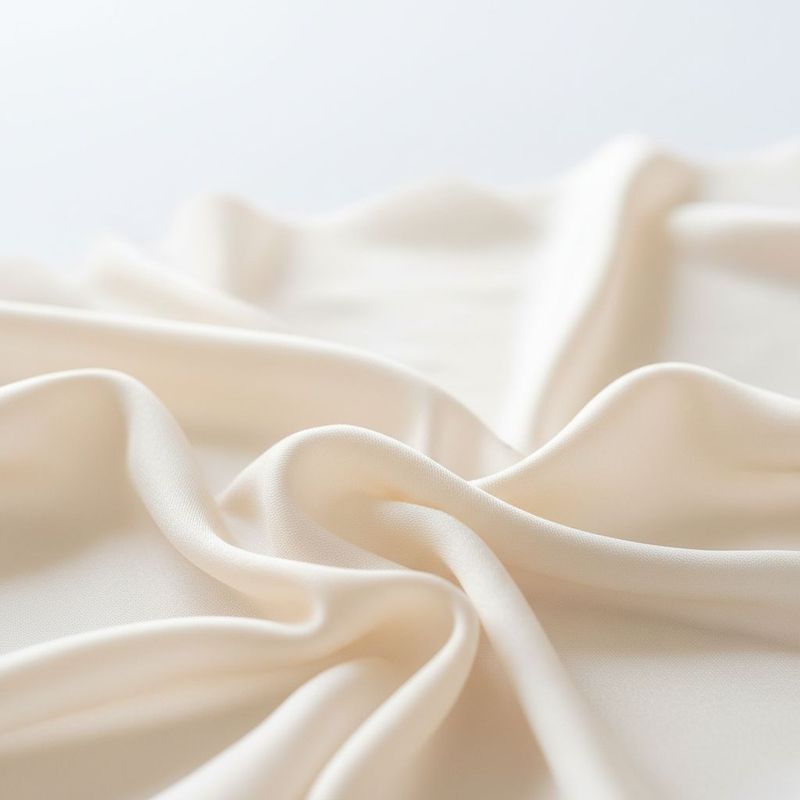
Silk tulle
Premium segment, hand washing only (silk tulle)
Hand washing only, zero tolerance for spin cycles.
The lightest and softest of the five types, used in haute couture and highest-end wedding veils. Silk won't tolerate spin cycles, high temperatures, or incorrect detergent pH, so this variant requires hand-only method, described later in the article.
Remember this one dependency: how stiff your tulle is tells you more about the amount of sizing on the surface than about the fiber weave itself. That's why two pieces of tulle from the same material, for example nylon, may require completely different caution during washing, depending on how much sizing was applied to them.
Two household uses appear most often and deserve separate, detailed discussion: tulle curtains in windows and tutu and tulle dresses for children. We'll cover both in the next sections.
We cover each aspect of tulle care separately, in short guides, so you reach a specific answer faster instead of scrolling through one long text. Below is the whole series:
- How to wash tulle
- Drying and ironing tulle
- Tulle curtains
- Tutu and children's dresses
- Tulle stiffness and yellowing
- When to take tulle to a laundry

Now you know the theory. Practice can be less forgiving.
If you would rather not risk your favourite piece, leave it to the specialists at Gorące Żelazko laundry in Lublin.