Tulle in the washing machine or by hand?
Short answer: wash at 30°C on a delicate cycle, with the spin off or set to minimal.

Direct answer: temperature 20 to 30°C, preferably hand washing. The washing machine is acceptable only for solid, synthetic tulle without premium layers. This excludes silk and delicate illusion combined with lace or beads.
If you decide to use the washing machine, a protective bag is mandatory, not optional. It prevents delicate loops from catching on zippers, velcro and hooks of other clothes spinning together in the drum. Set spin to off or a maximum of 400 revolutions per minute. Industry standards do allow 400 to 600 revolutions for tulle and lace, but that's still far below the standard 800 to 1600 revolutions achieved by a typical home washing machine on a normal cycle.
Why tulle needs different care than other fabrics
The mesh construction, the sizing finish, and where the fabric is weakest.
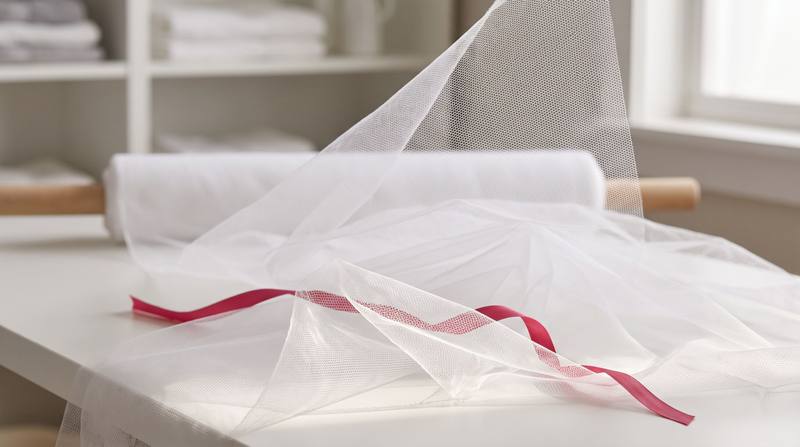
Tulle is most often a bobbinet mesh: thin threads twisted and woven into hexagonal loops, not woven in the classic sense. This construction gives it lightness and transparency, but every knot of the weave is a point where the fiber works under tension. Stretching across the loops, especially on wet fabric, deforms and weakens exactly those knots.
Tulle also usually has a sizing finish, a coating that stiffens the fiber so the fabric holds its shape and has a slightly crisp feel. Every wash gradually rinses out this sizing, which is why tulle becomes softer and more drapey over time. Gentle washing and skipping fabric softener slow this process down, but they do not stop it completely.
The material tulle is made from also matters. Polyester and nylon tulle are the most resistant to moisture and friction, which makes them the only variants suitable for machine washing. Silk tulle, also known as illusion, and tulle decorated with lace, sequins or beads requires hand washing only, regardless of the base mesh composition.
Tulle type and how to wash it
The most resistant variant. Machine washing allowed, always in a protective bag and on a delicate cycle
Hand washing only, at low temperature. High sensitivity to friction and spinning
Hand wash only, without soaking the decorations longer than necessary. Trims can discolor or come loose
Check colorfastness before the first wash. Wash separately, away from light-colored fabrics
Washing machine or hand: quick checklist
Do
- Use a protective bag when washing tulle in the washing machine
- Choose a delicate program at 30°C
- Turn off spin or limit it to a maximum of 400 revolutions per minute
Don't
- Don't throw tulle loosely together with zippers, velcro and hooks of other clothes
- Don't wash several layers of tulle skirt at once, as this risks tangling
- Don't exceed 30 to 40°C even for polyester tulle
Hand washing tulle step by step
Temperature, detergent, soaking and rinsing in the proper order.
Hand washing is the reference point for all tulle, and the only acceptable method for premium and silk variants. It eliminates spin cycle risk and gives you full control over every step.
- 1
Set water temperature
Set water to 20 to 30°C. Never hot: high temperatures speed up loss of sizing and can stiffen or dull the delicate mesh.
- 2
Choose detergent
Choose liquid detergent with neutral pH in the range of 6.5 to 7.5, without cellulolytic enzymes. These enzymes are designed to break down cellulose fibers and can weaken sizing finish, although synthetic fibers themselves are not their direct substrate.
- 3
Soak gently
Soak tulle for maximum 5 to 10 minutes, gently moving it in water, without rubbing between hands.
- 4
Rinse at least three times
Rinse at least three times in clean water at similar temperature. Thorough rinsing is critical: detergent residue trapped in the dense mesh of openings causes dulling and additional stiffening after drying.
- 5
Drain without wringing
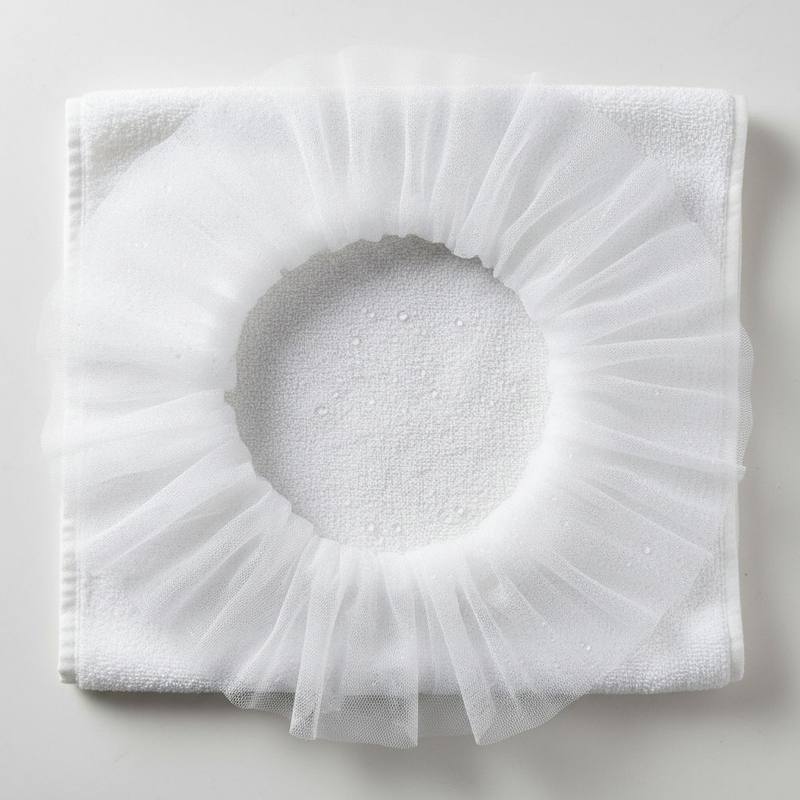
Wrap tulle in a towel and gently squeeze to remove excess water. Never wring or spin dry: wet tulle has low tensile strength in the direction perpendicular to hexagonal mesh.
Wet tulle has low tensile strength in the direction across hexagonal mesh openings. Wringing or spin drying in this state permanently distorts them, and the effect cannot be undone by ironing alone.
Machine washing: safety conditions
Protective bag, cycle and detergent choice, when tulle is sturdy enough.
Before you put tulle in the washing machine, check the label and make sure it's solid synthetic tulle without extra decorations. Place it in a protective laundry bag, ideally folded loosely, without compressing the layers. Tightly packed tulle inside the bag washes unevenly, because water and detergent reach the middle layers of the fabric less effectively.
Choose a delicate or hand-wash program on the machine, with a temperature of 30°C and spin off or limited to a maximum of 400 revolutions per minute. Wash tulle separately, without zippers, velcro, bra hooks or buttons from other clothes in the same cycle, even if everything goes into the bag.
Do not add fabric softener. Softener settles on synthetic fibers and leaves a film on the mesh that dulls it and takes away its characteristic light crispness. If you want a fresh scent, a good detergent without cellulolytic enzymes is enough.
Check colorfastness before the first wash
Before washing dyed or dark tulle for the first time, dip a small, hidden piece of fabric in water with detergent for a few minutes and press a white paper towel against it. If the color bleeds, always wash that item separately, in cool water, to avoid staining other fabrics and fading the tulle itself.
Why fabric softener damages tulle
Fabric softener is designed for natural fibers such as cotton or linen, which stiffen during drying. On synthetic tulle it does the opposite: it settles on the smooth surface of the threads, weighs down the mesh, and makes it lose its breathability and characteristic lightness. The effect is visible to the naked eye after just a few washes with softener.

Now you know the theory. Practice can be less forgiving.
If you would rather not risk your favourite piece, leave it to the specialists at Gorące Żelazko laundry in Lublin.


Frequently asked questions
Yes, but only solid synthetic tulle without premium layers or silk. Always in a protective bag, on a delicate program at 30°C, with spin off or limited to a maximum of 400 revolutions per minute.
20 to 30°C, regardless of whether you wash by hand or machine. Higher temperatures speed up loss of sizing and can stiffen or dull the mesh after drying.
Best not at all. If you must, limit spin to a maximum of 400 revolutions per minute, while a typical home washing machine standardly achieves 800 to 1600 revolutions. High-speed spin permanently distorts hexagonal mesh at the thread twist point.
No. Softener settles on the synthetic fibers of tulle, dulls the mesh and strips it of its characteristic light crispness. A mild detergent without softener is enough for washing.
When the tulle is silk, heavily decorated with lace, sequins or beads, or when it's an elaborate wedding or evening dress where the risk of washing it yourself outweighs the benefit of saving money. Specialists match the method to the specific trim and construction, which can't be fully replicated at home.