Sweat marks on caps and hats
Universal guide: from sweat chemistry to a safe home method, before you decide to hand over your favorite cap to professionals.

Yellow or brown marks on the inside of a cap with a visor are one of the most frustrating stains in your wardrobe. You see them exactly where the fabric touched your scalp: on the sweatband and lower edge of the visor.
A fresh stain is a completely different story from one that's been sitting for a few months. The longer a stain waits, the harder it is to remove without risk.
The biggest fear? That during washing you'll lose the stiffness of the visor or the shape of the brim and the cap is only fit for the bin. This fear is justified if you act on a whim. Unjustified if you know the right method.
Sweat marks on caps with visors
mechanism of formation and fabric properties
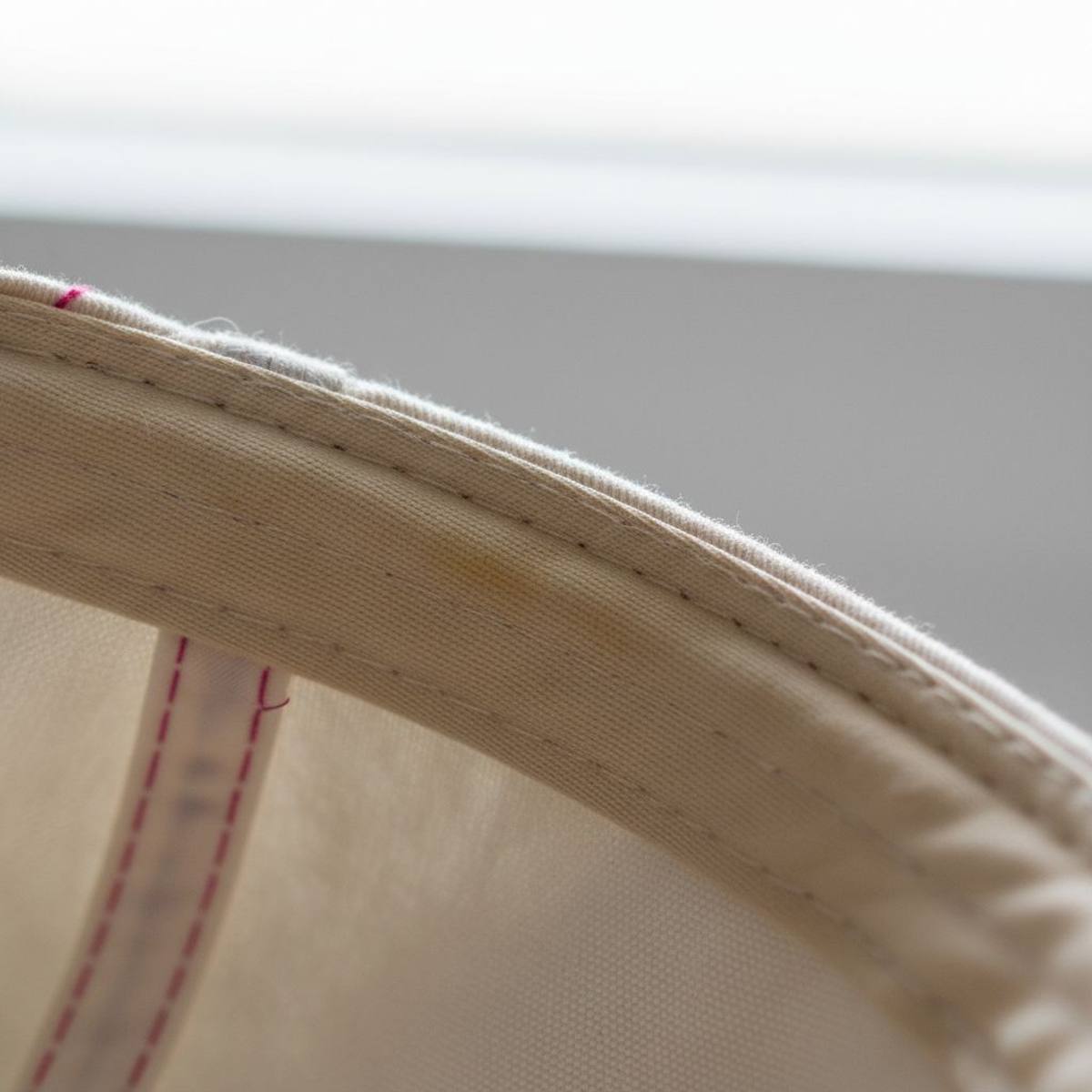
Sweat isn't just salt. It's a mixture of proteins, skin oils (sebum), and very often, aluminium salts from antiperspirant. Freshly applied, it rinses easily with plain water.
The problem starts later. Under the influence of air and light, proteins and fats oxidize and bind permanently to the fibre. That's why stains from a few months ago are much harder to remove than those from a week ago.
Remember one thing from the start: if you reach for chlorine bleach on such a stain, the aluminium salts from the antiperspirant will react with it and deepen the yellow or orange discolouration instead of removing it. More on this in the warning below.
approx. 99% of sweat mass
4.5 to 7.0 (slightly acidic)
mineral salt, whitish stains, different type from yellow ones
from apocrine glands and sebum, bind permanently after oxidation
from antiperspirants, form poorly soluble compounds
Felt or straw hat
differences in care and susceptibility to sweat stains
Not every headwear is treated the same. Cotton and knitwear are most forgiving. Felt and straw are riskiest because water can permanently deform them.
Before you do anything, check the label. The care symbol complying with ISO 3758 standard takes priority over any general rule from the table below.
Fabric and safe washing method
Cotton, knitwear, twill (baseball caps)
Hand washing at 30-40°C is safe. Risk: stiffening in the visor softens and loses shape at too high temperatures.
Felt wool (fedora, trilby)
Usually dry cleaning only, without water. Risk: felting, shrinking, and loss of brim shape.
Natural straw (panama, summer)
Spot cleaning only, without soaking. Risk: fibre brittleness and discolouration after contact with water.
What not to do
Washing in a machine at high temperature or drying in a drum dryer permanently deforms the visor stiffening and unglues the lining. Chlorine bleach on antiperspirant stains deepens the yellow or orange discolouration instead of removing it. Felt is usually cleaned dry only, not in water, and straw is spot cleaned only, without soaking. Ironing a stain directly with an iron sets the protein on the fibre instead of removing it.
Before you start, test the chosen product on an inconspicuous part of the fabric, for example inside at a seam.
For cotton and knitwear, liquid dish soap dissolved in lukewarm water up to 30°C works best, gently rubbed in with a brush. You can also apply a baking soda paste for 15 to 30 minutes and rinse.
Diluted white vinegar works well with mineral deposits and is well tolerated by protein fibres, meaning wool and silk. Don't use it on felt because you risk deformation.
Spot-wise, after testing, you can reach for 3% hydrogen peroxide for a few minutes. However, the most effective at removing old protein-fat stains is enzymatic laundry detergent, preferably at 30-40°C.
Step by step in brief
Do
- Test the product on an inconspicuous part
- Wash by hand in lukewarm water at 30-40°C
- Use enzymatic laundry detergent or baking soda paste
- Dry the cap in its natural shape, away from heat sources
Don't
- Don't wash in a machine at high temperature or dry in a drum dryer
- Don't use chlorine bleach on antiperspirant stains
- Don't soak felt or straw in water
- Don't iron a stain directly with an iron
The simplest prevention is drying the cap after each wearing. Damp headwear stored in the wardrobe is a simple path to another stain and sometimes mold on the sweatband.
If you wear the same cap every day, consider PLN as an additional barrier against future stains.
When to give up on home methods? When the stain is old and oxidized, when the fabric is felt, straw, or leather, or when you care about preserving the perfect shape of the visor. A laundry has steam cleaning under controlled pressure, dedicated cap washing, and blocking forms for hats, which you simply don't have at home.

Now you know the theory. Practice can be less forgiving.
If you would rather not risk your favourite piece, leave it to the specialists at Gorące Żelazko laundry in Lublin.


Frequently asked questions
It depends on the age of the stain and the fabric. Fresh stains usually disappear completely. Old, oxidized stains with aluminium salts from antiperspirant can sometimes only be lightened, not always removed 100%.
By hand, in water up to 30-40°C. Never in a machine or drum dryer because high temperature deforms the visor stiffening.
Don't submerge them in water. Felt is usually cleaned dry only, and straw is spot cleaned only, without soaking.
Dry the cap after each wearing and don't store it damp in the wardrobe because it's a simple path to another stain and mold on the sweatband. Also consider PLN as an additional protective barrier for the future, especially if you wear the same cap every day.