Sparkling water on wine stains: proven trick or myth
When the home method actually works and what to do when the stain has dried.

A wineglass tilts a millimeter too far and a dark stain spreads across your tablecloth. Your guests watch, you check the clock, and the stain deepens by the second.
Short answer: yes, sparkling water works, but only on fresh stains in the first few minutes. Once it has dried, it won't help.
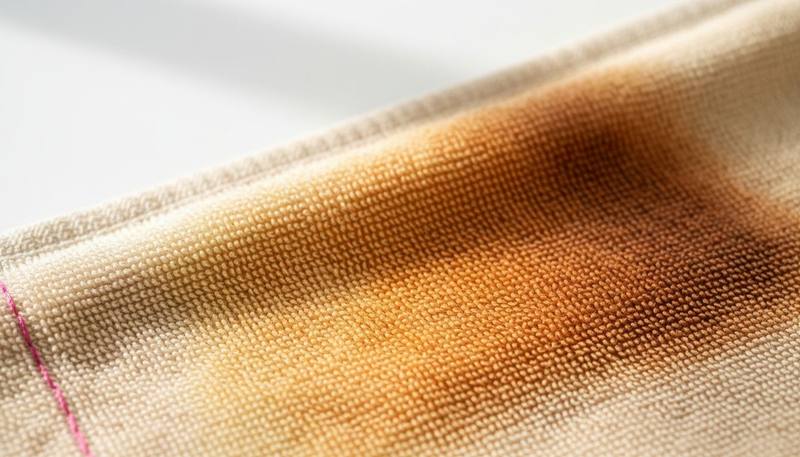
Red wine stains fabric because of anthocyanins, water-soluble plant pigments, and tannins that bind to the fiber. Wine has a pH around 3.3 to 3.6.
A popular myth says the CO2 bubbles mechanically push the dye out of the fibers. This claim circulates on forums but has no backing in industry sources.
The real mechanism is simpler: dilution and speed of reaction matter, just as they do with plain cold water. Sparkling water has a pH of roughly 4 to 6, so it does not act as a strong stain remover. It is effective because it is usually on hand right when you need to act.
What to do and what to avoid
Do
- Place a clean, light cloth under the stain so the dye doesn't transfer to the other side of the fabric
- Act immediately: cold water or sparkling water in the first few minutes
- Dry with a clean, light cloth between each flush
- Check the label before washing properly
Don't
- Don't rub the stain; this drives the dye deeper and spreads the affected area
- Don't dry the fabric in the dryer or pour hot water on it; heat sets the tannins
- Don't pour white wine on a red wine stain; it's a social trick with no proof, just doubles the liquid and sugar on the fabric
- Don't leave kitchen salt on the stain for many hours; too long a contact risks deepening the discoloration
Step by step: what to do right away
Specific instructions for the first few minutes after wine is spilled, before the stain sets in.
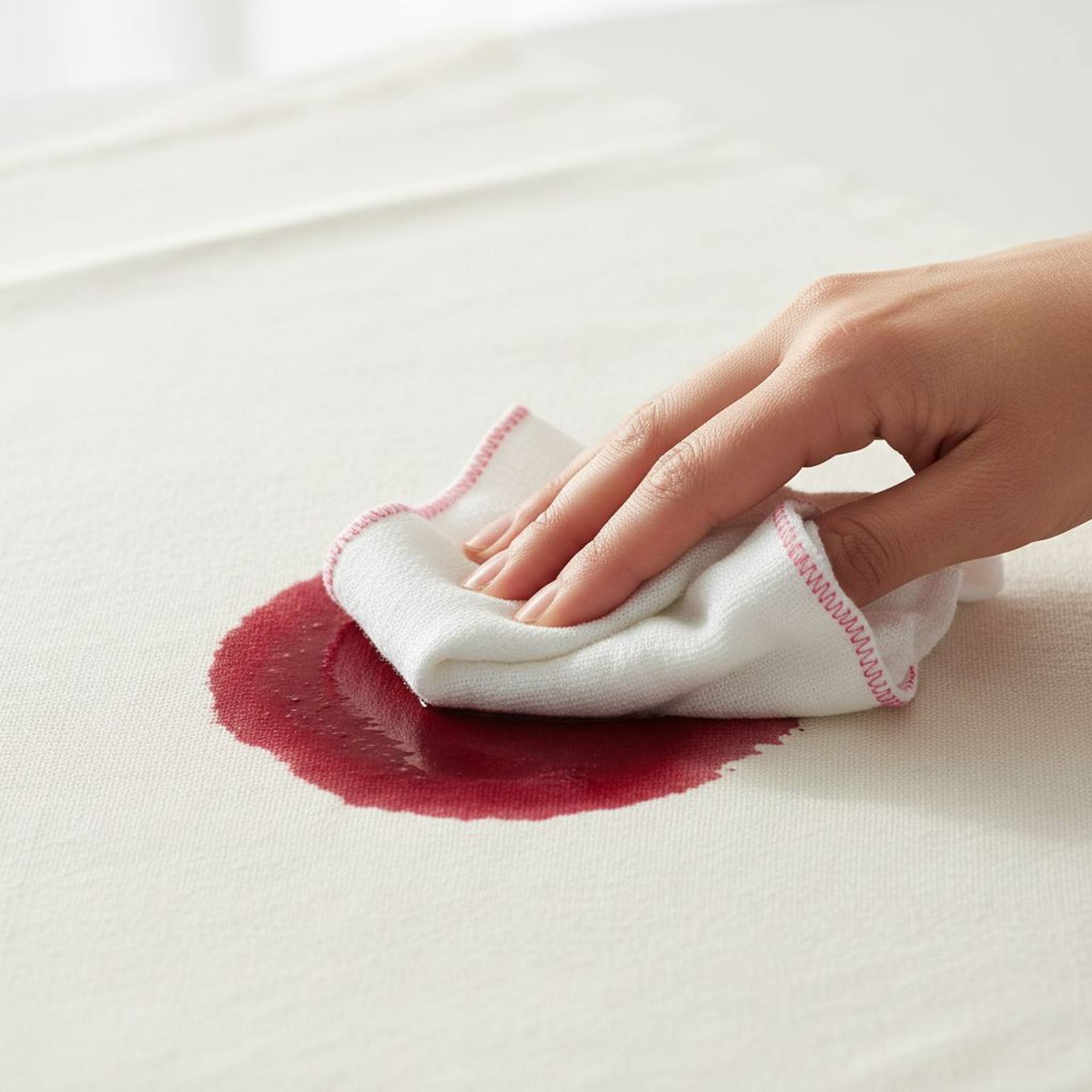
The whole sequence is 4 steps. Order matters: skipping steps clearly reduces effectiveness.
Rescue in 4 steps
- 1
Catch the excess liquid
With a clean cloth or paper towel, blot up the excess wine. Don't rub; just press and collect.
- 2
Pour cold sparkling or tap water
Pour the stain with cold sparkling water or plain tap water, working from the edges of the stain toward its center.
- 3
Dry and repeat
Dry with a clean, dry cloth. Keep pouring and drying until the dye visibly fades.
- 4
Wash as soon as possible
Wash the fabric according to the label, as fast as you can. Avoid the dryer until the stain is completely gone.
This sequence works great on fresh stains, but it has limits. What do you do when the wine has dried or the stain hit silk or wool?
When home methods fail: advanced techniques for dried wine stains
Risk to delicate fabrics and the limits of home methods, before you consider professional cleaning.
Risk by fabric type
Risk of losing sheen and water marks from water alone. Test on a hidden spot; best to send to a professional cleaner.
Risk of felting when rubbed. Flush gently with cold water without rubbing; hand the rest to a laundry.
Usually tolerate peroxide and oxygen bleach up to 40 degrees. Home methods are relatively safe here.
Sensitive to high heat and strong oxidisers. Low temperature, no chlorine bleach.
A dried stain is another story: the dye is now permanently bound to the fiber, so home remedies usually only lighten it, rarely remove it completely.
Laundries work differently. They pick a solvent for the specific fiber, test it on a hidden spot first. They wash in controlled temperature, usually 30 to 40 degrees, with enzyme-based products, and handle silk and wool professionally per the label: a circle symbol (ISO 3758) means professional cleaning in general, and the letter inside it decides the method. P, F, and A mean chemical cleaning; W means professional wet cleaning.
The advantage of handing it over to a professional instead of a home experiment is simple: the right product for the fiber and the ability to repeat the treatment in a controlled way, without risking permanent damage.
Two mistakes you cannot undo
Never dry a stained fabric in a dryer or press it until the stain is completely gone. Heat permanently binds the tannins to the fiber. Also never mix chlorine bleach with vinegar or another acidic stain remover. This reaction releases dangerous chlorine gas.
Do you have a fresh stain on cotton or linen? Act yourself, following the steps above, and in most cases the wine will vanish without a trace.
The stain has dried, it hit silk, it's a dress or family tablecloth, or your own efforts have already failed? This is the moment to hand it to a professional laundry. Gorące Żelazko in Lublin takes both fresh and dried wine stains on any fabric.

Now you know the theory. Practice can be less forgiving.
If you would rather not risk your favourite piece, leave it to the specialists at Gorące Żelazko laundry in Lublin.


Frequently asked questions
Yes, but only on fresh stains. It works through dilution and rapid flushing of the dye before it binds to the fiber. The bubbles themselves have no extra power here.
On a fresh stain, cold water or sparkling water is more effective. Salt has limited absorbing action and too long a contact can actually deepen the discoloration.
Home remedies only lighten a dried stain, rarely remove it completely. The best solution then is professional cleaning.
Carefully. Water alone can leave marks on silk or felt wool if rubbed. Test on a hidden spot or go straight to a laundry.
When the stain has dried, hit a delicate fabric, or when your own attempt has already failed. More home experiments usually just make things worse.
About the author
Małgorzata Małecka
Owner of the Gorące Żelazko laundry
Małgorzata Małecka runs the Gorące Żelazko laundry in Lublin. Together with her team, she makes sure customers' clothes, shoes and fabrics come back clean and in the best possible condition.