How to remove stains from gloves and winter hats
A stain on gloves or a hat triggers one specific fear: that a home attempt will do more damage than the dirt itself.

A stain on gloves or a hat triggers one specific fear: that a home attempt will do more damage than the dirt itself. Skin stiffens after contact with water, and wool felts under the influence of heat and friction. The wrong solvent can leave streaks worse than the original stain.
There is no one universal tip, because gloves and winter hats are made from completely different materials: leather, suede, wool, fleece, or acrylic. Each reacts differently to water, temperature, and friction.
In this guide, you'll first identify the material, then pick a safe method for the specific stain, and finally learn when to stop trying at home.
First identify the material
Leather, suede, wool or fleece: the cleaning method depends on the fabric, not the stain type
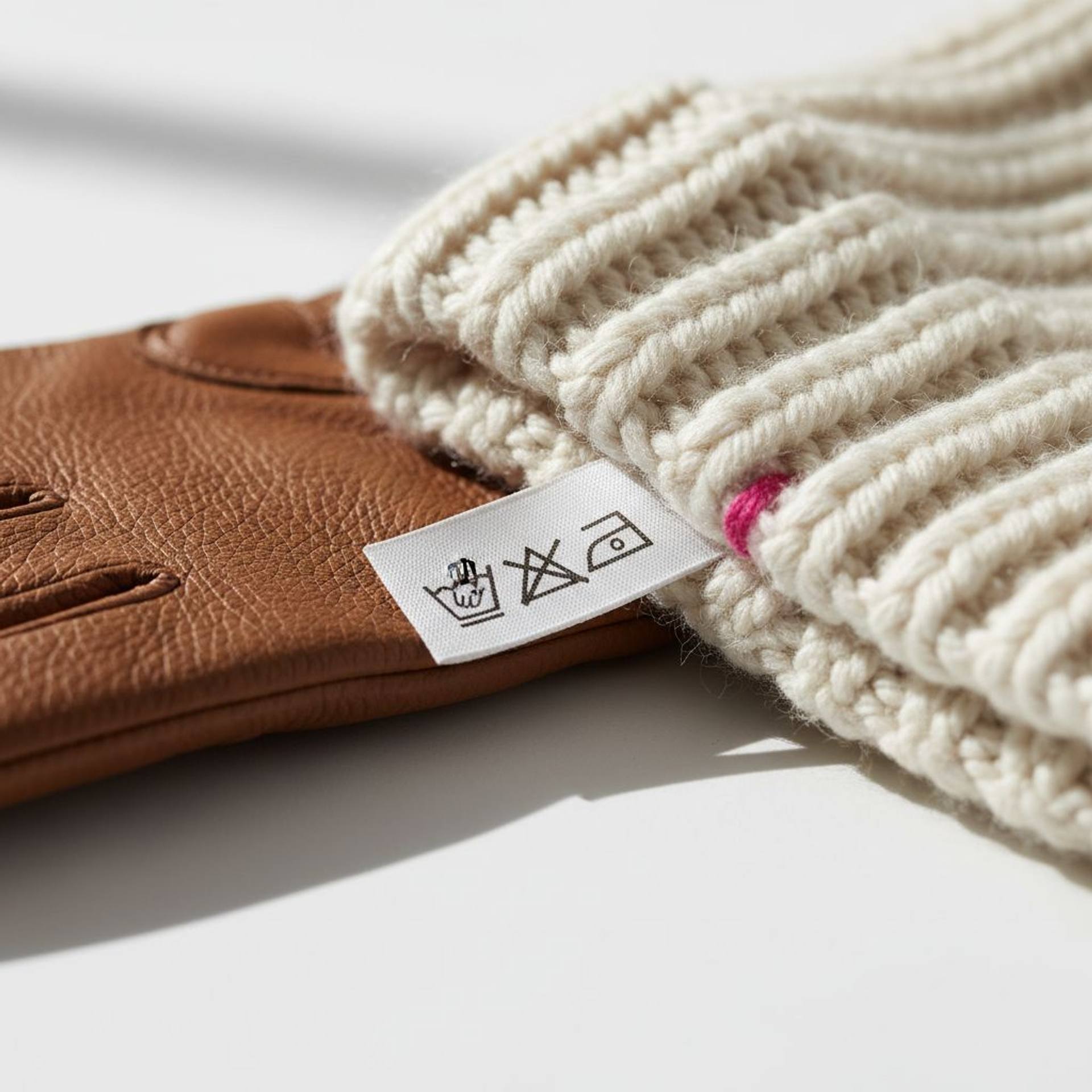
Before you reach for water or a stain remover, check the label. The care symbol following ISO 3758 tells you the maximum temperature at which you can wash a given material. Leather gloves and hats usually don't have this label because the standard applies to textiles, not leather. That's a signal in itself: no water, dry cleaning only.
Leather soaked in water stiffens, shrinks, and can crack after drying.
Wool reacts differently: under heat, moisture, and friction, the scales on the fiber overlap and the material felts, which is permanent.
Fleece and acrylic are mechanically more resilient, but high drying temperatures permanently deform their fibers, so they also require care.
Leather and suede
Never in water or a washing machine. Clean leather with a conditioning milk, suede with a dry brush. Dry away from a radiator.
Wool and knits (including merino)
Hand wash in water around 30 degrees, without rubbing. Dry flat, away from a heat source.
Fleece and acrylic
Low-temperature washing is safe, but dry away from a radiator and avoid high-power tumble drying to avoid permanently deforming the fibers.
You've now identified the material, so it's time for the stain itself. One rule applies regardless of what exactly stains your glove or hat. Always start with cool or lukewarm water, maximum around 30 degrees.
The reason is chemical. Protein stains, namely sweat and sebum, coagulate in hot water above around 60 degrees and then become really hard to remove. Below 30 degrees, five typical winter stains and a safe method for each.
Protein stain (sweat, sebum)
Rinse immediately in cool or lukewarm water. Hot water sets the protein instead of removing it.
Grease stain (balm, cream, protective salve)
First degrease with a surfactant, such as dish soap, only then wash with water. Water alone doesn't dissolve grease.
Salt stain (road salt, de-icing agents)
Dab with a diluted solution of spirit vinegar and water. Never rub dry, because you'll work the crystals deeper into the fiber.
On wool don't rub even when wet, just gently dab.
Dye stain (ink, ballpoint pen)
Apply isopropyl alcohol to a cotton pad and dab the stain point by point.
Always test first on a hidden area: the wrong solvent choice can blur the fabric's own dye.
Mud stain
Wait until it dries, brush off the dry residue with a brush, then wash according to the material's proper method.
A good method is half the battle. The other half is avoiding the mistakes laundry customers repeat most often, usually at drying time.
Do
- Dry wool flat, away from a radiator or heater.
- Dry gloves completely before wearing again: damp interiors encourage mold and bacteria.
Don't
- Don't wash leather gloves in a washing machine or under running water: leather stiffens and cracks.
- Don't dry a wool hat on a radiator: it speeds up felting and permanent shrinking.
- Don't rub a fresh salt stain with a dry brush (it works the crystals deeper).
- Don't use chlorine bleach on wool or acrylic.
- Don't iron damp wool without a protective cloth.
- Don't use acetone on elastane or synthetic leather: it dissolves the material.
When hats or gloves need professional cleaning
Cases where DIY risks losing your gloves or hat
Four signals say clearly: stop trying at home and take the item to a laundry.
The leather has already stiffened, cracked, or changed color after water contact. More home treatments will only deepen the damage.
The wool has started to felt. This is an irreversible process in home conditions: once it happens, no method can unweave it.
A grease or dye stain didn't lift after one try. Repeating the same method usually ends with smudging or discoloration, not success.
The material is premium, for example cashmere, suede, or merino. The tolerance for error is low here, and the cost of a mistake is high.
In these situations, professional cleaning picks a method to suit the material. That's a solution instead of another home attempt.
Clean suede gloves with a dry brush regularly, ideally after each use in difficult conditions, rather than waiting for the dirt to set in. Regular maintenance is easier than removing stubborn stains and extends the life of the material.

Now you know the theory. Practice can be less forgiving.
If you would rather not risk your favourite piece, leave it to the specialists at Gorące Żelazko laundry in Lublin.


Frequently asked questions
No. Leather usually doesn't have a care symbol because the ISO 3758 standard applies to textiles, not leather, and contact with water stiffens it and can cause cracking. Clean it dry or with a conditioning milk.
By hand, in cool or lukewarm water around 30 degrees, without rubbing. Dry flat, away from a radiator.
Air them out and hand wash in cool water. Enzymes in the detergent active around 30 degrees break down the source of the smell more effectively than water rinsing alone.
Use a dry brush regularly and avoid too much water, because it leaves streaks. For a stubborn stain, take the gloves to professional cleaning.
About the author
Małgorzata Małecka
Owner of the Gorące Żelazko laundry
Małgorzata Małecka runs the Gorące Żelazko laundry in Lublin. Together with her team, she makes sure customers' clothes, shoes and fabrics come back clean and in the best possible condition.