Stain on a suit or blazer: when not to risk cleaning it yourself
Before you rush to clean it, learn how a blazer is built and what signs tell you to hand it over to a professional.

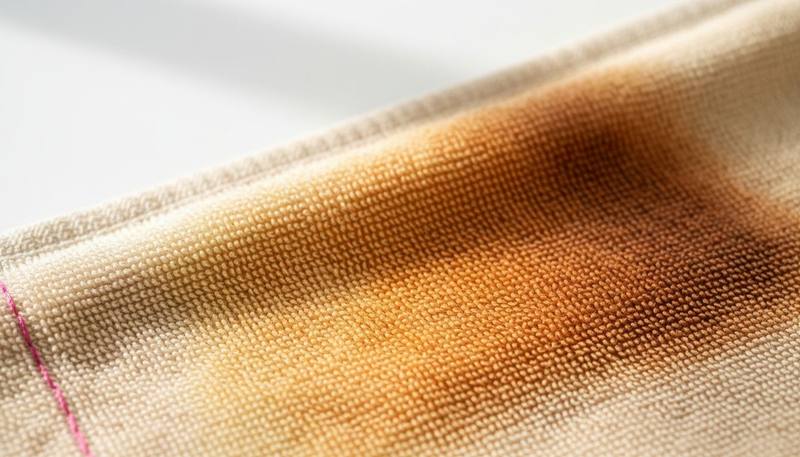
A stain always appears at the worst moment: before a meeting, at a wedding, before a court hearing. Your hand reaches for a tissue and you start rubbing.
Before you do that, one thing you need to know. A blazer is not a single piece of fabric. Under the surface cloth lies interlining, sensitive to moisture and heat far more than the wool itself. We'll explain why in a moment. A hasty DIY attempt can cause more damage than the stain itself.
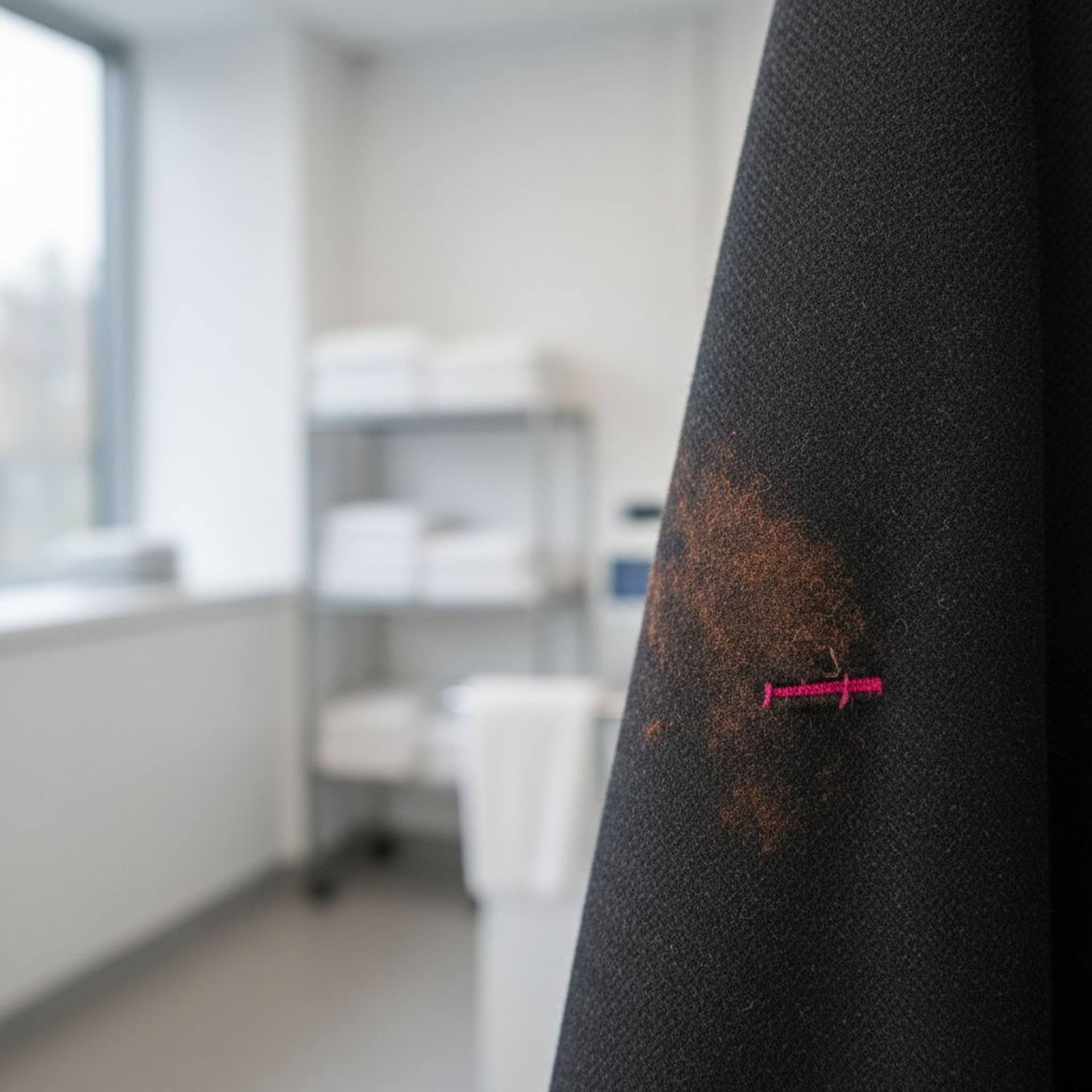
When a stain requires professional treatment
the mechanics of change in suit fibre
Under the wool surface cloth sits the blazer's front interlining. In cheaper suits, this is a heat-bonded interfacing, glued with heat. In expensive, bespoke suits, heat-binding is replaced by hand-stitching: horsehair backing.
Moisture and heat from a washing machine, dryer, or hot iron dissolve this glue. The result is separated interlining, wrinkled lapels, and bubbles on the front. There is no single critical temperature because it depends on the glue, but the outcome usually requires a tailor's visit, not another wash.
The care label says it directly: a circle means dry cleaning, and the letter P or F specifies the solvent (ISO 3758:2012).
Common suit stains and their risk level
Protein stain (blood, sweat, egg)
Blot with cold water, never hot. Take to a cleaner.
Hot water sets the stain instead of dissolving it.
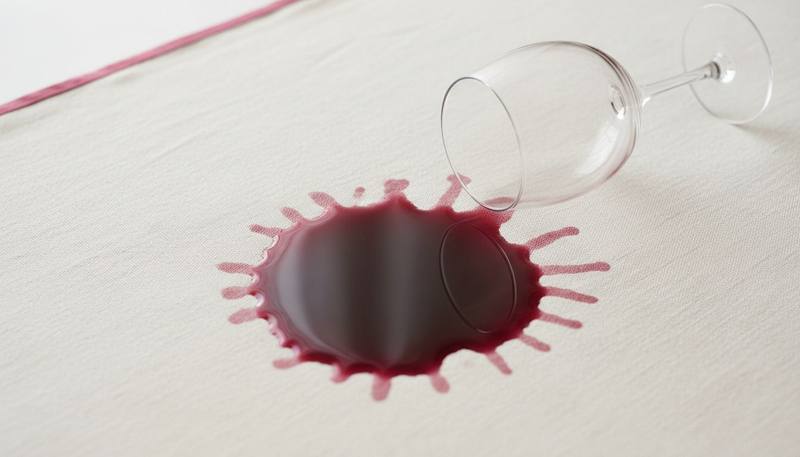
Tannin stain (coffee, tea, wine)
Blot from edge to centre, do not rub.
Poor drying leaves a ring mark.
Oil stain (grease, sauce, foundation)
Do not touch with water. Blot excess, take to cleaner.
Home solvent may damage the interlining glue.
Ink stain (ballpoint, fountain pen)
No alcohol or acetone, dry cleaner only.
Home solvent may damage the dye.
Wax stain (candle)
Scrape wax off when cold, do not use an iron.
Heat from an iron pushes wax deeper into the weave.
Deodorant, sweat under arms
No alkaline spot removers at home, take to specialist.
Wrong pH deepens the discolouration.
The type of stain is half the story. The other half is written by reflexes that look helpful at first but make damage worse.
Three mistakes that cost the most
Chlorine bleach on wool, in any concentration, breaks disulfide bonds in keratin. The result is yellowing and permanent fibre weakening. Hot water above 40°C on protein stains coagulates the protein and binds it to the fabric instead of dissolving it. Rubbing instead of blotting spreads the dirt and mechanically felts the wool where it touches.
Now for the good news. A few things you can safely do before the suit goes to the cleaner.
First aid for a stained blazer
- 1
Blot, do not rub
Use a clean, dry cloth to blot the stain from edge to centre. Rubbing spreads dirt and felts the wool.
- 2
Skip water and heat
No water on grease, no hot water on blood or sweat. You'll cause more damage than the stain itself.
- 3
Leave it alone
Do not press or dry the stained area. Leave the blazer at room temperature.
- 4
Remember the source
Note what caused the stain: grease, wine, sweat. It speeds up the method choice at the cleaner.
- 5
Take the whole set
Take the blazer with the trousers, not just the stained piece, to avoid a colour mismatch.
Dry cleaning versus water washing for suits
how they differ and what each method does
Dry cleaning is a bath in solvent, usually hydrocarbon or silicone, at room temperature, followed by drying in controlled conditions.
Wool is a protein fibre. In contact with water and agitation, it felts irreversibly. Solvent does not cause this effect, so it removes grease without the risk of fabric shrinkage.
Home dryer sheets only freshen scent and remove dust. They cannot replace a solvent bath, and dryer heat can damage the interlining glue just as much as regular washing.
Do it yourself or take to a cleaner
Do
- Blot a fresh stain with a clean cloth
- Note the stain source for the cleaner
- Take the whole set at once
- Leave the stain at room temperature
Don't
- Do not clean a stain of unknown origin yourself
- Do not risk a stain near the lapel where interlining sits
- Do not clean one piece when colour matching matters
- Do not try again after a ring from the first attempt

Now you know the theory. Practice can be less forgiving.
If you would rather not risk your favourite piece, leave it to the specialists at Gorące Żelazko laundry in Lublin.


Frequently asked questions about suit stains
Not worth it. Wool felts in contact with water and agitation, and moisture can damage the interlining glue. The circle symbol on the care label directly points to dry cleaning.
Blot with a clean, dry cloth from edge to centre, without rubbing. No water on grease and no hot water on blood or sweat.
87 / PLN, depending on how soiled it is and the fabric type.
Home dryer sheets remove only surface dust and scent. They do not replace a solvent bath, so grease stays behind.
About the author
Małgorzata Małecka
Owner of the Gorące Żelazko laundry
Małgorzata Małecka runs the Gorące Żelazko laundry in Lublin. Together with her team, she makes sure customers' clothes, shoes and fabrics come back clean and in the best possible condition.