Safe laundry chemical storage with children
Concrete rules that work, and a procedure in case of contact.

A colourful, transparent gel laundry capsule looks like a sweet or toy. A child aged 1-3 who is crawling, walking, and learning to climb on furniture is most at risk.
The most common parent mistake is confusing 'high up' with 'safely locked'. A shelf above the counter seems out of reach, but a child who has learned to climb on a chair gets there faster than you'd think.
Below are concrete, workable rules for storing laundry chemicals and a procedure if contact occurs despite prevention.
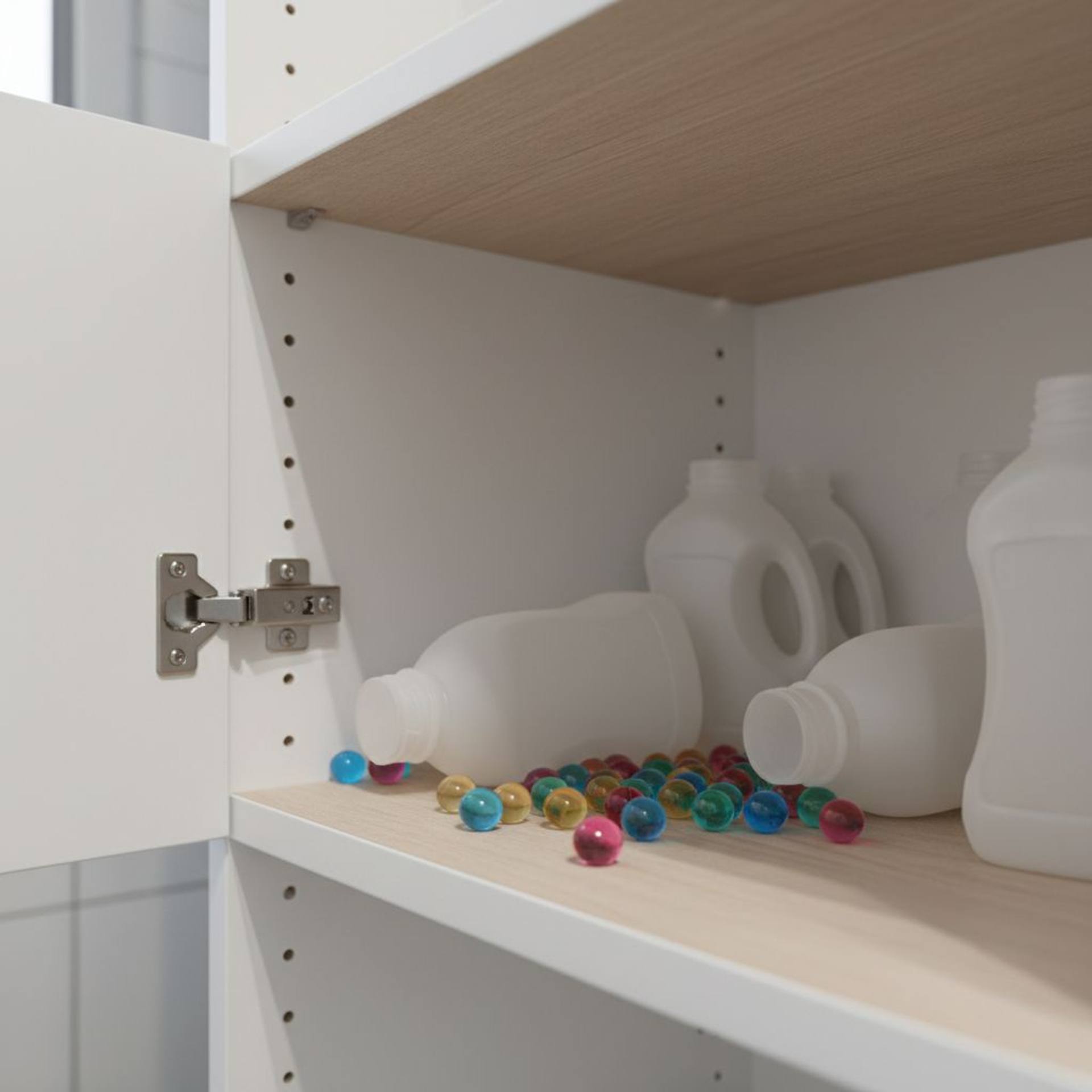
A gel capsule, powder, and liquid in a bottle are not the same product in different packaging, but three different risk levels. Gel capsules deserve a separate explanation because the hazard mechanism differs from regular liquid.
Why a capsule is more dangerous than a bottle
A gel capsule's coating is PVA film (polyvinyl alcohol), which dissolves on contact with moisture and body-temperature heat, around 36-37°C. A child biting a capsule releases concentrated liquid directly into the mouth. This differs from regular liquid in a bottle, where the dose a child gets in one mouthful is usually smaller and diluted.
What exactly is in these products
Sodium hypochlorite (chlorine bleach)
Caustic to skin on direct contact, toxic to aquatic organisms.
Sodium hydroxide (pre-wash agents)
Highly caustic to skin, one of the most aggressive substances in a typical home laundry.
Hydrogen peroxide (oxygen bleach)
Damages eyes from 8 per cent concentration, common in home stain removers.
Ammonia in household solution
Caustic to skin, harmful to water, present in stain removers and window cleaners.
How to safely store chemicals
so children can't access them
This isn't about renovating your whole house, just a few habits that really work and can be set up in one evening.
Storage rules
- Original packaging with a readable label, never poured into another bottleRequired
- A lockable cabinet with a latch, 1.2-1.5 m above the floorRequired
- Gel capsules in a sealed, original container closed immediately after useRequired
- Caustic products (chlorine, sodium hydroxide) separate from acidic and ammonia-based productsRequired
- Liquid detergent at 5-30°C, no freezingRecommended
- Chlorine bleach below 25°C, away from lightRecommended
- Powder in a dry room, up to 30°CRecommended
Never mix these products
Chlorine bleach mixed with ammonia creates chloramines, which irritate the airways and at high concentrations can cause lung swelling. Chlorine bleach mixed with acid, such as descaler or vinegar, releases gaseous chlorine, highly toxic and damaging to mucous membranes. The rule is simple: never mix chlorine products with any other preparation in the same container or on the same surface without rinsing with water between applications.
When a child has contact with chemicals
the first minutes decide what to do
Skin contact, eye contact, and ingestion are three different situations, each requiring a different first response. The sequence below helps you act immediately without scrambling for information in a panic.
- 1
Skin contact
Remove contaminated clothing and rinse skin with running water for at least 15 minutes.
- 2
Eye contact
Rinse the eye with water for at least 15 minutes, holding the eyelid open, then contact a doctor.
- 3
Ingestion
Do not induce vomiting, as renewed contact of the caustic substance with the oesophagus deepens damage. Rinse the mouth with water and immediately call the toxicology centre or 112.
A habit that works on its own
You don't have to frantically remember the entire list of rules from the previous paragraph. Just set up your storage system once according to the rules above, then stick to it consistently, even on evenings when you're tired and want to get it done quickly.

Now you know the theory. Practice can be less forgiving.
If you would rather not risk your favourite piece, leave it to the specialists at Gorące Żelazko laundry in Lublin.


Frequently asked questions
If skin contact occurs, remove contaminated clothing and rinse skin with running water for at least 15 minutes. If eye contact occurs, rinse the eyes with water for at least 15 minutes, holding the eyelid open. If ingestion occurs, do not induce vomiting, as renewed contact of the caustic substance with the oesophagus deepens damage. Instead, rinse the mouth with water and immediately call the toxicology centre or 112.
A capsule coating is PVA film, which dissolves in moisture and body-temperature heat, so biting releases concentrated liquid immediately. This is higher risk than regular liquid in a bottle, which is why capsules need a sealed, original container.
No. A child who has learned to climb on a chair or counter will eventually reach a high shelf. A lockable cabinet with a latch is needed, not just height.
Yes, provided that caustic and chlorine products stand separate from acidic and ammonia-based products, preferably on a separate shelf to prevent contact in case of a leak.
About the author
Małgorzata Małecka
Owner of the Gorące Żelazko laundry
Małgorzata Małecka runs the Gorące Żelazko laundry in Lublin. Together with her team, she makes sure customers' clothes, shoes and fabrics come back clean and in the best possible condition.