Bleach and vinegar: never mix them
Bleach and vinegar create toxic chlorine gas when mixed. Learn the chemistry, symptoms of poisoning, and what to do immediately if they are mixed.

Household bleach and white vinegar are two of the most popular cleaning solutions in homes, almost always used separately. The temptation to strengthen bleach with vinegar, however, keeps coming back.
This is not a theoretical warning from a label: mixing bleach with vinegar is a documented cause of inhalation poisoning in homes, most often when vinegar is poured into the washing machine drawer right after a cycle with bleach.
Find out why the reaction occurs and what to do if it has already happened.
Never mix bleach with vinegar
Sodium hypochlorite, the main component of household bleach, when in contact with acetic acid from vinegar, releases toxic chlorine gas. The warning EUH031 on the bleach label states that in contact with acids it releases toxic gases. This is exactly that situation. Risk also includes the detergent drawer of a washing machine right after a bleach cycle, soaking laundry in the same bowl, and cleaning a bathroom with both solutions one after another.
Why toxic gas forms
The chemistry of the mixture: how chlorine reacts with vinegar and why even weak acid is enough to produce chlorine gas
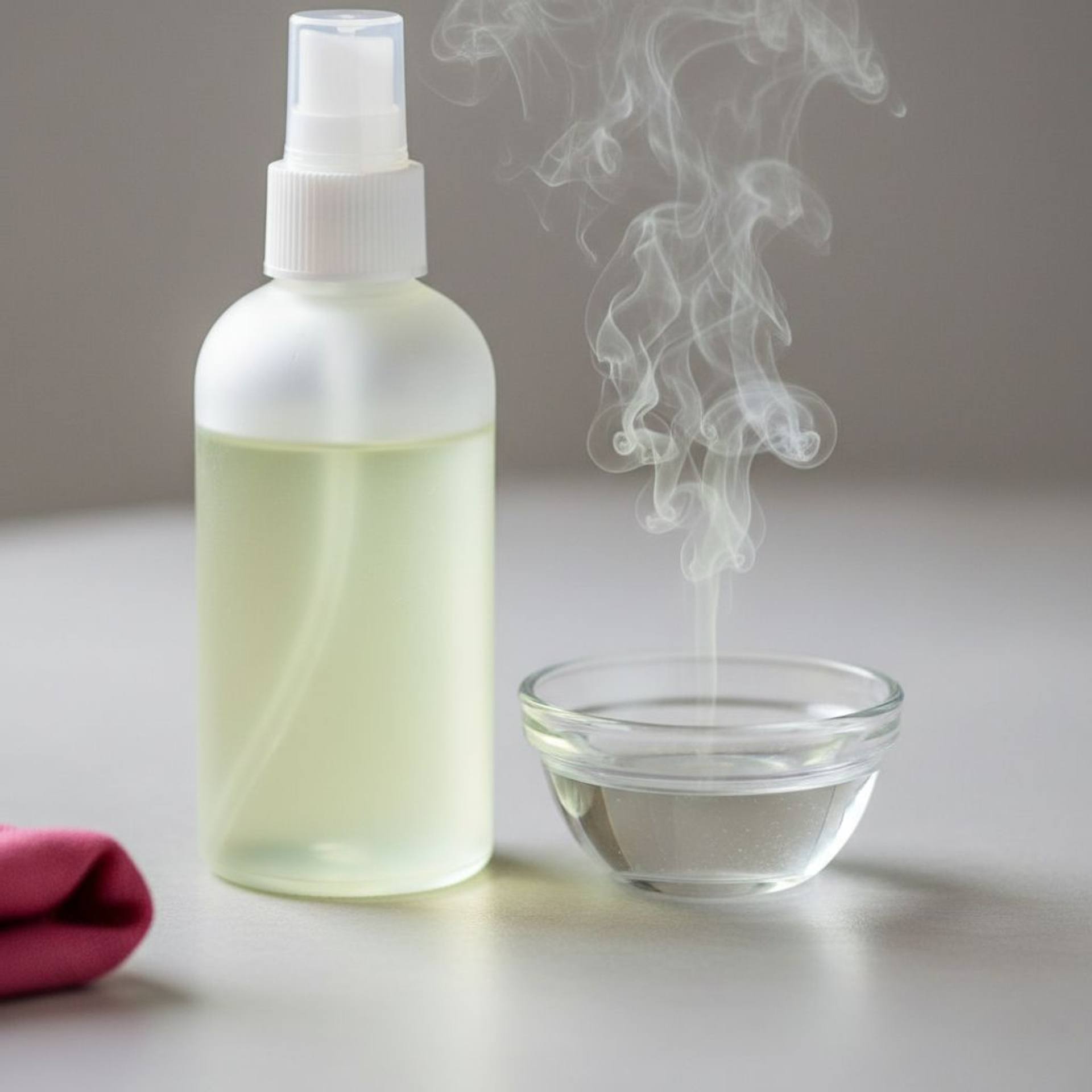
Sodium hypochlorite in water is in equilibrium between hypochlorite ion and hypochlorous acid. An acid, even as weak as acetic acid, shifts this equilibrium toward free chlorine gas.
The reaction with vinegar proceeds slower than with hydrochloric acid, which is why some people mistakenly consider it safe for bleach. In a closed bathroom without ventilation, even slow gas release is enough to irritate the respiratory tract. Household concentrations of both solutions are completely sufficient for this.
What a person exposed to fumes experiences
Immediate irritation
Tearing eyes, burning sensation, coughing even at low concentrations.
Shortness of breath with prolonged exposure
Chest tightness in a closed, unventilated room.
Delayed lung swelling
More serious symptoms may appear with a delay of several hours after exposure.
Smell is not a safety measure
The threshold of detectability is individual and does not protect against further exposure.
What to do when mixing occurs
Symptoms of chlorine gas poisoning: how to recognise them and when to seek medical help instead of waiting for it to pass
A sharp, pungent smell immediately after mixing both solutions indicates chlorine gas in the air. The order of action matters: first evacuation and ventilation, then observation of symptoms.
- 1
Leave the room
Go out into fresh air, do not lean over the place where the mixing occurred.
- 2
Ventilate without entering
Open windows and doors from the outside, return only when the smell is gone.
- 3
Observe for symptoms
Tearing and coughing usually subside in the air, shortness of breath is an alarm signal.
- 4
Consult a doctor or call emergency services
For irritation, visit a doctor, for shortness of breath or cough with sputum, call emergency services.
Symptoms may return after a few hours
In some people, more serious symptoms, shortness of breath or lung swelling, can occur with a delay of several hours after exposure. Do not downplay the subsiding of initial complaints. If shortness of breath returns, urgent medical help is needed, do not wait until morning.
The principle of separation is simple: never at the same time, always separately, with complete rinsing between uses. First bleach, then thorough rinsing, only then vinegar.
When using vinegar as a fabric softener, pour it into the fabric softener compartment, never into the one where bleach was just used minutes earlier. The reaction also reduces the effectiveness of the bleach itself, as some chlorine escapes as gas.
Bleach and vinegar: do this, not that
Do
- Use bleach and vinegar separately, with rinsing between uses.
- Work with an open window or ventilation.
- Store both solutions in labelled bottles, separately.
Don't
- Do not keep bleach and vinegar close to each other or reach for them at the same time when cleaning.
- Do not assume that the weak smell of vinegar means there is no reaction with chlorine.
- Do not ignore the EUH031 warning on the bleach label, it applies to exactly this combination.
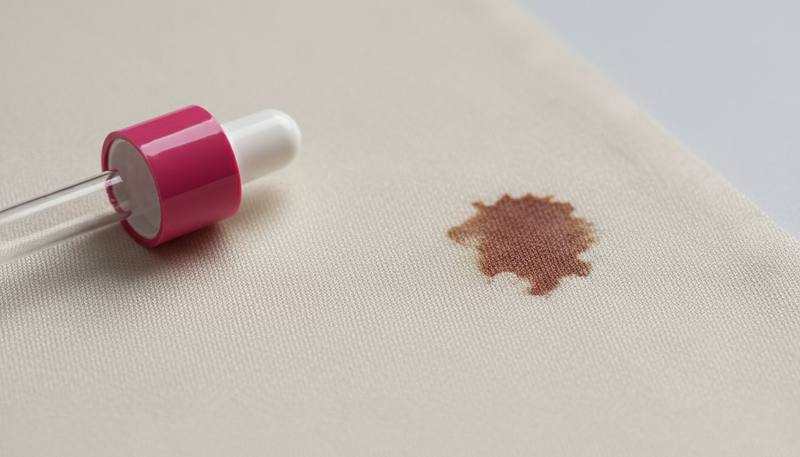
Beyond the health risk, contact of fabric with an undiluted mixture of bleach and vinegar can cause discoloration or fibre weakening, especially with cotton.
If a stain or chlorine smell does not fade after home washing, further experiments usually cause more damage than they repair. This is the moment to have the item evaluated by a specialist.

Now you know the theory. Practice can be less forgiving.
If you would rather not risk your favourite piece, leave it to the specialists at Gorące Żelazko laundry in Lublin.


Frequently asked questions about bleach and vinegar
An acid, even as weak as acetic acid from vinegar, shifts the equilibrium of sodium hypochlorite toward gaseous chlorine, which is confirmed by the EUH031 warning on the bleach label. In practice, the reaction proceeds in two stages: first hypochlorous acid is formed, and then when in contact with chloride ions it releases gaseous chlorine. The resulting gas has an acute inhalation toxicity classification, so real risk appears even at household concentrations of both solutions.
Leave the room and ventilate it from outside. In case of shortness of breath or cough, call for medical help.
Not in the same cycle or compartment, only separately, with complete rinsing between uses. Pouring vinegar into the drawer right after a bleach cycle is the most common way to accidentally mix both substances at home. Thorough rinsing between uses removes enough bleach residue that vinegar has nothing to react with.
It depends on the material and damage, which is why it is worth having the item assessed by a specialist. Cotton and other cellulose fibres are more prone to structural weakening after direct contact with a concentrated mixture than synthetic fabrics. Home attempts to clean a damaged area usually cause more damage than repair.
About the author
Małgorzata Małecka
Owner of the Gorące Żelazko laundry
Małgorzata Małecka runs the Gorące Żelazko laundry in Lublin. Together with her team, she makes sure customers' clothes, shoes and fabrics come back clean and in the best possible condition.