What never to mix: chlorine and ammonia
How to recognise a dangerous combination and what to do if exposed

A mop bucket, some chlorine bleach for grout, then a window cleaner added to the same water moments later. Or one after the other, without rinsing the bucket. A sharp, biting smell soon follows. Your eyes water. Your throat burns.
The bleach bottle has the warning EUH206: Do not mix with other products. Can release dangerous gases. It's easy to miss because it sounds like a label formula, not a real warning. But it is real. This is one of the most common household causes of acute inhalation poisoning during cleaning.
Never mix chlorine bleach with ammonia or any product containing it, such as window cleaners. Also never mix bleach with urine in a closed, poorly ventilated bathroom. Urea breaks down into ammonia.
What happens when you mix them
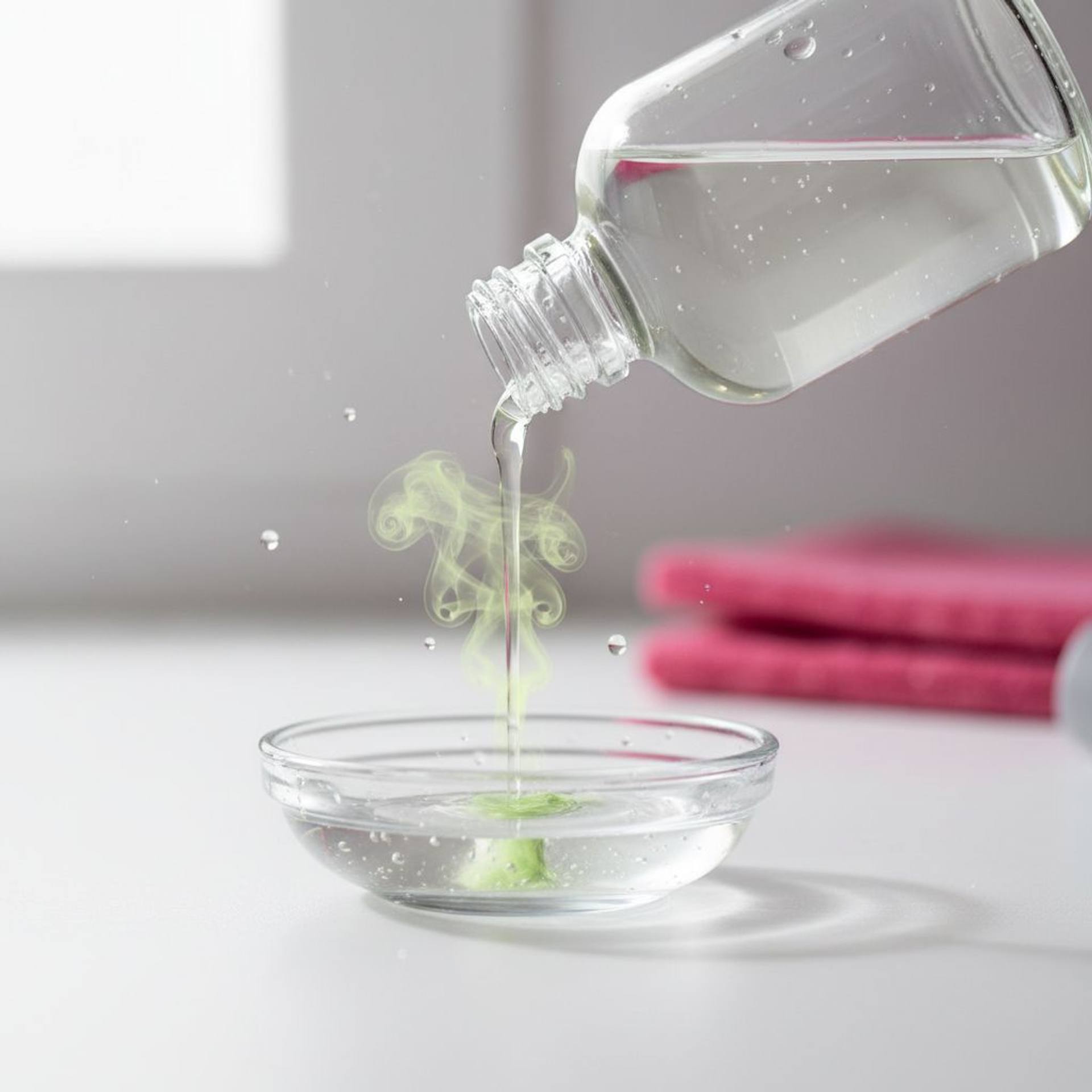
Chlorine from sodium hypochlorite (CAS 7681-52-9) reacts with ammonia (CAS 1336-21-6) to form compounds called chloramines. At typical household concentrations, the main product is monochloramine (CAS 10599-90-3), a gas that irritates the respiratory tract even at low concentrations.
If bleach is in excess, the reaction goes further and dichloramine (CAS 3400-09-7) forms. With even more excess, trichloramine (CAS 10025-85-1) appears, which is more irritating and unstable. It's exactly the smell you know from a poorly ventilated indoor pool, where chlorine in the water reacts with nitrogen compounds.
Eyes and nose
Watering, stinging, and irritation of mucous membranes even at low vapour concentration.
Throat and lungs
Coughing, shortness of breath, feeling of tightness in the chest.
High concentration in a closed space
Risk of lung oedema, with symptoms that may appear with a delay of several to dozens of hours.
Higher-risk groups
People with asthma and COPD, children, older people, and pregnant women react more strongly than a healthy person.
The problem doesn't end with consciously mixing two bottles with similar names. Ammonia often hides under the name ammonium hydroxide or ammonia solution, not always spelled out as ammonia itself.
Urine too contains its precursor: urea, which breaks down into ammonia when wet and exposed to bacteria. Soaking fabric heavily soiled with urine in bleach in a small, poorly ventilated bathroom is a real risk, not theoretical.
chlorine (sodium hypochlorite)
chlorine
often ammonia
sometimes ammonia
ammonia, natural source
If you smell a sharp odour after mixing products, quick and simple action matters more than diagnosis. The steps below are in order: from first reaction to deciding whether to call for help.
- 1
Go outside for fresh air
Leave the room immediately and close the door behind you. Do not go back inside without ventilation.
- 2
Ventilate the space
Open windows and doors wide before you spend more time inside.
- 3
Rinse irritated areas
If eyes or skin feel irritated, rinse with clean running water for 15 to 20 minutes.
- 4
Call for help with serious symptoms
If you have shortness of breath, chest pain, or a lot of vapour, call 112. Also consider contacting your local poison control centre.
Chlorine, vapours, and clothing colour
Chlorine from bleach oxidises fabric dyes and leaves light, irreversible stains in home washing. Clothing exposed to vapours or spilled bleach may also have weakened fibre exactly where contact happened, not just visible discolouration.
Delicate fabrics, silk, and wool react to chlorine more strongly and quickly than cotton or linen.
Rewashing at home a bleach stain with another stain remover often makes the discolouration worse instead of better. Don't dry or iron clothes with a bleach stain before assessing it. High heat locks fibre damage in place.

Now you know the theory. Practice can be less forgiving.
If you would rather not risk your favourite piece, leave it to the specialists at Gorące Żelazko laundry in Lublin.


Frequently asked questions
There is no single safe number of minutes. What matters is rinsing the container thoroughly and ventilating the space well, not just the passage of time.
No. Ventilation reduces the risk but doesn't eliminate it. The rule is: never mix, never mix carefully.
Yes. Urea in urine breaks down into ammonia, so soaking fabric soiled with urine in bleach in a small bathroom is a real risk.
Air the clothing separately before washing, don't add it to other things right away. With a stubborn stain or weakened fibre, professional stain removal may save the fabric.
About the author
Małgorzata Małecka
Owner of the Gorące Żelazko laundry
Małgorzata Małecka runs the Gorące Żelazko laundry in Lublin. Together with her team, she makes sure customers' clothes, shoes and fabrics come back clean and in the best possible condition.