Shoe polish stains: step-by-step removal
Wax, dye and solvent: three different substances in one stain

A shoe polish stain on clothing looks like game over: goodbye to this piece. Relax, it's not one stain, it's three in one.
Shoe polish is a mix of wax (beeswax, carnauba, paraffin, roughly 15-30% of the formula), solvent (lacquer thinner or light naphtha) and dye. Each component behaves differently on fabric, so one universal method won't work here.
Good news: since you know what you're dealing with, you also know how to break it down into simple steps.
Before you do anything: heat is your enemy. Wax softens at just 60-85°C, so hot water and an iron will set the stain deeper instead of removing it.
The solvent from the polish soaks into the fabric and spreads the wax and dye to the sides before it can evaporate. That's where the wide halo around a fresh stain comes from.
The dye, meanwhile, bonds to the fibre almost like permanent dyeing: the longer you wait, the harder it is to lift.
Two mistakes that set the stain permanently
Washing immediately in hot water melts the wax and pushes it deeper into the fabric. Ironing the stain (to smooth it) is even worse: an iron on a cotton setting (180-200°C) sets the dye more effectively than any later treatment. Your first reaction should be different: scrape off excess polish with a blunt tool (like a spoon) and pre-rinse with cold water only.
Removing the stain step by step
wax, dye and solvent separately
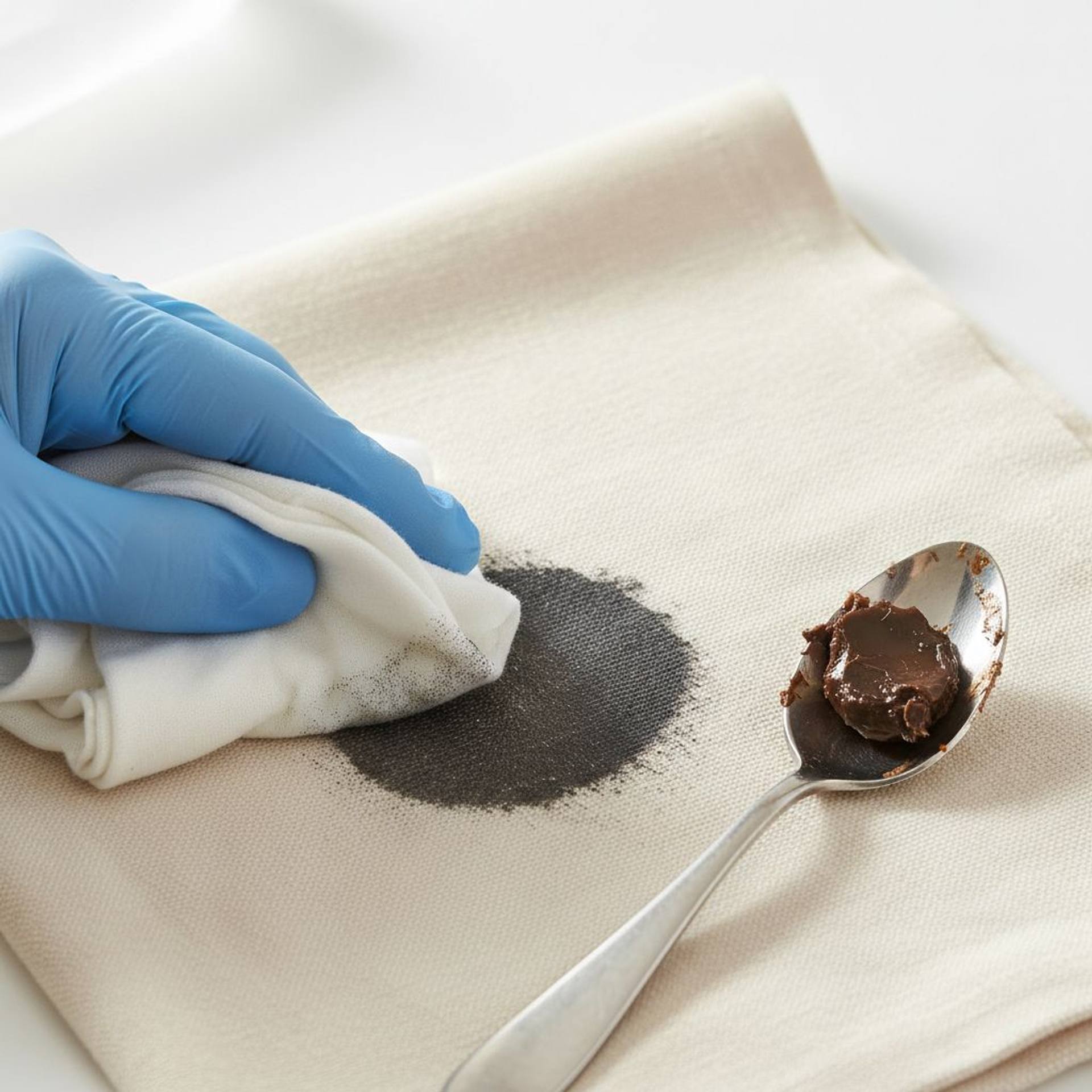
The method below works on fresh stains and resistant fabrics: cotton, linen, heavier polyester. It mainly tackles the wax component and partially the solvent. The dye may remain as faint but visible discoloration, more on that in the section below.
5 steps to remove the stain
- 1
Scrape off excess polish
On cold, with a blunt tool (like a spoon), moving from the stain's edge to the center, without smearing.
- 2
Test on a hidden area
Apply a drop of solvent (such as isopropyl alcohol) to an inner seam, wait a few minutes, and check the colour and texture.
- 3
Blot the stain with solvent
Gently, from edges to center, wearing nitrile gloves and with a window open. Mainly removes wax.
- 4
Wash at low temperature
Cold or lukewarm water, degreasing detergent. Hot water will undo all your progress.
- 5
Tackle any remaining dye
Use an enzymatic dye stain remover. If the discoloration won't budge, further DIY attempts usually just set it: take your garment to a professional cleaner.
Home method limits
when shoe polish needs a specialist
Not every fabric tolerates solvent. Cotton and linen are resistant to most organic solvents with brief contact, so the method from the previous section makes sense here.
Acetate and triacetate dissolve in acetone almost instantly: professional cleaning only. Silk and wool are sensitive mainly to heat, moisture, and friction, not solvent alone, so cold water and zero scrubbing. Upholstery leather and suede are another league entirely: wax soaks into the pores and usually needs professional leather care, not regular washing.
With a shoe polish stain
Do
- Test solvent on a hidden area
- Start with cold water
- Blot from the stain's edges to the center
- Nitrile gloves and an open window
Don't
- Acetone or nail polish remover on polyester, acrylic, acetate or triacetate
- Ironing the stain before removing it
- Rubbing wool and silk
- Hot water to start
When to try it yourself, and when to take it to the laundry
Resistant fabric (cotton, linen, heavy polyester) and a fresh stain? Try the method from the section above, you have a real chance of success. Delicate fabric (wool, silk, acetate, suede, upholstery) or a stain that won't budge after washing? Don't risk another DIY attempt, take the garment to the laundry.

Now you know the theory. Practice can be less forgiving.
If you would rather not risk your favourite piece, leave it to the specialists at Gorące Żelazko laundry in Lublin.


Frequently asked questions about shoe polish stains
It depends on the fabric and how fresh the stain is. Usually yes on cotton and linen, especially if you act quickly. Dye on light fabrics can be tricky and sometimes leaves faint discoloration.
For testing and blotting, isopropyl alcohol or extraction naphtha work well. After removing the wax, wash the garment with degreasing detergent at low temperature.
No. Hot water melts the wax in the stain and sets the dye. Always start with cold or lukewarm water.
Don't iron that spot or try stronger DIY methods, as they usually just set the stain. Take your garment to a professional cleaner.
The price depends on the fabric, the extent of the stain, and whether it also got on the shoes. The laundry will price it individually after inspecting the garment.
About the author
Małgorzata Małecka
Owner of the Gorące Żelazko laundry
Małgorzata Małecka runs the Gorące Żelazko laundry in Lublin. Together with her team, she makes sure customers' clothes, shoes and fabrics come back clean and in the best possible condition.