Home Stain Removal Kit: What You Really Need to Have
Eight tested products that work on grease, protein, and dyes before a stain sets permanently

Coffee drips on your blouse. A child smears egg on a sleeve. Grass stains a knee after a match on the lawn. A stain appears in seconds, and you have two options: panic or helpless waiting until wash day.
The biggest mistake is not a lack of will, but a lack of knowledge. The same product that removes grease in a flash can set a protein stain permanently if you reach for it without thinking.
This is not another random list from a forum. It is a system: what to keep on hand before a stain soaks deeper into the fabric.
Three Types of Stains
protein, grease, and dye-based: which type is which
Blood, milk, egg, or sweat leave a protein stain: protein coagulates in heat, so only cold water works, below 30°C.
Grease stains react differently (oil, lubricant, cosmetics, butter): these need a surfactant and warm water, 40-50°C.
Tannin and dye stains are the third case. Coffee, tea, wine, grass, or ballpoint pen penetrate fabric through tannins and dyes, so speed matters most.
One reflex, hot water, and vigorous rubbing fixes one category while setting another.
Before You Reach for a Product
Do
- Cold water below 30°C for blood, milk, and sweat
- Warm water 40-50°C for grease, oil, and cosmetics
- Hydrogen peroxide 3% or vinegar 1:1 for coffee, tea, and wine, always after testing on hidden area
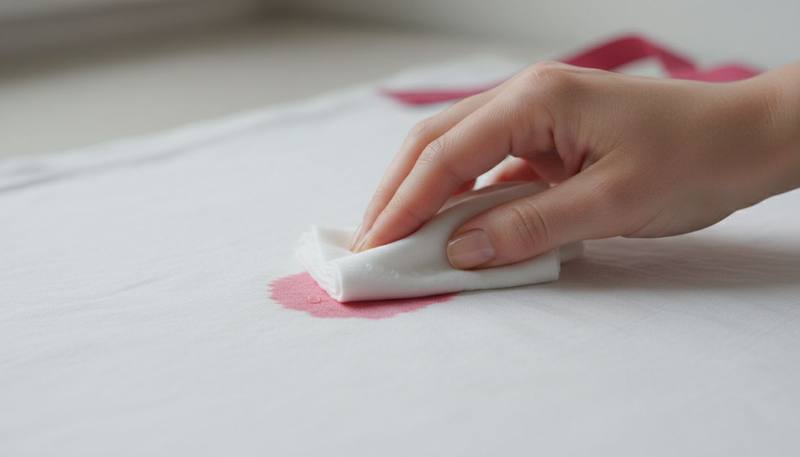
- Blot with white cloth from outside the stain toward center
Don't
- Hot water on protein stains, it sets them permanently
- Rubbing the stain, it pushes it deeper into fibers
- Chlorine bleach on colors or wool, it damages fibers and removes color
- Dryer before confirming the stain is completely gone
Eight Things for Your Kit
tested products, zero impulse buys
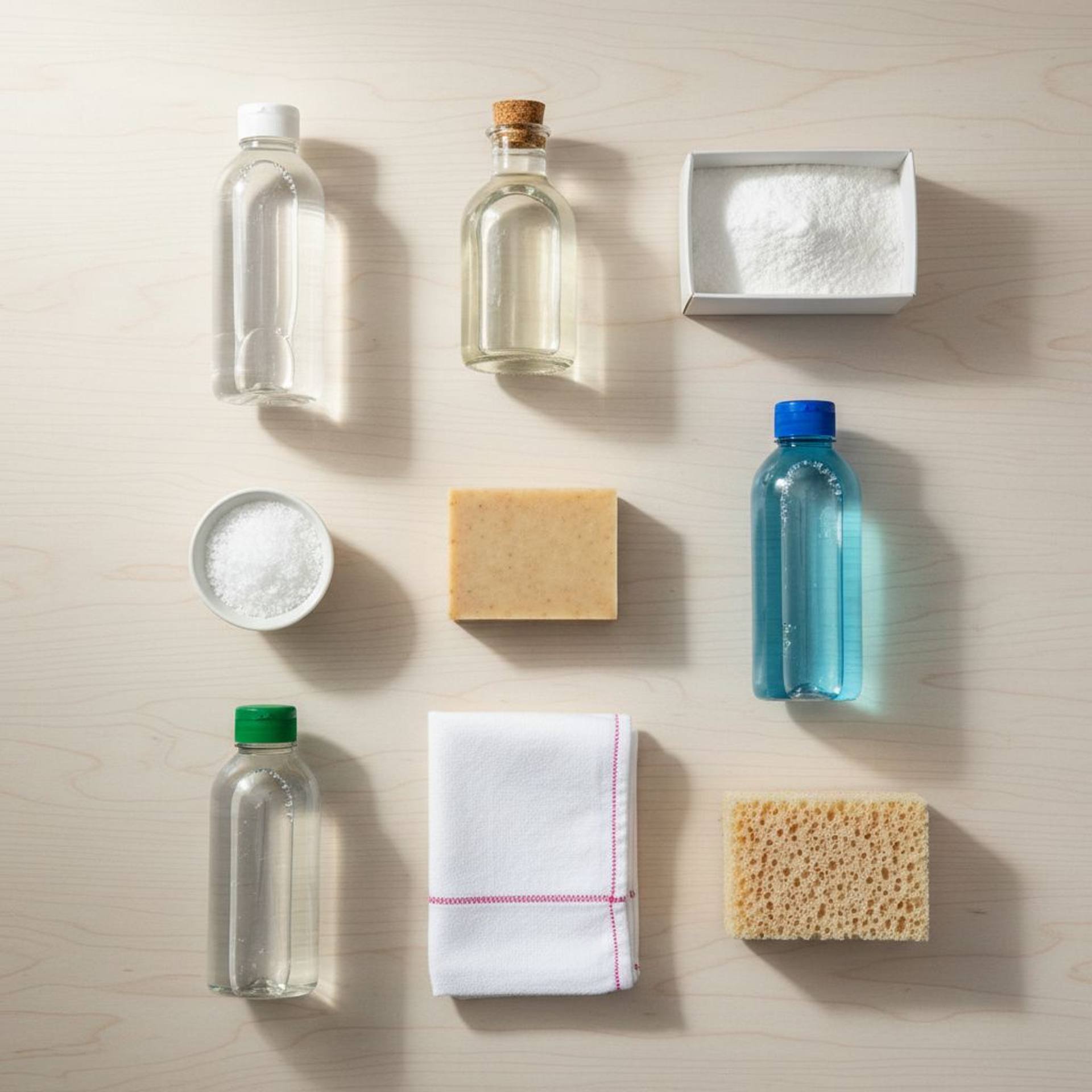
The selection criteria are simple: ingredients with documented, multi-purpose use, not random methods from forums. The eight items below cover all three stain categories from the section above.
Eight Things for Your Kit
Hydrogen Peroxide
White Vinegar
Baking Soda
Table Salt
Gall Soap
Enzymatic Laundry Detergent
Isopropyl Alcohol
White Cotton Cloth and Sponge
Never Mix These
Never mix vinegar or hydrogen peroxide with chlorine bleach: they release irritating fumes. When working with concentrated vinegar and alcohol, wear nitrile gloves. Isopropyl alcohol is flammable, open a window.
Where to Keep It
Keep the entire kit in one box or drawer so you can access it within seconds of a stain appearing. Original, labeled containers, out of reach of children.
A home kit works on fresh, surface-level stains on durable fabrics: cotton and polyester. On silk, wool, or linen with finish, with old and set stains, or on dry-clean-only materials, it is better to stop.
A professional laundry has industrial solvents, dry-cleaning machines, and knowledge of how specific fibers react with specific stains. A home kit cannot replace that.

Now you know the theory. Practice can be less forgiving.
If you would rather not risk your favourite piece, leave it to the specialists at Gorące Żelazko laundry in Lublin.


Frequently asked questions
Yes, on fresh and surface stains on durable fabrics like cotton or polyester. For delicate fabrics or old stains, it is better to see a professional laundry.
Oxygen bleach is safe on colors after testing on a hidden area. Chlorine bleach damages fibers and removes color from fabrics and wool. Never mix it with vinegar or hydrogen peroxide.
The faster the better, before a stain soaks deeper into fibers. Blot with white cloth from outside to center, do not rub.
On old and set stains, when home treatments have nothing left to grip. On delicate fabrics like silk or wool, where aggressive stain removers can damage fibers instead of help. Similarly on dry-clean-only materials, where water methods are ruled out. And if a stain went into the dryer before you removed it, heat may have set it permanently, and then only a professional laundry remains.
About the author
Małgorzata Małecka
Owner of the Gorące Żelazko laundry
Małgorzata Małecka runs the Gorące Żelazko laundry in Lublin. Together with her team, she makes sure customers' clothes, shoes and fabrics come back clean and in the best possible condition.