School Uniform Stains: How to Remove Them
Blood, grass, ink, or grease: each stain on a school uniform requires a different approach.

He comes home from school with a fresh stain on his shirt, and tomorrow that same uniform has to be worn again. First thought: will this come out, or will I set it further by rubbing something on blindly?
Take it easy, this can be solved. Below you have a specific action plan step by step, not a wall of theory. Because a uniform worn several days in a row collects stain after stain, and an unremoved stain sets more firmly before it gets to wash.
What stain is it, before you start
Protein, fat, and dye classification determines the method and washing temperature.
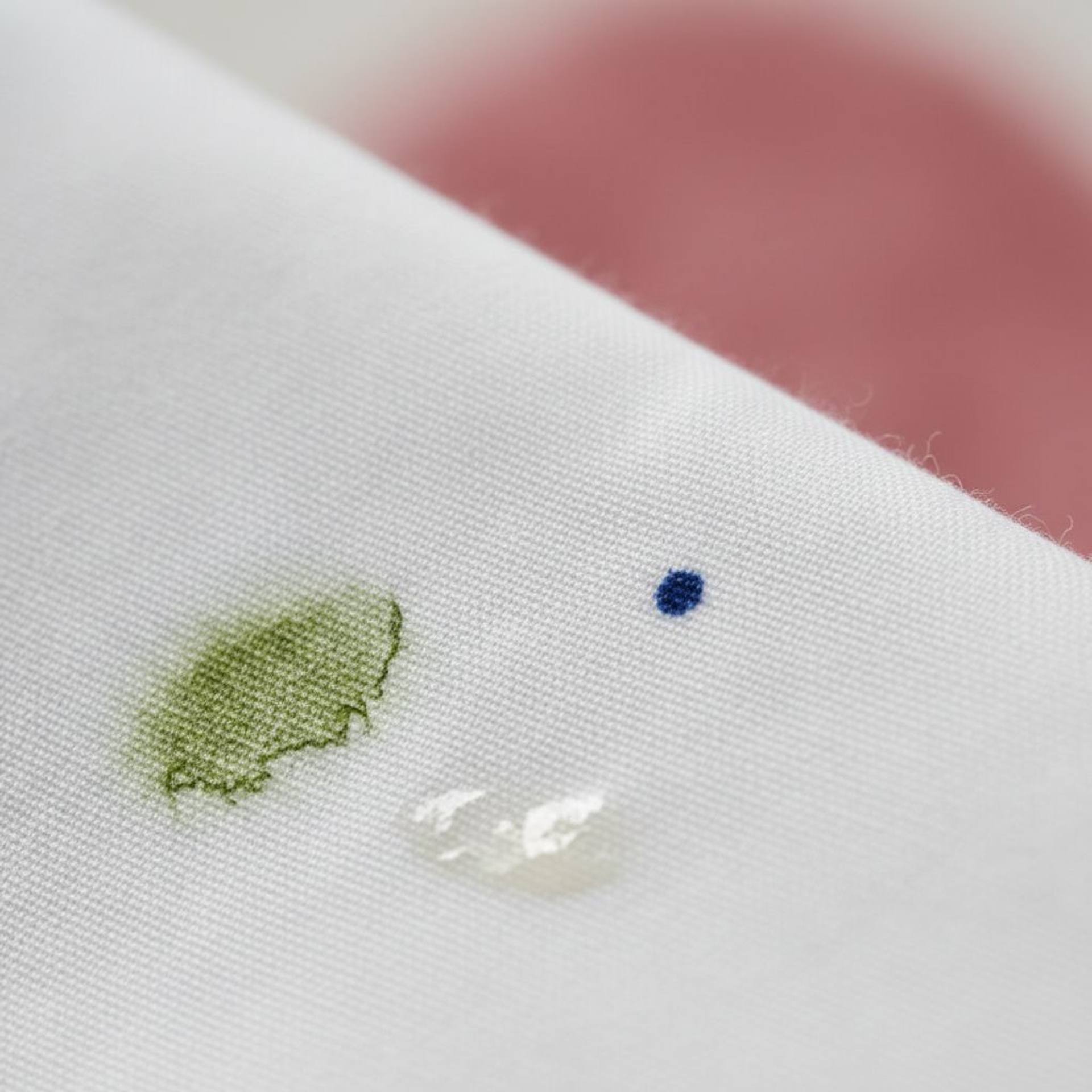
Before you scrub anything, figure out what you're dealing with. School uniform stains fall into four groups: protein (blood, sweat, food), fat (sauce and grease from the cafeteria), plant-based dyes (grass), and pigments (ink, marker).
Each reacts differently to water and temperature, so there's no universal remedy. What matters is the order of action, not the product itself. The faster you start, the greater the chance of complete success: a fresh stain usually disappears after one treatment.
Blood and sweat
Protein stain, cold water only.
Hot water sets protein permanently; never use it on this stain.
Grass
Plant-based dye, chlorophyll.
On dyed fabric, test the color fastness on a hidden area first.
Pen or ballpoint ink
Pigment stain, oil-based or water-based.
Permanent marker usually doesn't come off in home conditions.
Grease from the cafeteria
Fat stain, dishwashing liquid.
Chewing gum
Removed mechanically after freezing.
Before you throw it in the washer
The most common mistake is washing a soiled uniform in a standard 40-60°C cycle without removing the stain first: this sets protein and dye stains instead of removing them. The second mistake is drying in a dryer or ironing before fully removing the stain, because heat permanently sets most organic stains.
First aid step by step
Blood, grass, ink, and grease require different water and different products: the order determines effectiveness.
One rule applies to every stain: never rub in circular motions. Press from the edges to the center; otherwise, friction spreads the soil onto clean fibers instead of removing it.
Below are five situations in the order they usually appear in the wash: blood and sweat, grass and ink, fat and chewing gum. Green grass dye is chlorophyll, which penetrates deep into fibers, so ordinary washing won't remove it.
- 1
Blood and sweat
Rinse with cold water 20-30°C immediately after staining, then soak in cool, lightly salted water for 30 minutes. Only then wash normally.
- 2
Grass
Saturate the stain with isopropyl alcohol around 70%. On colored fabric, test the dye fastness on a hidden area first.
- 3
Ink
Oil-based pen ink removes with rubbing alcohol or isopropyl alcohol. Water-based marker ink comes off in cold water with regular detergent.
- 4
Grease from the cafeteria
Rub dishwashing liquid into the stain, wait a bit, then wash at 40-60°C.
- 5
Chewing gum
Put the garment in the freezer for 30-60 minutes (around -18°C) or apply an ice pack. Frozen gum comes off mechanically without smearing.
Don't forget the rinse
Isopropyl alcohol can irritate a child's skin if the fabric isn't thoroughly rinsed. Always rinse the uniform well before the child puts it back on.
This mix is dangerous
Never mix chlorine bleach with ammonia-containing products. The reaction releases toxic chloramine fumes, dangerous especially for children with asthma. Chlorine bleach also damages wool keratin, so don't use it on jackets with any wool content.
No method, whether homemade or professional, guarantees stain removal if it was previously set by high dryer temperature. This is an honest limitation, not an excuse.
There are signals when it's better not to risk it: permanent marker, a stain previously set by washing, a large grease stain on wool, or symbol P or F on the label. In these cases, home chemistry often damages the fabric more than saves it.
In short
Do
- Act right away, preferably within the first few hours after staining.
- Remove protein stains exclusively with cold water.
- Press the stain from the edges to the center, never rub in circles.
- Rinse the fabric thoroughly after each home treatment.
- Check the label symbol before washing a jacket with any wool content yourself.
Don't
- Don't dry or iron the uniform before fully removing the stain.
- Don't mix chlorine bleach with other cleaning products.
- Don't rub the stain in circular motions.
- Don't wash a soiled uniform in a standard cycle without first removing the stain.

Now you know the theory. Practice can be less forgiving.
If you would rather not risk your favourite piece, leave it to the specialists at Gorące Żelazko laundry in Lublin.


Frequently asked questions
It depends on the stain type. Protein stains (blood, sweat) wash at 20-30°C, fatty ones at 40-60°C. Match the temperature to the stain, not to the whole load.
Yes, pre-removal always comes first. A standard 40-60°C cycle without this step sets protein and dye stains.
It increases the chances with greasy and pigment stains, but no method guarantees 100% success when the stain was previously set by a dryer.
With permanent marker, a previously set stain, a large grease stain on wool, or symbol P or F on the label. Then home chemistry often damages the fabric more than helps.
About the author
Małgorzata Małecka
Owner of the Gorące Żelazko laundry
Małgorzata Małecka runs the Gorące Żelazko laundry in Lublin. Together with her team, she makes sure customers' clothes, shoes and fabrics come back clean and in the best possible condition.