Oxalic acid: the most effective home rust remover and its risks
Rust is iron oxide embedded in the fibre. Oxalic acid dissolves it through chelation, but only if you use it correctly.

Lemon juice, vinegar, salt. Everything tried, yet rust stains remain visible after washing. This is a common scenario because domestic food acids are too weak for this type of soiling.
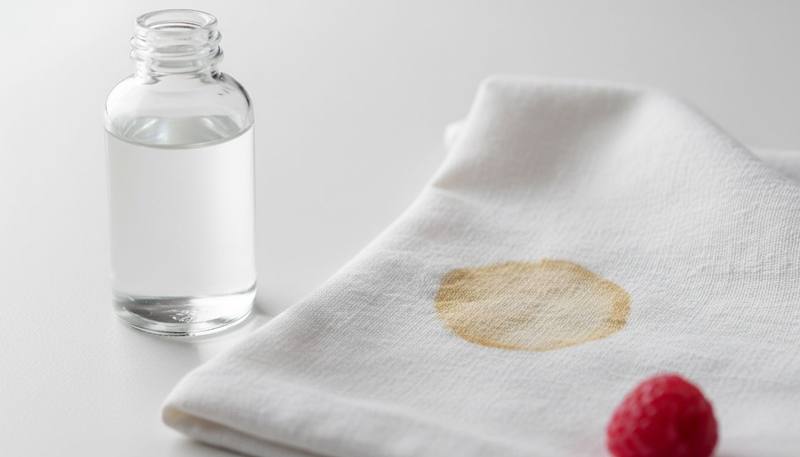
Common sources include rusty drying rack bars, a paperclip left in a pocket, corroded rivets in jeans, or water from rusty pipes. Rust is not an organic stain: it is iron(III) oxide (Fe2O3) and iron(III) hydroxide (FeO(OH)) embedded deep in the fibre structure.
Oxalic acid works through a completely different chemical mechanism than what you've already tried. Below, exactly how it works, and where its effectiveness ends.
The chemistry of oxalic acid
How it dissolves iron oxide embedded in fabric
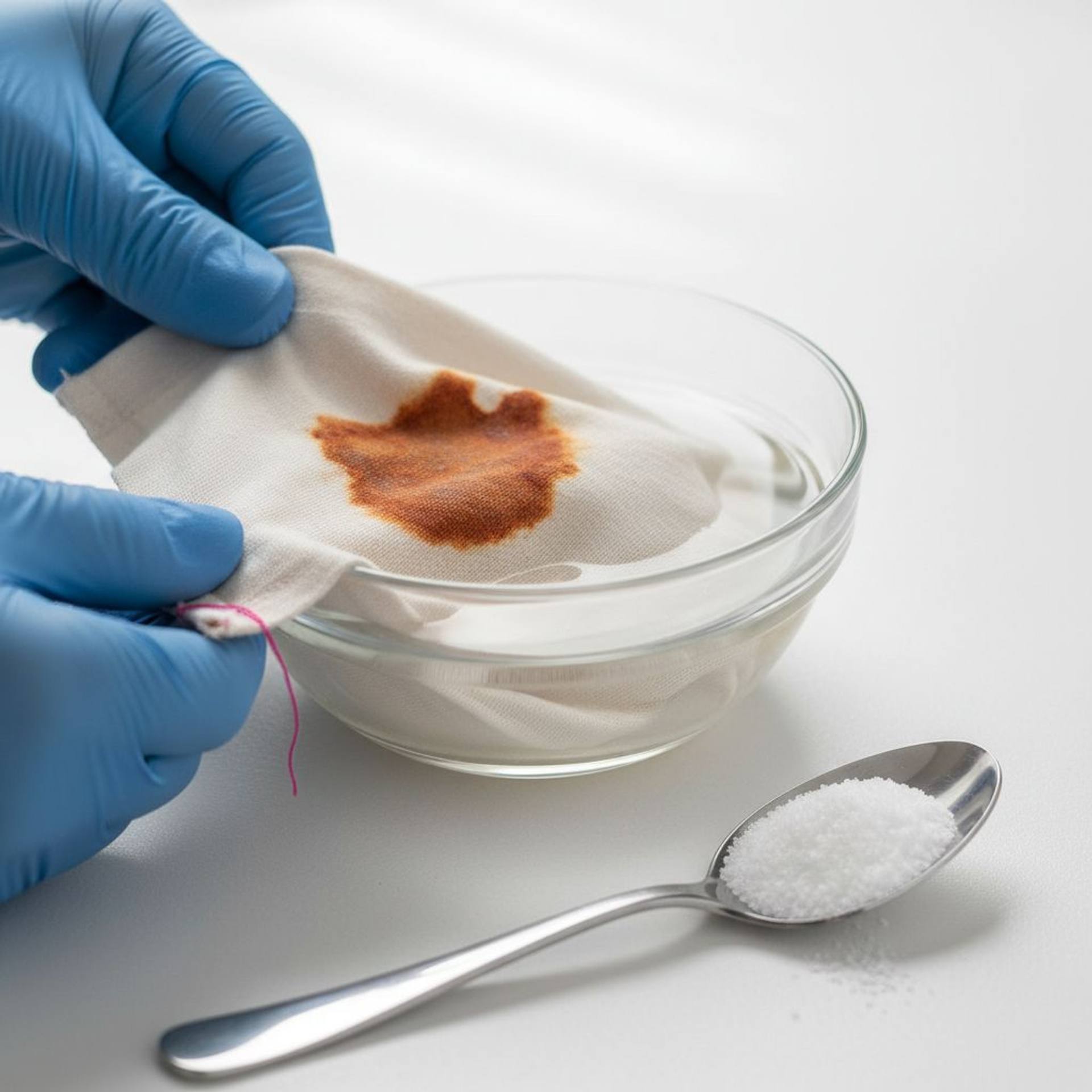
Oxalic acid, H2C2O4, is used at home as a dihydrate (CAS 6153-56-6, anhydrous form CAS 144-62-7), sold under the name 'oxalic salt' or 'rust remover'.
It works in two ways:
- As an acid it lowers the pH of the environment and dissolves some iron compounds.
- As a chelating ligand it forms soluble oxalate complexes with iron ions, and some iron(III) is reduced to iron(II) in the process, which easily rinses out with water.
This is a completely different mechanism from ordinary stain removers: proteolytic or lipolytic enzymes break down protein and fat stains, but do not work on mineral stains, which is why a typical rust remover is not sufficient.
Oxalic acid (dihydrate)
CAS 6153-56-6 (anhydrous form: 144-62-7)Crystals of dicarboxylic acid used at home to remove rust stains from cellulose fabrics.
- removing rust stains from cellulose fabrics (cotton, linen)
- irritating to skin and eyes
- never mix with chlorine bleach
- store in original packaging out of reach of children
Theory clear, now concrete step-by-step instructions.
The recipe below shows exact proportions, water temperature, and soaking time. Follow the order of steps, because skipping rinsing or neutralization increases the risk of skin irritation and fabric damage.
What matters is concentration, water temperature, and contact time, not guesswork.
Oxalic acid solution for rust stains
Ingredients
- 1 tablespoon oxalic acid crystals (working solution approx. 5 to 10 percent by weight)
- 1 cup warm water (40 to 60 degrees Celsius)
Instructions
- 1
Dissolve crystals in warm water (40 to 60 degrees) in a plastic or glass container.
- 2
Test the solution on an inconspicuous area of fabric.
- 3
Soak the stained area for 15 to 30 minutes, no longer than recommended by the product manufacturer.
- 4
Rinse thoroughly with clean water.
- 5
Neutralize with baking soda solution (sodium bicarbonate) or additional thorough rinsing, then proceed to normal washing.
Concentrated oxalic acid is irritating to skin and mucous membranes. Contact with eyes requires immediate, thorough rinsing with clean water and medical consultation.
The crystalline form can be mistaken for sugar or table salt, so store it only in an original, labelled container out of reach of children.
People prone to kidney stones should avoid direct contact and inhalation of crystal dust: oxalates are a major component of kidney stones.
Never mix oxalic acid with sodium hypochlorite (chlorine bleach). The reaction releases toxic gaseous chlorine. This also applies to the sequence of treatments on the same fabric: always rinse thoroughly between different products, never use them simultaneously.
- Nitrile glovesRequired
- Safety glasses or gogglesRequired
- Well-ventilated spaceRequired
- Plastic or glass container, never metalRequired
- Protective apronRecommended
- Storage in original, labelled packaging out of reach of childrenRecommended
Limits of DIY methods: when oxalic acid isn't enough
Old, deeply embedded rust and delicate fabrics are a sign to take it to the professionals
Stick with the DIY method when the fabric is cotton or linen, the stain is fresh and surface-level, and the material is not delicately dyed.
Take it to the laundry when rust is old and deeply embedded, and the fabric is delicate (wool, silk, elastane). The same applies to designer or valuable clothing and large stains, for example from pipe damage.
Professional laundries match the strength of the solution to the specific fibre type and test it on a sample before the actual treatment. They also protect metal and lace elements from contact with the solution, giving them an advantage over home tinkering without process control.

Now you know the theory. Practice can be less forgiving.
If you would rather not risk your favourite piece, leave it to the specialists at Gorące Żelazko laundry in Lublin.


Frequently asked questions
It is not recommended for protein fibres: it weakens them and risks brittleness. The risk applies mainly to wool, silk, and elastane, so for such fabrics it is better to go straight to professional cleaning rather than trying a DIY experiment.
Neutralization is essential to prevent residual acid from irritating skin and weakening fibres during further washing. A baking soda solution (sodium bicarbonate) or thorough rinsing with clean water is sufficient, as per step 5 of the recipe above. Only after this step should you proceed to normal washing.
Its effectiveness is limited. Old stains typically require professional treatments with controlled concentration.
Oxalic acid forms stable, soluble oxalate complexes with iron through chelation, which weaker citric acid does not do to the same degree. This is why it is clearly more effective against rust.
About the author
Małgorzata Małecka
Owner of the Gorące Żelazko laundry
Małgorzata Małecka runs the Gorące Żelazko laundry in Lublin. Together with her team, she makes sure customers' clothes, shoes and fabrics come back clean and in the best possible condition.