Dish soap as a stain remover
Find out when dish soap works on grease and when it damages fabric.

A grease stain on your shirt, mayonnaise on your skirt, and all you have is dish soap from the sink. You reach for it instinctively because it works brilliantly on grease on plates. On fabric it's a different story: it might work just as well or it might destroy it.
The answer depends on two things: the type of stain and the type of material. On fresh grease on cotton or denim, dish soap works really well. On silk, wool, or on stains from blood or wine it can do more harm than good. Below, exactly when it's worth using and how to do it safely.
Dish soap vs laundry detergent
why one always works on fresh grease
Dish soap is a solution of surfactants at a concentration of around 15-30%, clearly higher than in laundry powders (there 5-15%, rough figures). A surfactant molecule has two parts: one soluble in water, the other in grease. When it contacts a stain it surrounds droplets of grease, forming micelles that detach from the fibre and pass into the water.
That's why it works effectively on fresh grease from cotton, linen, denim, and polyester:
- oil, grease, butter, mayonnaise
- greasy cosmetics
On protein and tannin stains (blood, milk, wine, tea) surfactants have no advantage, as the soiling binds to the fibre differently and requires enzymes.
Fabrics sensitive to soap damage
why they dissolve or lose colour
Silk and wool react worst. High surfactant concentration combined with rubbing destroys the scales of wool fibres and damages the fibroin structure of silk, which shows as dulling and stiffening.
Coloured fabrics, especially naturally dyed ones, can lose colour through dye migration, particularly without an earlier test on an inconspicuous area. Skin and suede fade and stiffen because soap strips out the natural oils that protect them.
How to apply dish soap safely
Do
- Dilute the soap: a few drops in a tablespoon of lukewarm water
- Dab the stain, don't rub
- Test on an inconspicuous area first
- Use lukewarm water (30-40°C)
Don't
- Don't apply undiluted soap to the stain
- Don't rub: it pushes soiling deeper
- Don't use hot water on a mixed stain
- Don't use on silk, wool, or skin
Never mix with bleach or ammonia
Never mix dish soap with chlorine bleach or ammonia. The reaction releases irritating chloramine vapours, hazardous to your respiratory system. This also applies to fabric with traces of bleach left over from earlier washing. Cocamidopropyl betaine and methylisothiazolinone, common ingredients in dish soaps, are known contact allergens. With prolonged contact, put on protective gloves, and rinse the fabric thoroughly after treatment, especially for children's clothes. Keep the product away from children and pets.
- 1
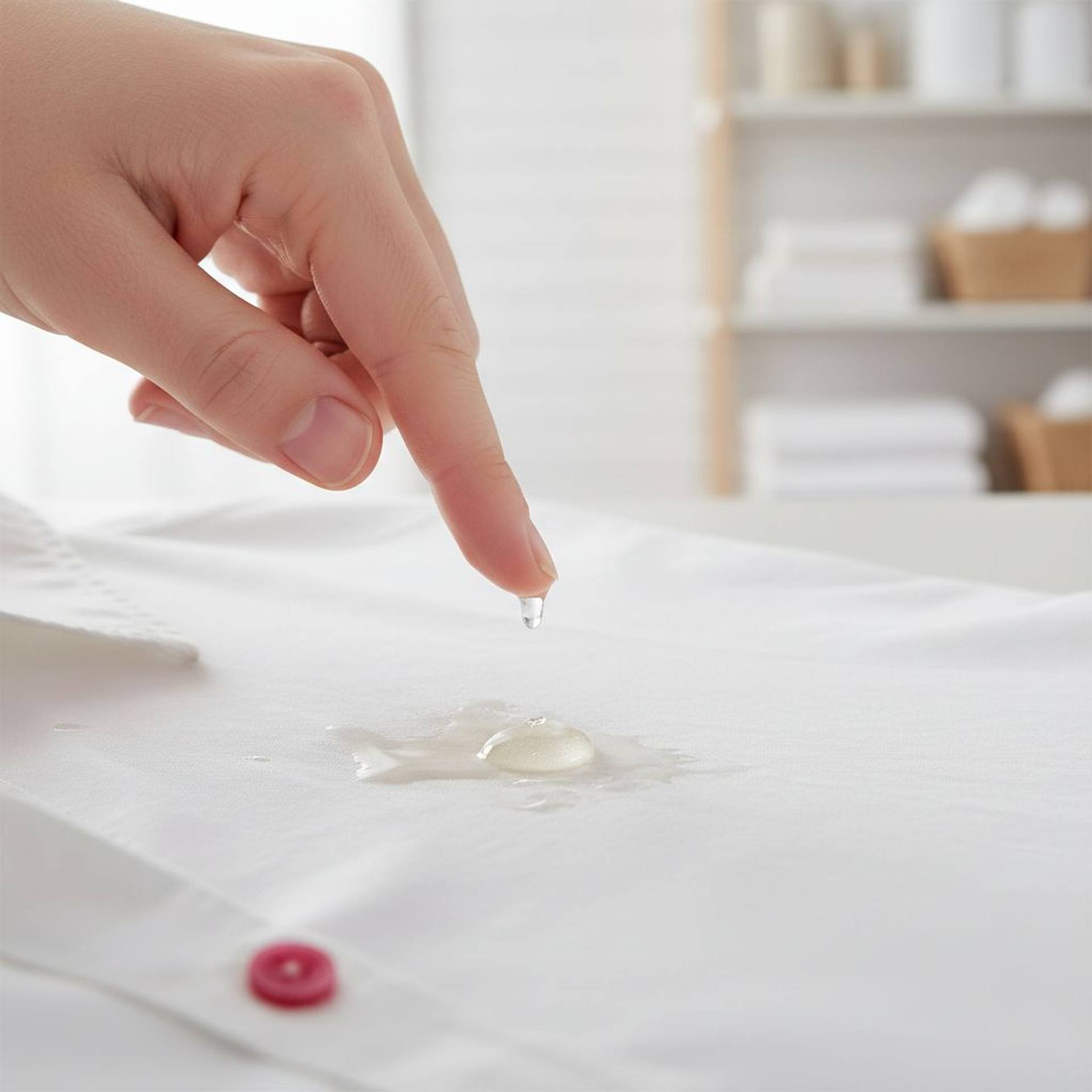
Test on an inconspicuous area
Apply a drop of diluted soap to an inner seam of sturdy fabric (cotton, denim, synthetics) and check that the colour doesn't change.
- 2
Dilute the soap in lukewarm water
Mix a few drops with a tablespoon of lukewarm water (30-40°C). Undiluted soap leaves streaks.
- 3
Dab the stain and wait
Apply the solution to the stain, dab gently, never rub. Leave for 5-10 minutes.
- 4
Rinse and check the result
Rinse the fabric thoroughly and check the result before washing. For delicate material, old stains, or unknown soiling, choose professional assessment instead of another attempt.

Now you know the theory. Practice can be less forgiving.
If you would rather not risk your favourite piece, leave it to the specialists at Gorące Żelazko laundry in Lublin.


Frequently asked questions
Yes, but only fresh grease stains: oil, grease, butter, mayonnaise, on cotton, denim, or polyester. It won't work on protein and tannin stains, as explained above.
No. High surfactant concentration and rubbing destroy the scales of wool fibres and the structure of silk, leading to dulling and stiffening. For these fabrics it's better to take the item to a professional.
Rinse the fabric thoroughly in clean, lukewarm water. If streaks remain visible after drying, professional assessment is needed, as further attempts could deepen the discolouration.
It depends on the fabric and treatment. Gorące Żelazko laundry in Lublin prices this individually based on fabric and stain diagnosis.
About the author
Małgorzata Małecka
Owner of the Gorące Żelazko laundry
Małgorzata Małecka runs the Gorące Żelazko laundry in Lublin. Together with her team, she makes sure customers' clothes, shoes and fabrics come back clean and in the best possible condition.