Blood stains: enzymes or soap
Enzymes break down blood protein, soap only washes it from the surface. How to remove fresh and dried stains without damaging fabric.

Fresh blood on a white shirt, bedding, or child's blouse triggers panic, and the first instinct is usually hot water, because "hot water cleans better". But that's the worst thing you can do.
Blood is a protein stain: it contains albumins, globulins, fibrinogen, and hemoglobin with a heme group that gives it its reddish-brown colour. Success in removing it depends far more on water temperature than on the cleaning product you choose.
Hot water denatures blood proteins irreversibly, coiling amino acid chains and binding them to the fabric fibre. The same effect comes from tumble drying before stain removal, high temperature sets it just as effectively as washing in hot water. Remember one rule: always cold or lukewarm water, never hot, until the stain is completely gone.
Enzymes in stain removers are proteases, most commonly subtilisin extracted from Bacillus bacteria. Protease works like a biological catalyst: it hydrolyzes peptide bonds in the protein chain, breaking them into short, soluble fragments that water easily flushes from the fibre.
Soap works completely differently. It's a salt of fatty acids (such as stearate or palmitate sodium), which only emulsifies and loosens the soiling on the fabric surface, it doesn't chemically break down the protein. That's why it manages fresh, shallow blood stains, but fails with dried stains or ones already washed multiple times without effect.
You have two scenarios: the stain is still wet or already dried, maybe even set by previous washing. The longer blood dries, the harder it becomes to remove, but dried doesn't mean lost.
The rules stay the same: cold water and enzyme. What differs is only the time and patience you'll need.
- 1
Rinse from the back
Hold the fabric under running cold water and rinse from the wrong side, this pushes blood out of the fibres to the outside, not deeper into the material.
- 2
Apply enzyme
Use an enzymatic stain remover directly on the stain or soak the garment in cold water with table salt, salt works by osmosis and helps with very fresh stains.
- 3
Wait 30-60 minutes
Follow the instructions on the product packaging. For dried stains, soak longer or repeat the soaking cycle until it disappears.
- 4
Wash and then dry
Wash at low temperature according to the care label. Only put the fabric in the dryer once you've checked that the stain is completely gone.
With dried stains, patience and repeated soaking in enzyme work better than vigorous scrubbing, which pushes blood particles deeper into the fabric structure instead of flushing them out. A helpful addition can be 3-percent hydrogen peroxide from the pharmacy: the fizzing loosens the stain. Always test it first on a hidden area though, as it risks discolouring coloured fabrics.
Why blood on silk, wool, and bedding needs different care than cotton
Delicate fibres and valuable items cannot take the same soaking and scrubbing as ordinary cotton shirts
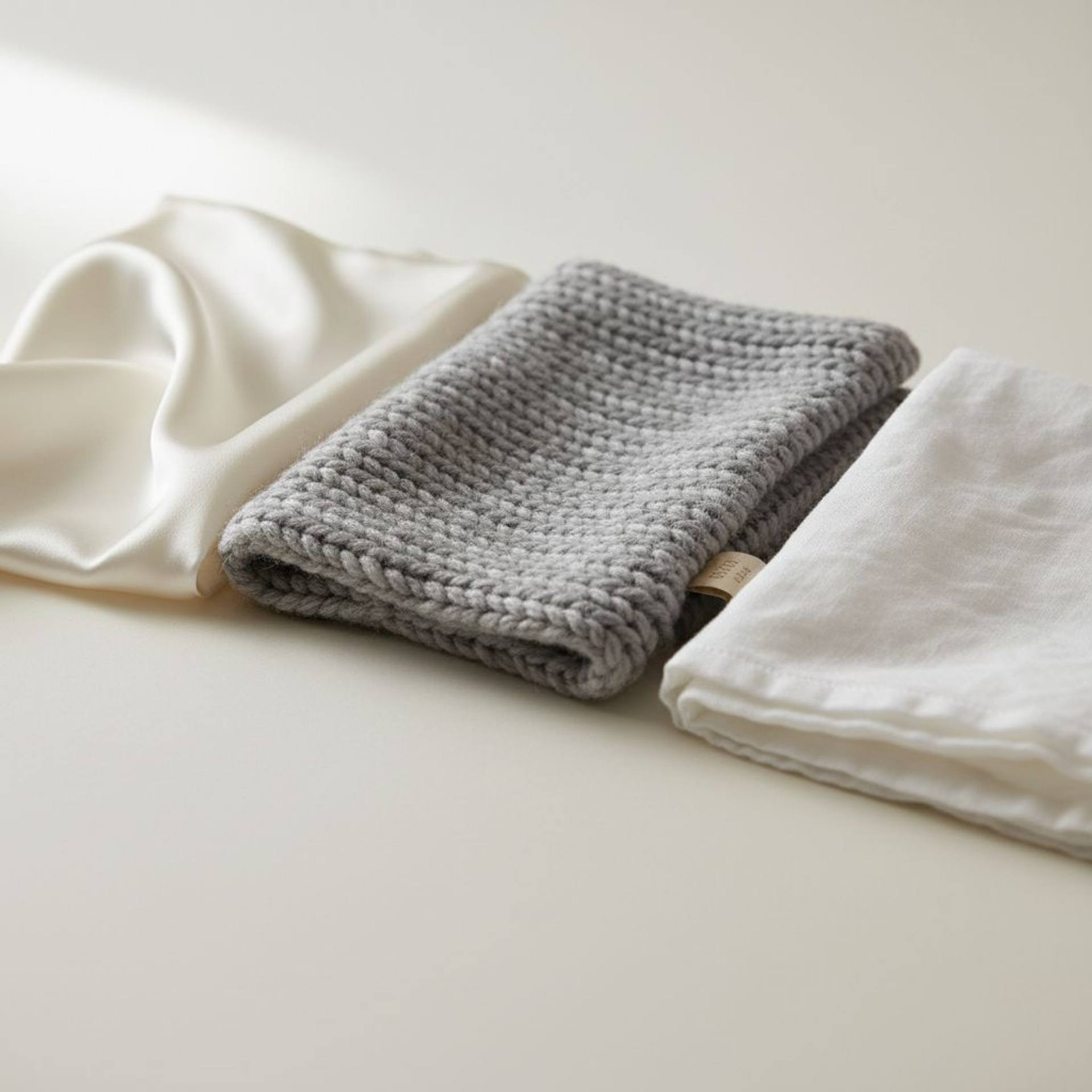
Silk and wool are protein fibres, so enzymes can react with them similarly to how they react with the stain, and long soaking carries risk for them. Before using any stain remover, test it on a hidden area of the fabric first, the way professionals do according to PN-EN ISO 105-X12 (crocking) and PN-EN ISO 105-C06 (wash resistance) standards.
With a wedding dress, suit, or bedding made from delicate fibres, the risk of DIY attempts often isn't worth the savings. Professional 290 or 87 gives greater certainty that the item survives without a trace.
Never mix chlorine bleach (sodium hypochlorite) with a stain remover or ammonia-based cleaner. The reaction releases toxic chloramine compounds, hazardous to your respiratory system. This risk particularly affects washing bedding and underwear, where persistent stains make it easy to reach for both products at once.
The limits of home chemistry: when to call a professional
When home methods aren't enough and professional laundry still has a chance to save the item
A few signals tell you it's time to hand the item to experts: the stain is old, already washed or dried multiple times at high temperature, or the fabric is valuable, like silk, wool, lace, or linen bedding.
A laundry has stain removers with higher protease concentration than shop products and can do controlled pre-soaking at steady temperature. To be honest though: very old, repeatedly set stains sometimes don't disappear completely even with professional washing.

Now you know the theory. Practice can be less forgiving.
If you would rather not risk your favourite piece, leave it to the specialists at Gorące Żelazko laundry in Lublin.


Frequently asked questions
Hot water causes thermal protein denaturation. Amino acid chains irreversibly coil and bind to the fabric fibre. Instead of disappearing, the stain sets for good and stops coming out even with repeated washing.
Enzymes, or proteases, hydrolyze peptide bonds and chemically break down blood protein into soluble fragments. Soap works only on the surface: it emulsifies and loosens soiling but doesn't break down protein molecules.
Use longer or repeated soaking in enzymatic stain remover. Avoid dry scrubbing, which pushes blood particles deeper into the fabric structure instead of flushing them out.
When the fabric is delicate or valuable, such as silk, wool, wedding dress, or suit, or when home attempts have already failed. Professional pre-spotting at controlled temperature has better chances of success.
About the author
Małgorzata Małecka
Owner of the Gorące Żelazko laundry
Małgorzata Małecka runs the Gorące Żelazko laundry in Lublin. Together with her team, she makes sure customers' clothes, shoes and fabrics come back clean and in the best possible condition.