Fabrics damaged by chlorine vs those safe to bleach
Chlorine whitens cellulose but damages protein fibres. How different mechanisms work and how to bleach safely

You're holding a bottle of chlorine bleach and a white shirt, towel or wool sweater, and one question keeps nagging at you: will it survive. You hesitate because chlorine can rescue a fabric or destroy it for good, leaving a hole, permanent yellowing or fibre breakdown that often appears only after drying, when it's too late to reverse.
This article answers directly: which fabrics chlorine damages, which you can safely bleach, and what to do if damage has already happened.
Why chlorine damages fabrics
the chemistry of chlorine bleach and fibre hazards
Household chlorine bleach is sodium hypochlorite solution (NaOCl), typically 3-6% concentration, stabilised with sodium hydroxide. The hypochlorite ion (ClO-) works by oxidation: it breaks chromophoric bonds in dyes and soils, but doesn't tell the stain from the fibre itself, so it attacks the material too.
Cellulose fibres, namely cotton and linen, tolerate this oxidation relatively well. Protein fibres are different: wool keratin and silk fibroin have disulphide bonds that chlorine breaks irreversibly. Polyamide yellows permanently through oxidation of amino groups, and elastane loses elasticity because oxidation destroys its urethane bonds.
Never mix chlorine with other products
Never combine chlorine bleach with vinegar, ammonia, or toilet bowl cleaners. The reaction releases toxic chloramine vapours, especially hazardous in poor ventilation. Work at an open window in protective gloves.
Do
- White cotton without finishes, when used occasionally and diluted
- White linen on the same terms as cotton
- White polyester without print as an emergency solution, not routine
Don't
- Wool: keratin breakdown, yellowing and fibre stiffening
- Silk: fibroin breakdown, brittleness and loss of sheen
- Polyamide (nylon): permanent yellowing, so-called chlorine yellowing
- Elastane (spandex, lycra), even as a minor addition in cotton blends
- Acrylic: moderate intolerance, fibre fades and stiffens
- Leather: complete intolerance, chlorine destroys structure and causes cracking
Even resistant cotton and linen have their limit. Repeated bleaching gradually converts cellulose to oxycellulose, a form with significantly lower mechanical strength, so frequent chlorine use weakens the fabric despite apparent durability.
Before reaching for bleach, check the label. ISO 3758 standard marks bleaching rules with a triangle:
- blank triangle: allows any bleach
- triangle with CL letters: permits chlorine
- triangle with two lines: limits to oxygen bleach only
- crossed triangle: complete ban
This symbol matters more than guesswork based solely on fibre type.
Safety test before washing
Always test bleach on a hidden fabric section, such as an inner seam or spare material swatch. For soaking use a heavily diluted solution, roughly 1:10 ratio with water, and short contact time. Use cool or lukewarm water: higher temperature speeds up oxidation and raises the risk of fibre damage.
Chlorine damage: what now
what can be fixed at home and what needs professional help
Not every chlorine damage is permanent. Some effects can be reduced if you act quickly, before oxidation progresses further. The three steps below help you assess the situation and take first action.
Diagnosis and first aid
- 1
Identify the damage type
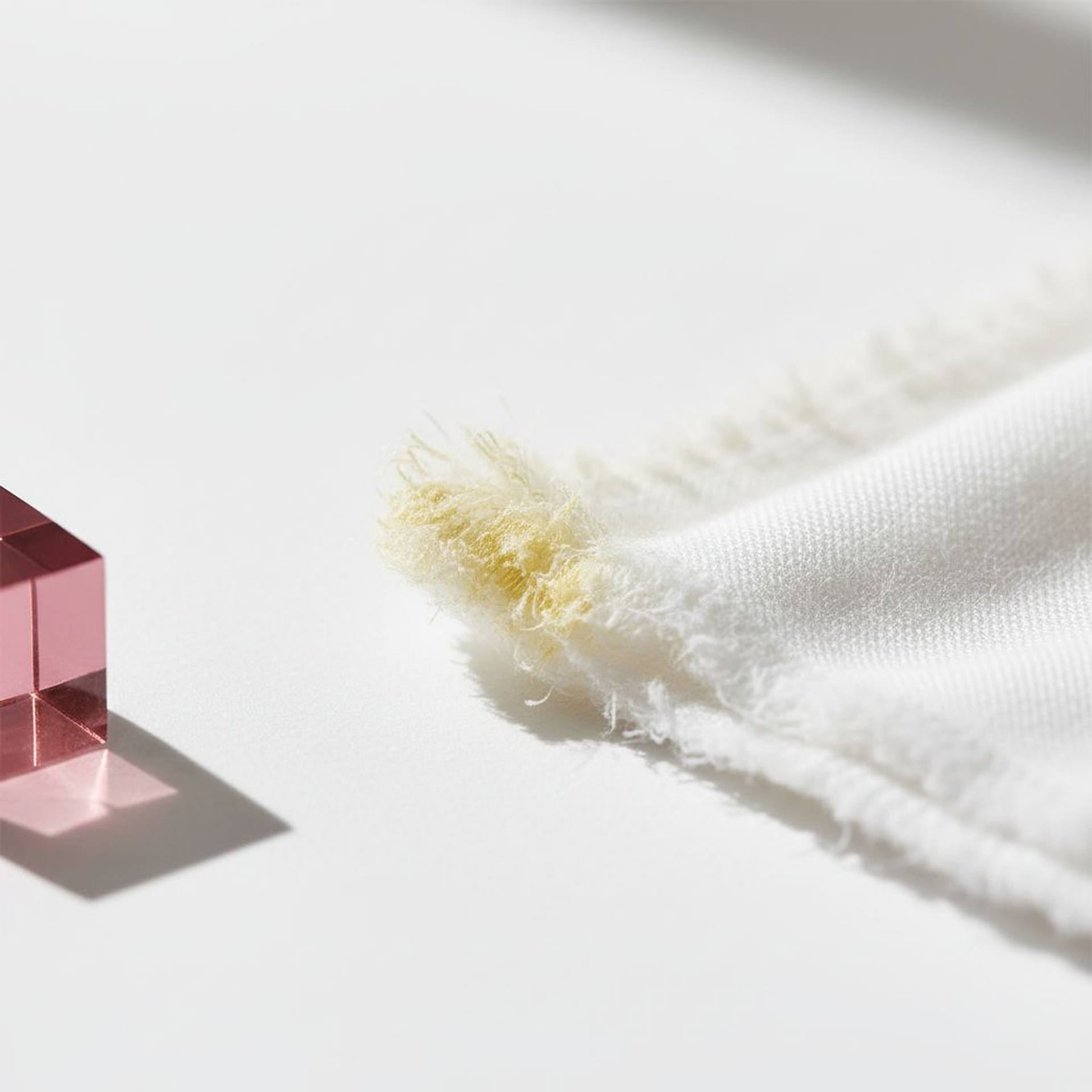
Yellowing in patches usually affects polyamide or elastane, the permanent fading effect described above. Stiffness and brittleness point to protein fibre breakdown, so wool or silk. A hole means localised over-oxidation of the fibre.
- 2
Rinse chlorine residue
Immediately flush the fabric in cool water to stop further fibre oxidation. The longer chlorine stays in contact with the material, the greater the risk of deepening the damage.
- 3
Assess reversibility
Nylon yellowing and protein damage on wool or silk are permanent. Home washing will not reverse them. A hole might be darned, otherwise the choices are accepting the loss or taking the item for professional assessment.

Now you know the theory. Practice can be less forgiving.
If you would rather not risk your favourite piece, leave it to the specialists at Gorące Żelazko laundry in Lublin.


Common questions about chlorine and fabrics
Yes, with occasional use and proper dilution, but routine bleaching weakens the fibre despite apparent cotton and linen durability. Check the label: a triangle with CL letters directly permits chlorine.
Because they are protein fibres. Sodium hypochlorite breaks their disulphide bonds, causing yellowing, stiffening and loss of elasticity. This effect is irreversible.
Check if it's nylon or a fabric with elastane added: such yellowing is permanent and regular home washing won't reverse it. If you value the item, consult a professional laundry.
Oxygen bleach based on sodium carbonate or hydrogen peroxide. It acts more gently on protein and elastic fibres, making it safer for elastane blends.
About the author
Małgorzata Małecka
Owner of the Gorące Żelazko laundry
Małgorzata Małecka runs the Gorące Żelazko laundry in Lublin. Together with her team, she makes sure customers' clothes, shoes and fabrics come back clean and in the best possible condition.