Nail Polish Stain: Does Acetone Destroy Fabric?
Acetone dissolves some fabrics instantly, barely irritates others. Find out which fibres are at risk and how to safely remove the stain.

A nail polish stain on your clothes, and your hand reaches for acetone-based remover. Natural instinct, but not always safe. Acetone aggressively attacks some synthetic fibres, sometimes as powerfully as it dissolves the polish itself.
This article explains when acetone is a safe solution and when it destroys fabric irreversibly, before you use it.
Acetate and triacetate fibres are chemically cellulose acetates, the same type of ester bond as the film-forming base of nail polish. Acetone dissolves them almost instantly: the fabric at the contact point becomes sticky, then hardens into a stiffened, discoloured stain. This is not a stain to remove, but permanent damage to fibre structure, with no way to restore it. Before reaching for acetone on an unknown fabric, check the label for its composition symbols.
Which fabrics does acetone dissolve fastest
Polyamide, polyester, and acrylic: different levels of risk
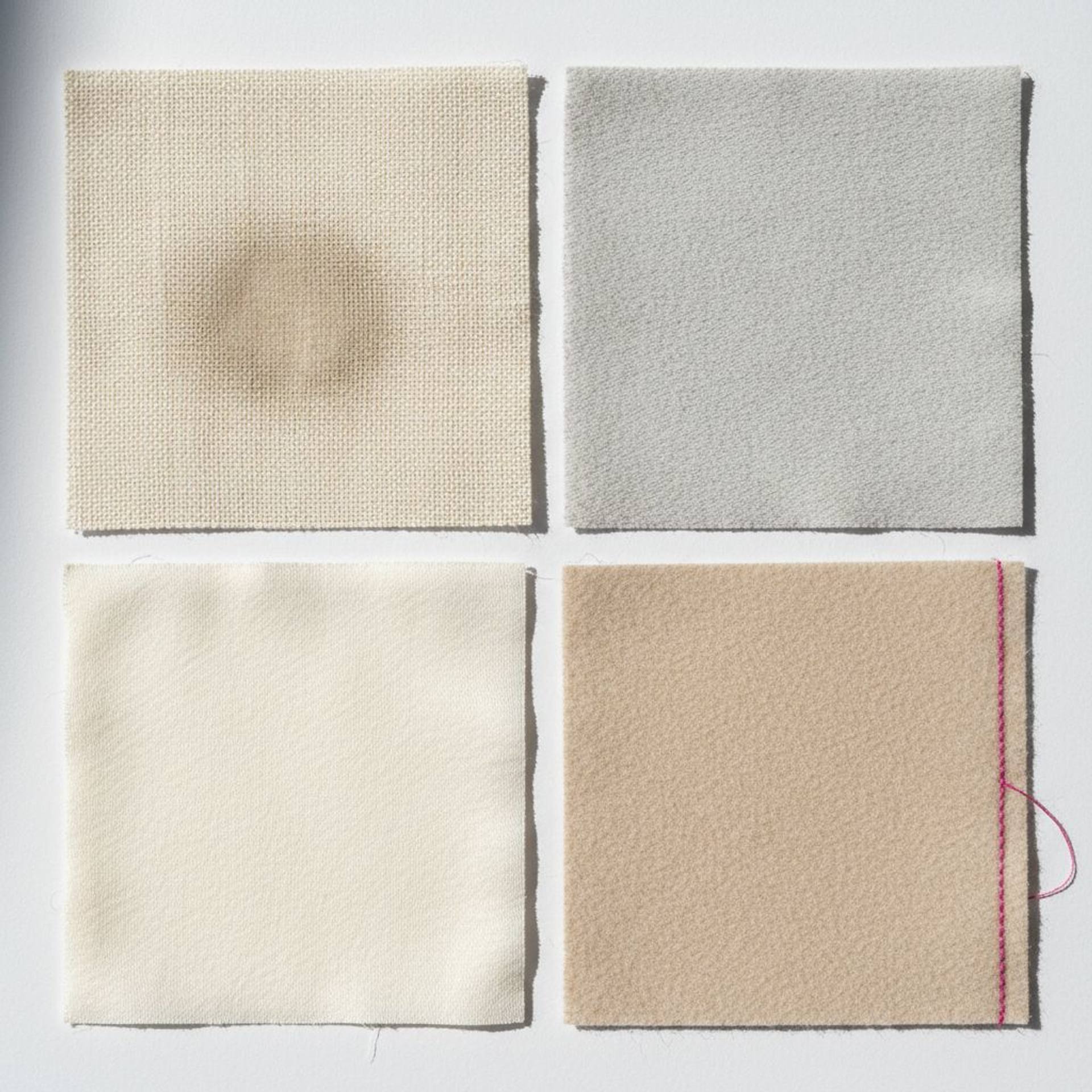
Acetone dissolves fibres whose chemical structure resembles the polish base, while acting more gently or not at all on others.
Acrylic and modacrylic can dull with prolonged contact, polyester and nylon are usually resistant to brief dabbing. Risk increases with soaking time: always test on a hidden area first.
Dissolution, permanent damage
Very high risk: contact with acetone is irreversible, do not use it on these fibres.
Dulling with prolonged contact
Resistant with brief contact, requires testing
May lose elasticity with prolonged contact
Moderate risk: brief contact usually safe, prolonged contact risks dulling or stiffening.
Usually resistant
Chemically resistant, pigment penetrates deeper
Resistant to brief contact, mechanical risk
Low chemical risk: technique, pigment, and friction matter more than the acetone itself.
Cotton and linen are chemically resistant. However, nail polish pigment penetrates natural fibres deeper than synthetics, so the stain can be harder to remove, not riskier. Wool and silk tolerate brief contact, but face risk from friction during cleaning and high-temperature drying. When fabric is on the safe side, technique, not the product itself, determines the outcome.
The procedure below applies to fabrics from the safe group: cotton, polyester, nylon, and linen. Order matters: test first, then dab, never rub or apply heat before the stain is gone.
- 1
Check the label and test first
Find the fabric composition symbols. Apply a small amount of acetone to a hidden area, such as a seam, and wait a few minutes for any reaction.
- 2
Dab, don't rub
Place an absorbent cloth under the fabric. Dab the stain from edges to centre with an acetone or remover-soaked pad, never rub.
- 3
Don't use heat while drying
Don't use a blow dryer or iron before the stain is fully gone. High heat sets the polish resin into the fibre.
- 4
Wash according to the label
Wash the garment in a standard cycle matching the label symbols and check the result before putting it in the dryer.
For silk, wool, and elastane, start with acetone-free remover based on ethyl acetate and isopropyl alcohol. It works more slowly but won't risk stiffening or losing fibre elasticity. Work by an open window or in a ventilated space, away from open flames. Acetone vapours are flammable and can cause dizziness.
When DIY methods hit their limits
Dried stains, set resin, and damaged acetate fibres
A dried stain or one heat-set (such as from ironing) signals that DIY method effectiveness drops. Professional dry cleaners select solvents matched to the specific fibre type and test them on a swatch before treating the whole garment.
Even professional methods have limits: deep damage to acetate fibres is irreversible, regardless of cleaning technique used.
Do
- Check the label before using acetone
- Test on a hidden fabric area
- Dab from edges with a cloth underneath
- Air dry
- Ventilate the room during treatment
Don't
- Don't use acetone on acetate or triacetate
- Don't rub the stain
- Don't soak fabric long in acetone
- Don't iron or use heat dryer before the stain is gone
- Don't work near open flames

Now you know the theory. Practice can be less forgiving.
If you would rather not risk your favourite piece, leave it to the specialists at Gorące Żelazko laundry in Lublin.


Frequently asked questions
Brief contact is usually safe. Prolonged soaking can stiffen the fibre or dull its surface, so always test on a hidden area before treating the entire stain.
Use acetone-free remover based on ethyl acetate and isopropyl alcohol. Dab instead of soaking: it works slower but won't risk stiffening the fibre.
Yes, for most fabrics. A laundry selects the solvent to match the fibre type and tests it on a swatch. The limitation remains with already-damaged acetate or triacetate fibres.
If acetate or triacetate fibres dissolved, the damage is irreversible. Don't attempt further DIY treatment; consult a laundry to avoid making it worse.
About the author
Małgorzata Małecka
Owner of the Gorące Żelazko laundry
Małgorzata Małecka runs the Gorące Żelazko laundry in Lublin. Together with her team, she makes sure customers' clothes, shoes and fabrics come back clean and in the best possible condition.