Home detergent vs professional laundry detergent: composition differences
Enzymes, concentration and water hardness: we examine what really sets home detergent apart from professional and when to send laundry to a professional service.

I wash in the same powder I always use, yet the stain won't come out. That's one of the most common things we hear from customers. Right beside it: "does the laundry have some secret powder".
The answer is less dramatic than the question sounds: the difference lies in the concentration of ingredients, the selection of enzymes for specific stain types, and dosing adjusted to water hardness, not in one magical substance. Let's examine where exactly this matters and when powder from the store hits a hard ceiling on effectiveness.
Overdosing home detergent
why it leaves grey buildup instead of cleaning
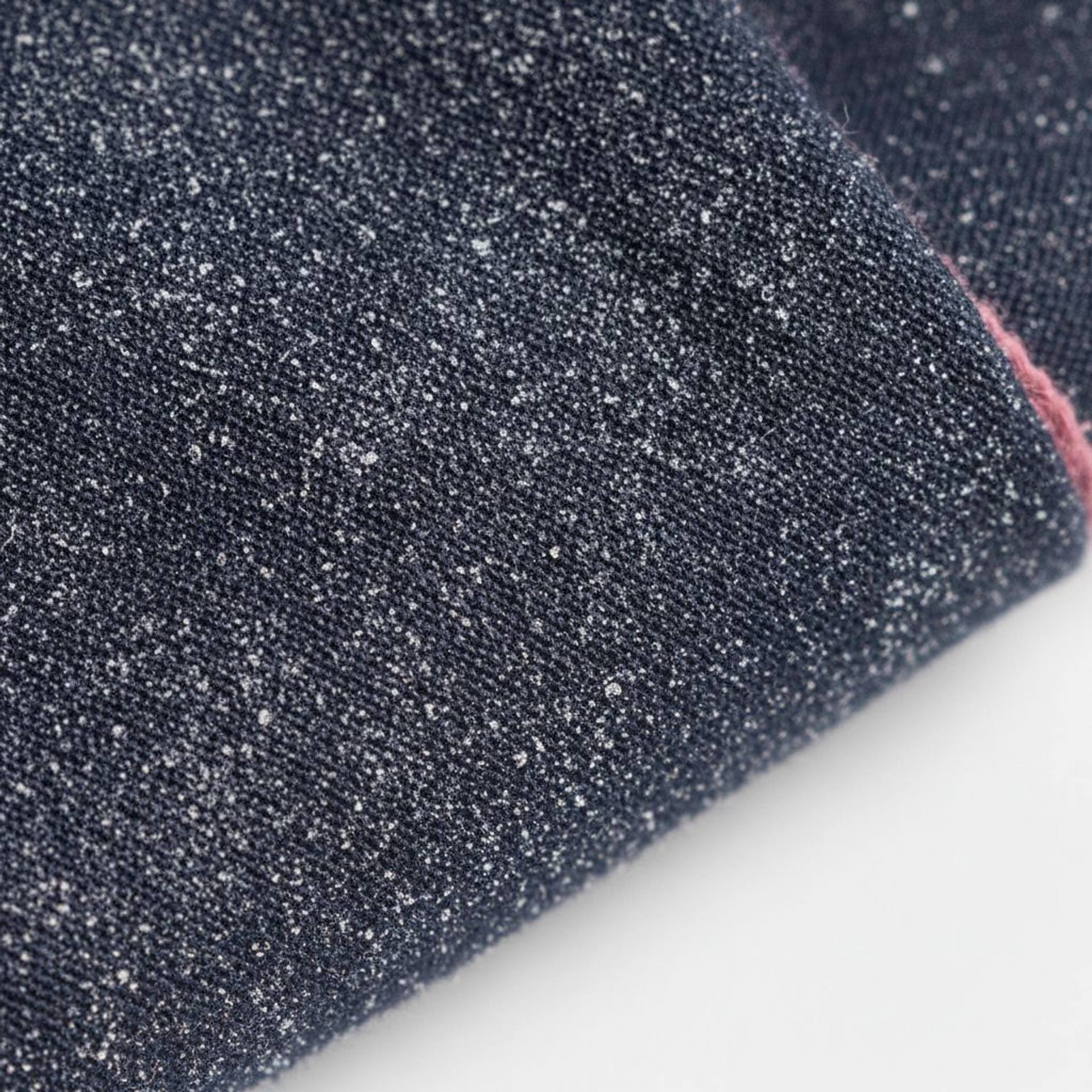
If the powder dose exceeds what the washing machine can rinse out, a residue of surfactants and builders remains on the fibre: that grey buildup and white streaks.
Hard water makes the problem worse. Builders in home powder (typically 15-30% of the composition) are meant to bind calcium and magnesium ions, but at high water hardness their quantity isn't enough.
A vicious cycle forms. You add more powder, hoping for better results, but the washing comes out worse because excess detergent has no chance to rinse out.
More powder doesn't mean cleaner
In hard water, excess powder stays on the fabric as buildup instead of rinsing out. Dose according to the manufacturer's recommendations and actual water hardness from your water supply, not by guesswork.
Both types of powder have the same architecture: surfactants to remove grease and dirt, builders to soften water, enzymes to break down specific soils. What differs is the proportion and purity of raw materials.
Enzymes are the most underrated element. Proteases break down protein-based stains (blood, grass, sweat), amylases handle starch, lipases tackle grease, and cellulases refresh the fibre surface.
Professional powder uses a broader set of enzymes at higher concentrations: typically 1-4% of the composition versus 0.5-2% in home powder.
Optical brighteners are another category: they don't remove soil, but reflect UV light, making fabric appear whiter. Standard in home powder, rarer in professional.
LAS (linear alkylbenzene sulfonate sodium)
Sodium perbonate
Subtilisin (protease enzyme)
Zeolite A (sodium aluminosilicate)
Sodium silicate (metasilicate)
HEDP (1-hydroxyethylidene-1,1-diphosphonic acid)
Match your powder to your water
Check your water hardness on your local water supplier's website. With hard water, it's worth adding water softening salt to your washing machine as a supplement to the builders in the powder.
Limits of home powder on protein and grease stains
when to take laundry to a professional
Do you recognize yourself in any of these scenarios?
You have hard water and despite your efforts, clothes are greying. Home powder has a limited supply of builders and won't manage extreme hardness the way powder tailored to your water installation does.
You have a tendency to allergies or atopic dermatitis. High concentrations of surfactants and protease enzyme require thorough, multi-stage rinsing that a single home washing cycle doesn't provide.
You have a protein stain (blood, grass, sweat) or grease stain. The laundry selects enzymes for the soil and cycle temperature (40, 60 or 90 degrees C), while at home you have one universal temperature. Washing fresh blood stain in hot water sets it permanently because protein coagulates above roughly 40 degrees C.
Home powder: what to do and what to avoid
Do
- Dose powder according to water hardness, not by guesswork
- Rinse fresh protein stains (blood, sweat) in cold water before washing
- If prone to allergies, check the powder label for enzymes
- Give extensive grease stains and set protein stains to the professionals
Don't
- Don't increase powder dose guessing when results are weak
- Don't wash fresh blood or sweat stains in hot water
- Don't rely on one universal powder for all stain types

Now you know the theory. Practice can be less forgiving.
If you would rather not risk your favourite piece, leave it to the specialists at Gorące Żelazko laundry in Lublin.


Frequently asked questions
Both have the same ingredient architecture, but differ in proportion and selection. Professional powder has higher enzyme concentration (typically 1-4% versus 0.5-2% in home powder) and is dosed separately for water hardness and cycle temperature, not by a single universal instruction on the package.
This is the result of overdosing combined with hard water. Excess powder doesn't rinse completely, and the builders in standard dose don't bind enough calcium and magnesium ions from hard water. Residue remains on the fibre.
Rinse fresh protein stains (blood, sweat, grass) immediately in cold water, never hot, because it sets the protein. If the stain is already set or grease-based and extensive, home powder washing has a hard ceiling on effectiveness. Professional stain removal with enzyme selection matched to the specific soil and controlled cycle temperature gives a better chance of complete removal.
Higher surfactant and protease enzyme concentration doesn't automatically mean professional powder is worse for skin. It does require thorough, multi-stage rinsing, which the laundry provides in its washing process. If you have allergies or atopic dermatitis, it's worth mentioning when you bring in your laundry.
About the author
Małgorzata Małecka
Owner of the Gorące Żelazko laundry
Małgorzata Małecka runs the Gorące Żelazko laundry in Lublin. Together with her team, she makes sure customers' clothes, shoes and fabrics come back clean and in the best possible condition.