Chemistry of odour: why washing doesn't remove all smells
Smell is made of specific chemical compounds trapped in fibres. Learn why it returns, even though clothes look clean.

You washed according to the care label, even in high temperature, yet sweat smell, smoke, moisture, or pet odour returns anyway. Sometimes right after drying, sometimes only after the first sweat in the garment.
This is not about dirt. Smell is made of specific volatile chemical compounds adsorbed onto the fibre or trapped in a microbial biofilm in the drum and in the fabric. Each requires a different removal mechanism: one dissolves in water, another must be emulsified by surfactant, the next is broken down by enzyme, and another simply evaporates. Standard domestic washing does not do all of this at once, so part of the problem returns with each cycle.
Odour built into fibre structure
Does standard low-temperature home washing have a technical limit
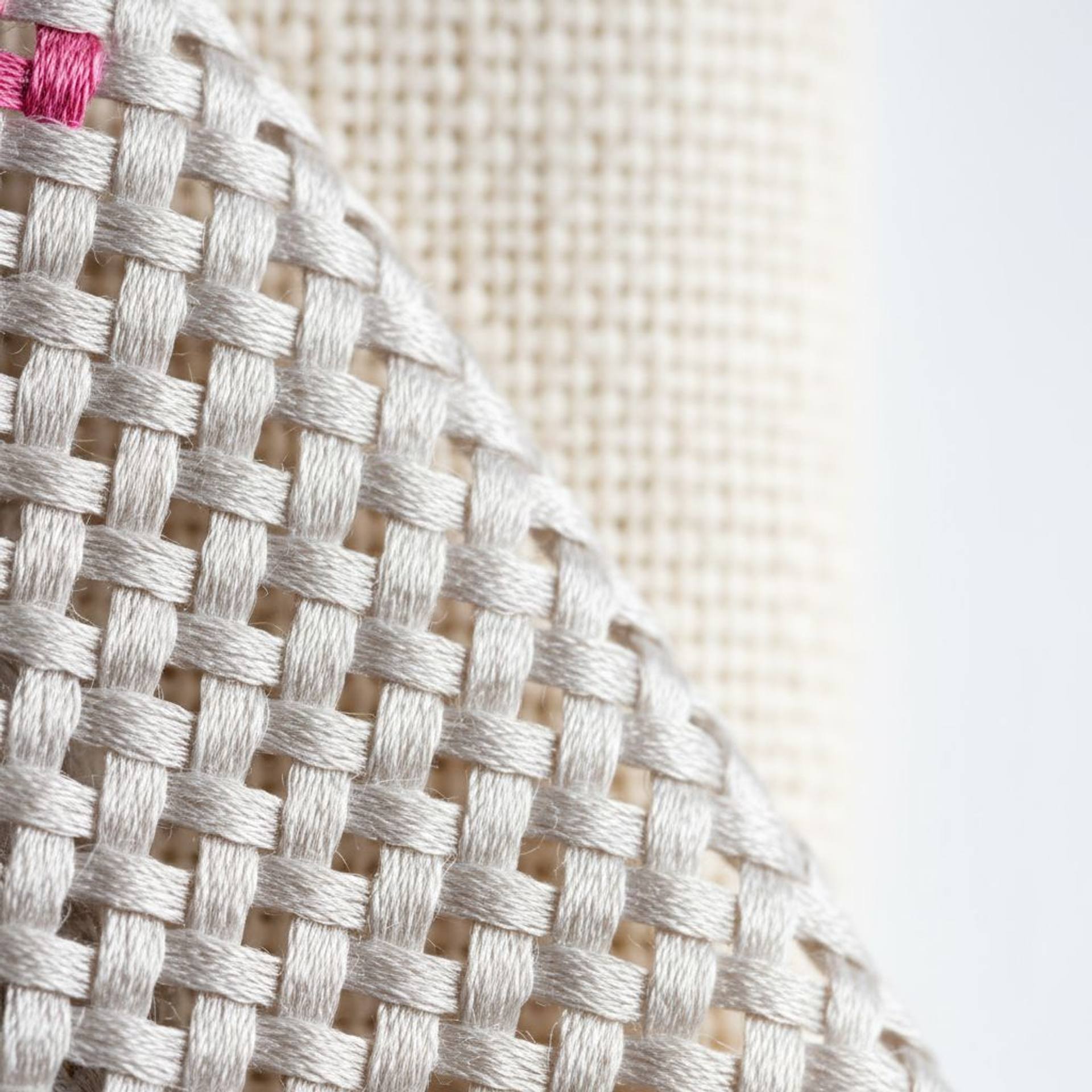
Sweat and musty smell are a mixture of partly non-polar compounds. The key ones are isovaleric acid (CAS 503-74-2), butyric acid (CAS 107-92-2), and sweat thiols. All have high affinity for synthetic fibres.
Polyester has a hydrophobic structure. It binds these fatty compounds more strongly than cotton and releases them less easily in water, even with anionic surfactant like LAS (CAS 68411-30-3).
On top of that comes bacterial biofilm, mainly Moraxella osloensis, which settles in the rubber seal, filter, and on the synthetic fibre itself. Independent microbiological studies of washing machines confirm this phenomenon, not just one isolated source. Biofilm rebuilds between washes, so when re-wetted, then sweating, or with rain, it reactivates trapped compounds and smell returns as if from nowhere.
Higher temperature or more detergent is not always the answer. Fat breakdown from sebum and emulsifying fatty acids benefits from temperatures above 40°C and alkaline pH, usually above 9. Yet home washing usually happens at 30-40°C to save energy and protect fabrics.
Protease and lipase enzymes in detergent have a narrow window of action. Too low a temperature limits their activity. Above about 60°C the enzyme protein denatures and stops working.
Fabric softener does not change this: it masks smell with perfumes like d-limonene (CAS 5989-27-5) or linalool (CAS 78-70-6), instead of removing its source. After the first sweat in the garment the original smell returns, because nothing actually removed it.
Home washing versus professional odour removal
Home washing 30-40°C with enzyme detergent
4PLN
Estimated cost of energy and detergent per cycle. Emulsifies some fats and breaks them down partly enzymatically, but does not remove biofilm from the fibre or drum, especially on synthetics.
Professional washing with disinfection program in higher temperature
26PLN
Longer contact time and higher temperature give high effectiveness against biofilm, but require thermally resistant fabric. For smoke smell or very stubborn staleness, chemical solvent cleaning or ozonation also helps, available only at professional laundries.
Verdict: Home washing works for fresh, light smell on cotton. For synthetics, stubborn pet odour, or smoke, professional approach is more effective.
Mistakes that make the problem worse
An overloaded drum reduces mechanical friction and water access to all fibres. Too little detergent relative to water hardness and load size leaves too few surfactants to emulsify fat. Wet washing left in a basket or drum longer than a few hours encourages bacterial growth, so smell worsens instead of fading.
Biological odour
Why animal microbiology requires a different approach
Fur, saliva, and pet skin bring a different set of compounds than human sweat: saliva protein, sebum, and skin microflora. They bind to fibre by the same mechanism though, that is, adsorption and biofilm. Odour refreshers mask smell but do not remove either the biofilm or the protein compounds sinking deep into fabric weave, blanket, or bedding.
Three factors decide effectiveness, the same as with sweat: temperature, contact time, and mechanical action. The biological source of smell does not change this rule.
How to tell biofilm from dirt
If smell returns after just wetting, not only after sweating, that signals biofilm, not dirt. Synthetic fabrics, polyester and polyamide, carry higher risk of stubborn smell than cotton. If the problem stays despite trying several detergents in a row, standard home washing most likely reached its technical limit.
What to do and what to avoid
Do
- Wash in the highest temperature the care label allows for that fabric
- Dry laundry fully before putting away in the cupboard
- Dose detergent according to water hardness and load size
- For synthetics with stubborn odour, consider professional washing with a disinfection program
Don't
- Do not rely on fabric softener as the only way to tackle odour
- Do not leave wet laundry in a basket or drum for hours
- Do not overload the drum, as it limits mechanical friction and water access

Now you know the theory. Practice can be less forgiving.
If you would rather not risk your favourite piece, leave it to the specialists at Gorące Żelazko laundry in Lublin.


Common questions about odour after washing
Because smell and dirt are two different things: fibres can look clean yet trap volatile odour compounds and bacterial biofilm. A standard cycle at 30-40°C does not remove them completely, especially on synthetics.
Polyester has a hydrophobic structure, so it binds fatty odour compounds more strongly than cotton and releases them less easily in water even with good detergent. This makes it the main reason for stubborn smell, not sweat itself.
Just masks it: perfumes in the softener, such as d-limonene or linalool, cover the smell for a while but do not break down or remove the source compounds. So the original smell returns after sweating in the garment.
The highest temperature the care label allows: above 40°C fat breakdown and emulsifying work better. A disinfection program at high temperature limits biofilm much more than standard 30°C.
When smell returns despite washing in the highest allowed temperature and trying several detergents, especially on synthetics, jackets, or bedding. Professional laundries have access to higher temperatures, disinfection programs, and methods like chemical cleaning or ozonation not available in a home machine.
About the author
Małgorzata Małecka
Owner of the Gorące Żelazko laundry
Małgorzata Małecka runs the Gorące Żelazko laundry in Lublin. Together with her team, she makes sure customers' clothes, shoes and fabrics come back clean and in the best possible condition.