Rubbing alcohol on fabrics: when it's safe
Check how rubbing alcohol works on silk, wool, cotton and leather before you rub it on a stain. Safe testing and what to do if you make a mistake.

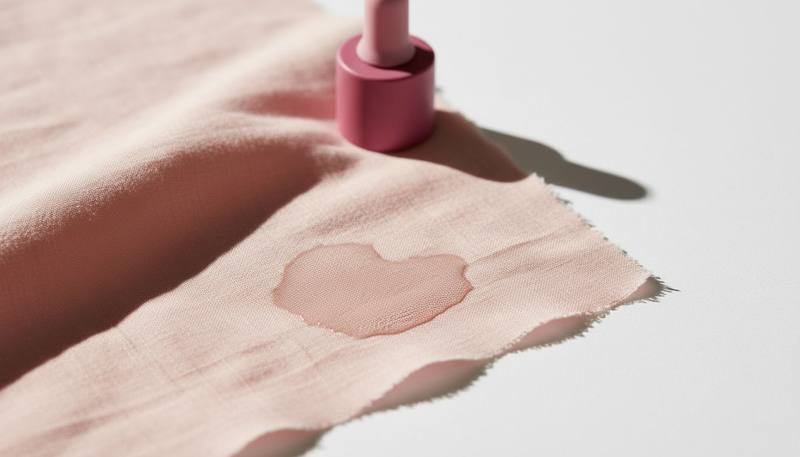
The myth sounds convincing: alcohol evaporates without trace, so it's safe on any fabric. This is an oversimplification because alcohol dissolves certain fibres and dyes chemically before it has time to evaporate.
"Rubbing alcohol" in practice means isopropanol or denatured ethanol, and customers often confuse both with acetone, which works very differently. The answer depends on the fabric and concentration; there is no universal yes or no.
Spirit alcohol, denatured alcohol, isopropanol
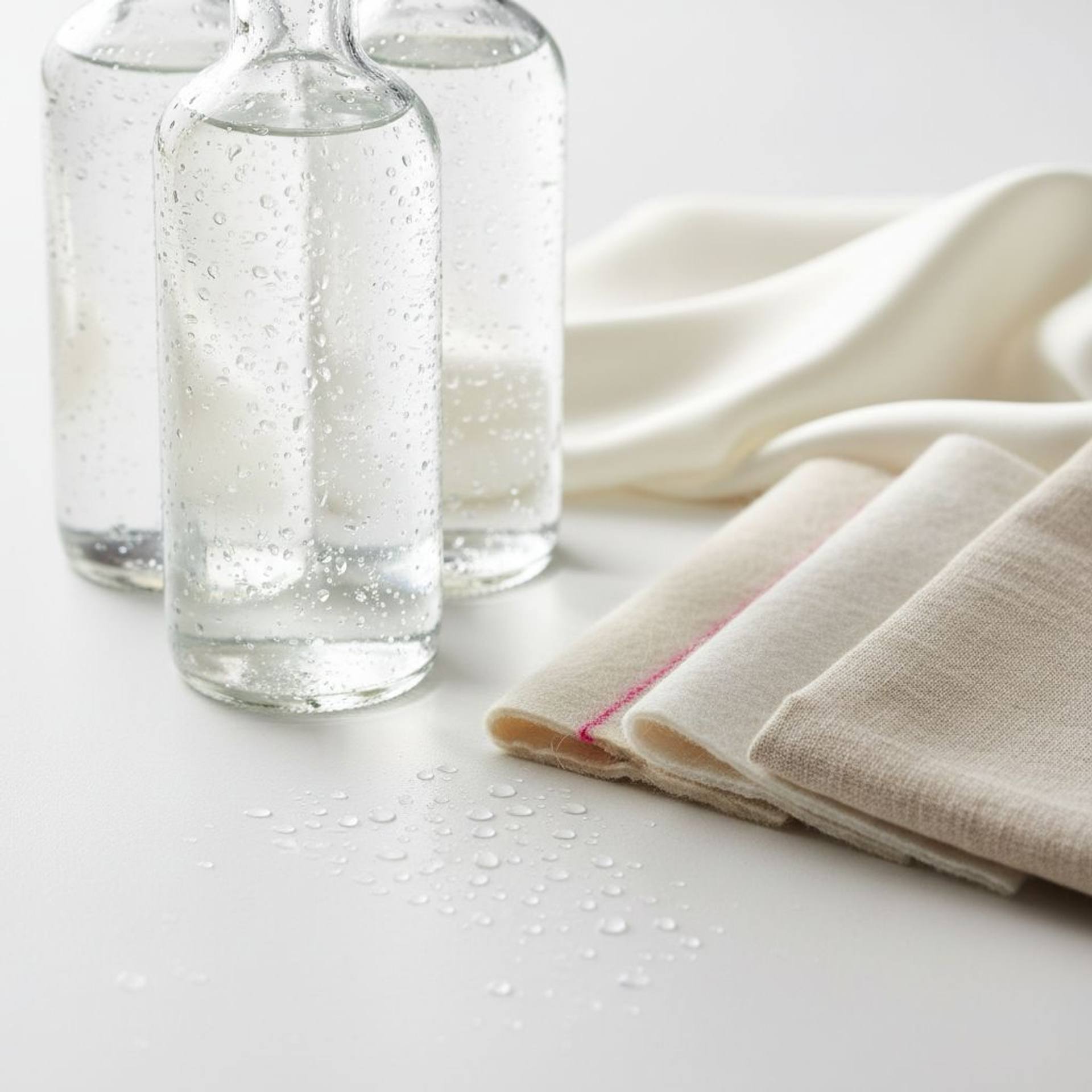
Isopropanol typically occurs in concentrations of 50-91%, most often 70%, and ethanol in denatured alcohol reaches 60-96%. Denatured alcohol contains denatonium benzoate, a bitter agent that discourages ingestion, and some products may be contaminated with methanol.
Acetone is a different substance, though customers often confuse it with rubbing alcohol. It dissolves more aggressively and faster damages coatings.
Composition and concentrations: five substances from the home medicine cabinet
Isopropanol
Ethanol
Denatonium benzoate
Methanol
Acetone
Cleaning versus damage
Cellulose acetate and triacetate are esters sensitive to polar solvents: high alcohol concentrations dull them and glue fibres together, leaving a stain with a different texture than the surroundings. Viscose swells in contact with alcohol, and repeated applications increase the risk of discolouration and localised shrinkage.
Silk and wool are protein fibres: alcohol does not break down keratin or fibroin the way strong acids do, but it dissolves some dyes, which shows as colour bleeding at the stain edge.
Polyester and nylon are inherently resistant, but risk applies to prints and finishing coatings. Leather and suede lose natural oils, and polyurethane-based eco-leather can soften from a single contact.
Pre-use test: what to do, what to avoid
Do
- Test on an inconspicuous area: seam, spare fabric
- Dab gently with a cotton pad, do not rub
- Use diluted solution
Don't
- Do not apply concentrations above 70% to delicate fabrics
- Do not rub in circular motions
- Do not apply to protein stains: blood, milk, sweat
- Do not dry with a dryer immediately after application
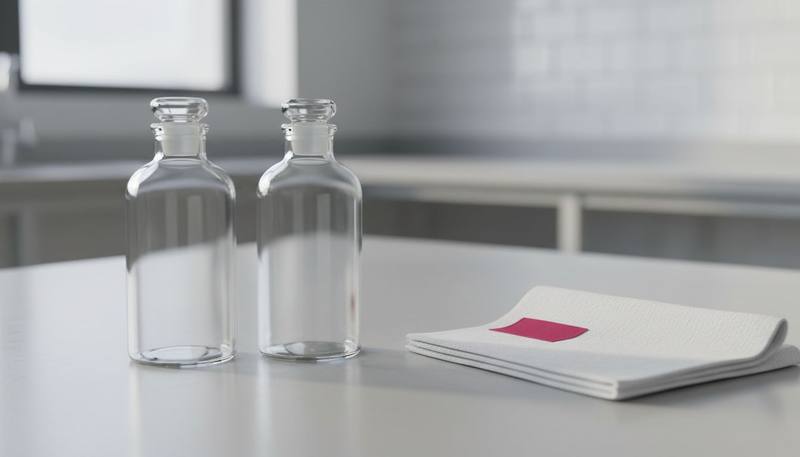
Before reaching for alcohol on a visible stain, do a simple test. Four steps take a few minutes and could save you from ruining your item.
- 1
Choose an inconspicuous area
Inner seam, spare fabric, or lining.
- 2
Apply solution with a cotton pad
Gently, without rubbing, small amount.
- 3
Wait a few minutes
Check texture and colour in good light.
- 4
Assess the result
No change: you can dab the stain. Colour change: stop.
Do not dry discolouration with a dryer or iron: high temperature will set the damage. Do not rub harder and do not apply more alcohol. Do not mix it with vinegar or hydrogen peroxide on the same stain.
Rinse the fabric in cold water, gently dab with neutral soap, and dry naturally, away from heating.
If you see colour migration, stiffening, or texture change on silk, wool, or elastane, that's the end of home remedies. Time for professional dry cleaning.
Even professional methods don't eliminate risk completely with unknown fabric history, but a preliminary test significantly limits it.
You can manage on your own when the fabric is cotton or polyester, the stain is fresh, and the test on an inconspicuous area came out clean. Take it to the cleaner when silk, wool, elastane, or leather are involved, or if the alcohol has already left a mark.

Now you know the theory. Practice can be less forgiving.
If you would rather not risk your favourite piece, leave it to the specialists at Gorące Żelazko laundry in Lublin.


Frequently asked questions
It depends on the type and concentration. Cotton and polyester usually handle it, but silk, viscose, or leather can discolour or stiffen.
The lower the concentration, the less risk. Solutions above 70% increase the chance of damaging delicate fibres, so always dilute and test.
Yes, normal washing per the care label removes residue, provided the fabric showed no changes in the test beforehand.
Rinse in cold water and dab with neutral soap. If stains persist, take the item to professional dry cleaning.
About the author
Małgorzata Małecka
Owner of the Gorące Żelazko laundry
Małgorzata Małecka runs the Gorące Żelazko laundry in Lublin. Together with her team, she makes sure customers' clothes, shoes and fabrics come back clean and in the best possible condition.