Coca-Cola laundry myth debunked
The myth conflates two different phenomena: acid cleaning a hard surface and washing fabric that already has a stain embedded in it.

You've probably seen this in social media: someone pours cola on a rusty lock or burnt baking sheet and the stain comes out clean. The trick circulates with claims that Coca-Cola washes clothes as well as laundry detergent.
Short answer: it doesn't. Coca-Cola won't remove a stain from fabric the way detergent does, and in many cases it leaves behind a new, worse stain. The myth conflates two different phenomena: acid cleaning a hard, smooth surface and washing fabric that already has a stain embedded in it.
The myth has roots in real chemistry, just applied elsewhere. Phosphoric acid genuinely dissolves iron oxides, which is rust, on metal surfaces. That's why popular videos from automotive forums show Coca-Cola cleaning a rusty bumper or lock.
Another source is a popular video where Coca-Cola "removes" burnt grease from a baking sheet thanks to its acidity and high temperature.
Both cases involve a smooth, hard surface. A stain on fabric is a different situation: dye and grease penetrate between the fibers, and acid alone won't flush them out.
What Coca-Cola does and doesn't do on fabric
Do
- Partially dissolves rust on metal elements of clothing, such as zips or snaps, thanks to phosphoric acid
Don't
- Doesn't remove protein stains (blood, grass, egg): no proteolytic enzymes
- Doesn't remove grease stains: no surfactants to lower surface tension
- Doesn't remove starch stains (sauce, potatoes): no amylolytic enzymes
Coca-Cola deep in the fiber
why sometimes you can't save it
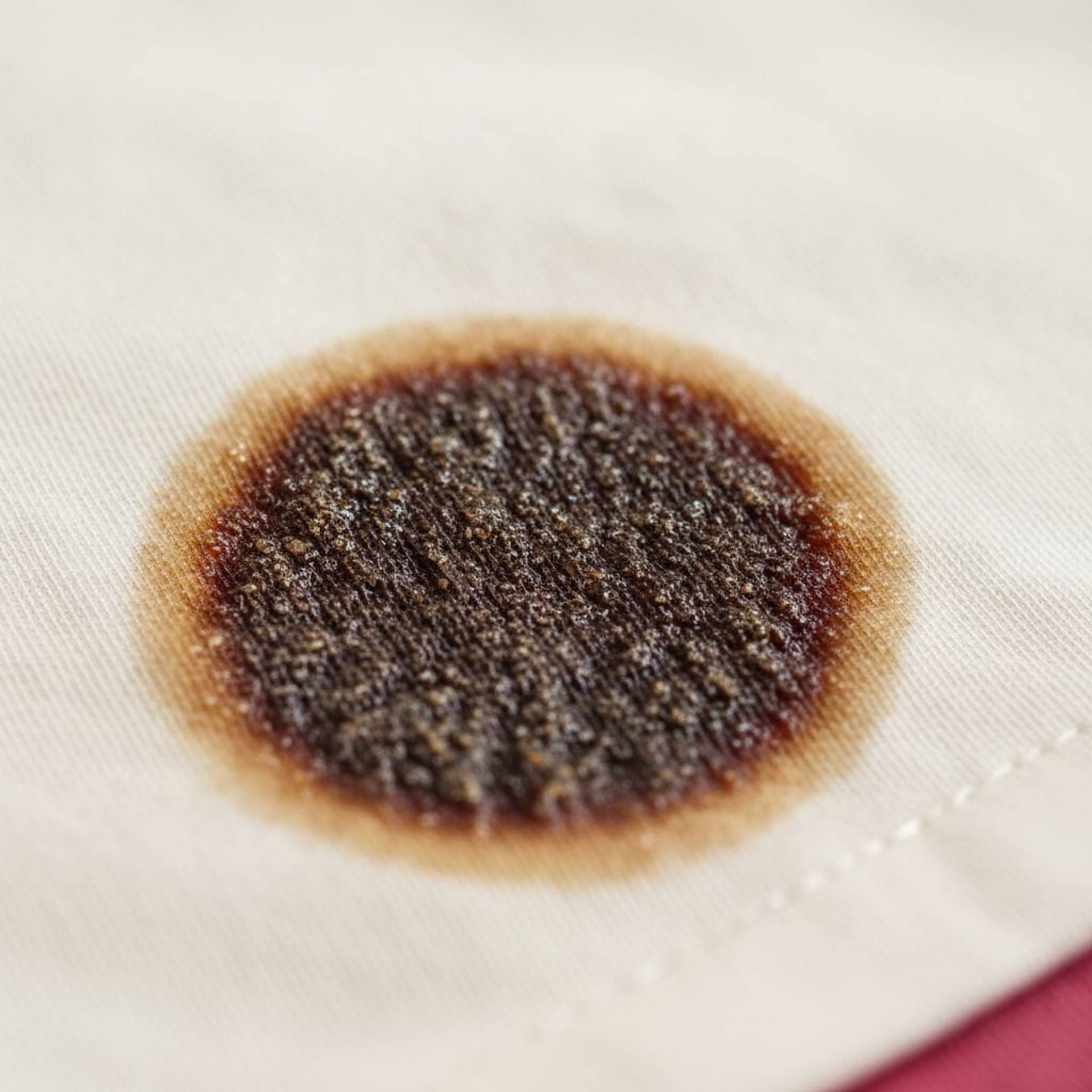
On fabric, Coca-Cola leaves three specific marks. After drying, sugar (10.6 g per 100 ml) creates a sticky layer that attracts dust and dirt instead of removing it. Caramel dye E150d is itself a stain source, not a stain remover. Caffeine can leave a yellowish tint on light natural fibers, especially cotton and linen.
Two mistakes make the damage worse. Soaking clothing in cola overnight only extends the time sugar and dye penetrate the fiber. Using this method on silk or wool is risky because the low pH combined with prolonged contact can damage the fiber protein structure.
Real washing relies on three pillars that cola lacks entirely: surfactants, enzymes, and oxygen bleach.
Coca-Cola versus typical stains
Rust on fabric
Phosphoric acid can partially dissolve iron oxides, but the effect on fiber is uncertain; data mainly concerns metal.
Protein stain (blood, grass, egg)
Skip the cola. Rinse with cold water from the back of the fabric and soak in enzymatic detergent; warm water will only set the stain.
Risk of setting the stain with prolonged contact.
Grease stain (oil, grease)
Skip the cola; grease won't come out of it. Apply liquid dish soap directly and wait a moment, then wash according to the label.
Starch stain (sauce, potatoes)
Skip the cola. Scrape off excess, rinse with cold water, and wash in enzymatic detergent.
Light fabric, cotton or linen
Caramel dye and sugar settle into the fiber; instead of removing the stain, cola adds a new one.
Why cola stains resist removal
against home chemical methods
Rescue for a fresh stain
A fresh cola stain from a failed cola attempt still has a chance. Speed and order of actions matter: the longer sugar and dye sit on the fiber, the harder they become to remove.
- 1
Rinse with cold water from the back
Immediately after noticing the stain, rinse the fabric with cold water, working from the back of the material. Never use warm water, as it sets the sugar and dye.
- 2
Blot, don't rub
Dry the spot with a clean cloth using gentle blotting motions. Rubbing will press the dye deeper into the fiber.
- 3
Soak for 30 minutes maximum
Soak the garment in cool water with enzymatic detergent. Don't leave it overnight; longer soaking just deepens the problem.
- 4
Wash according to label
Choose the temperature shown on the care tag. Proteolytic enzymes work best up to about 40°C.
- 5
Check the stain before drying
Before putting the garment in the dryer, make sure the stain is gone. High drying heat will permanently set any remaining dye residue.
The sequence above works on a fresh stain on cotton or linen. Three situations increase the risk: a dried and set stain, delicate fabric like silk or wool, and elegant or work clothing. In these cases, home rescue costs more than a professional service.
One mistake to avoid
Never soak clothing in Coca-Cola overnight hoping for a stronger effect. Stick to the 30-minute limit from step 3 above; longer soaking won't improve results, it only extends the time until washing.

Now you know the theory. Practice can be less forgiving.
If you would rather not risk your favourite piece, leave it to the specialists at Gorące Żelazko laundry in Lublin.


Frequently asked questions
No. Coca-Cola contains no surfactants or washing enzymes, so it doesn't wash fabric. Phosphoric acid genuinely dissolves rust on metal, but that's a different situation from washing.
More often it adds a new stain rather than removes an old one. Sugar and caramel dye settle into the fiber, especially on light cotton and linen fabrics.
Because sugar residue didn't rinse out in a normal wash cycle. Damp, sweetened fabric also encourages bacterial growth, making the smell worse.
Rinse with cold water, soak briefly in enzymatic detergent, and wash according to the label. If the stain is old or the fabric is delicate, professional stain removal will work better than another home attempt.
About the author
Małgorzata Małecka
Owner of the Gorące Żelazko laundry
Małgorzata Małecka runs the Gorące Żelazko laundry in Lublin. Together with her team, she makes sure customers' clothes, shoes and fabrics come back clean and in the best possible condition.