Kitchen apron with stains: how to clean tonight
Good news: you can handle this in one evening, if you treat each stain separately by type rather than using one method for everything.

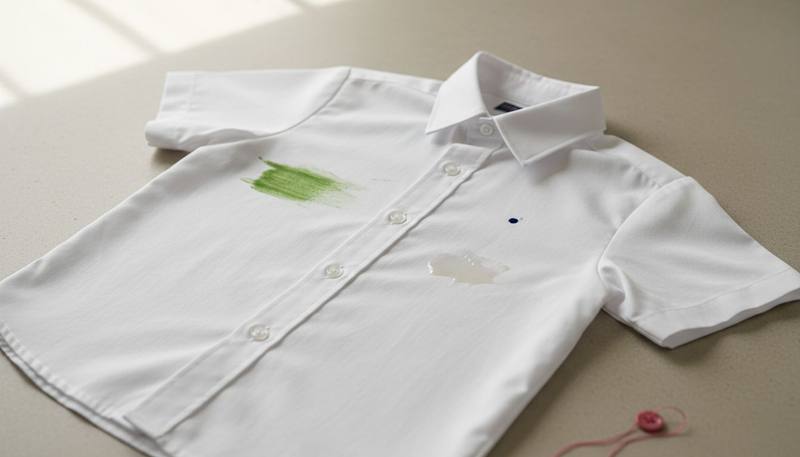
A kitchen apron after one day in the kitchen is not one stain, but several completely different soils at once. Grease from a pan, a blood mark or egg, a coffee stain or tomato sauce. Each reacts to different chemistry and different temperature.
That is why there is no single universal method for stains. A protein stain in hot water sets permanently, and a grease stain in cold water refuses to budge at all.
Good news: you can handle this in one evening. The condition is simple: treat each stain separately by its type, rather than tossing the apron into the washing machine and hoping everything will disappear on its own.
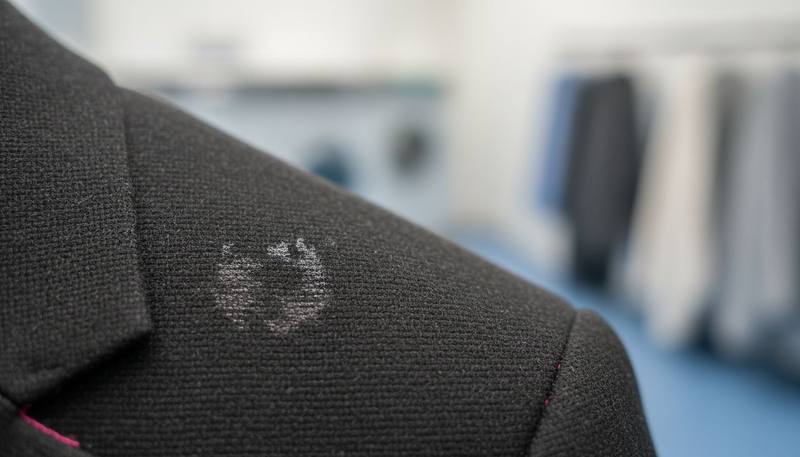
Grease and oil
Dish soap as pretreatment on the stain, then normal wash
Dried grease may require several wash cycles
Blood and egg (protein stain)
Proteolytic enzyme (liquid or gel with enzymes) on the stain before washing
Hot water sets this stain permanently. Never wash hot.
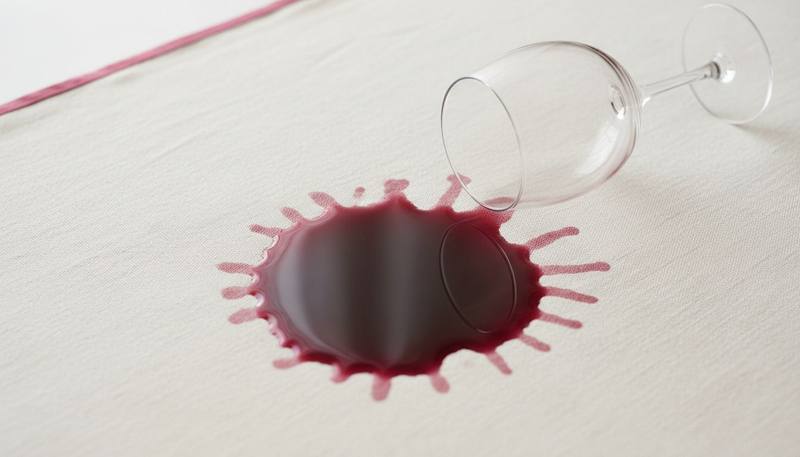
Coffee, tea, red wine
5-6% spirit vinegar applied spot-on before washing
Risk of fading coloured fabric. Test on a hidden area first.
Tomato sauce, curry, turmeric
Oxygen bleach plus sun exposure (UV partially breaks down the dye)
Often impossible to remove completely. Expect a faint trace.
Wax and paraffin
Chill and scrape off excess, then iron through paper towel on low/medium heat (around 110-120°C)
Do not use on synthetics sensitive to heat
The most common mistake tonight
Washing a protein stain (blood, egg) immediately in hot water sets it permanently instead of removing it. Protein coagulates above around 40°C. Before choosing your wash temperature, check the apron's care label with ISO 3758 symbols, because cotton, linen, and cotton-polyester blends (roughly 65/35) have different maximums.
DIY methods for grease
that actually work on kitchen aprons, step by step for tonight
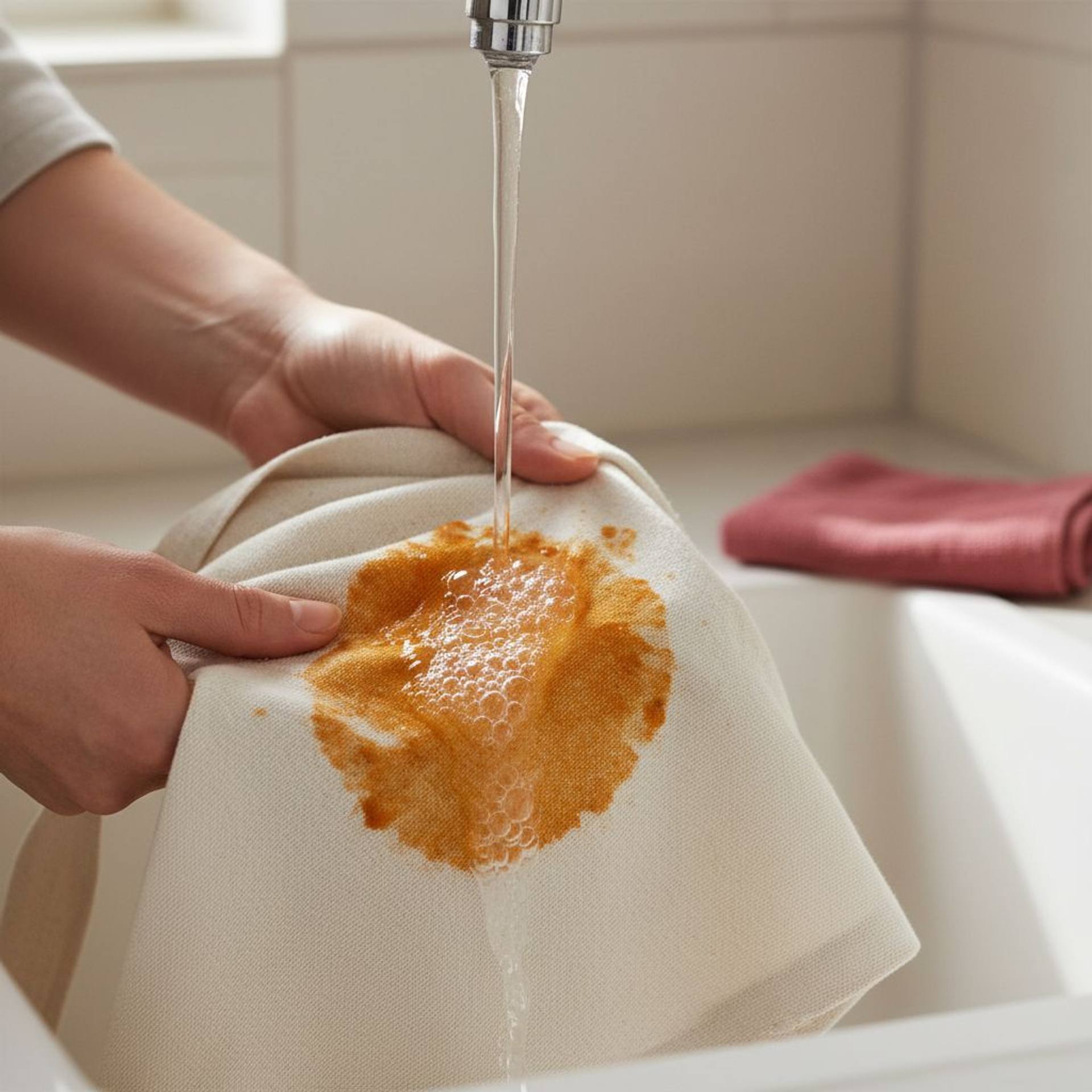
Rule number one: rinse the stain with cold water from underneath, not from the top. Water then pushes the soil out of the fibre instead of driving it deeper.
The order of steps decides the outcome more than the product itself. Stick to it: sorting, rinsing, pretreatment, optional enzymatic soaking, washing according to the label.
Plan for tonight
- 1
Sort the stains
Separate fresh from set-in stains. Fresh ones respond to every method much better.
- 2
Rinse spot-on
Cold water from underneath the stain, never from the top and never hot with protein stains.
- 3
Do pretreatment
Liquid detergent or enzyme gel straight onto the stain, leave for 15-30 minutes.
- 4
Soak enzymatically
With many stains, soak the whole apron in lukewarm water 30-40°C for 30-60 minutes.
- 5
Wash at the highest allowed temperature
Check ISO 3758 symbols on the label and wash at the highest temperature they permit.
- 6
Inspect before drying
Stain still visible? Do not dry or press. Repeat the wash, because heat will set it permanently.
This sequence applies to aprons made from cotton, linen, and cotton-polyester blends, the ones you can wash in a machine.
PVC-coated or impregnated aprons (oxford type) follow different rules. More on that next.
Do / Don't
Do
- Rinse protein stains with cold water, never hot
- Check the label and ISO 3758 symbols before choosing wash temperature
- Test vinegar or oxygen bleach on a hidden patch of fabric first
Don't
- Do not dry or press an apron with a partially removed stain. Heat will set it permanently.
- Do not use chlorine bleach on coloured or mixed fabric. Fading is irreversible.
- Never mix sodium hypochlorite (bleach) with ammonia. The reaction produces toxic chloramine gas.
Where DIY ends
which apron damages are beyond home cleaning
Let's be honest: not every stain will come out, either at home or at the laundry. Charring of fabric from contact with a hot pan or iron is physical damage and irreversible by any method.
A heavily set turmeric stain on light fabric or red wine rubbed in and dried in a hot dryer also rarely disappear completely. The realistic goal is to reduce visibility, not achieve 100% removal.
PVC-coated or impregnated aprons (oxford type) should never go in a washing machine. The only option is surface cleaning with a damp cloth and mild detergent.
When to send your apron to the laundry
A professional laundry has what you do not have at home. Separate spotting chemicals for protein, grease, and dye stains, applied with precision by a steam station, give accuracy impossible at the sink. Professional apron washing is 20 PLN. A sensible option if you have a mix of old, set-in stains or before an important shift when there is no time for several home wash cycles.

Now you know the theory. Practice can be less forgiving.
If you would rather not risk your favourite piece, leave it to the specialists at Gorące Żelazko laundry in Lublin.


Common questions about kitchen apron washing
It depends on the material and stain type. Protein stains (blood, egg) wash below 30°C, grease stains at 40-60°C, always within the limits of the label per ISO 3758 symbols.
It helps as a mild softener and deodoriser, but it will not replace a surfactant for grease or an enzyme for protein stains. Treat it as an add-on, not the main product.
Cotton and linen aprons yes. PVC-coated or impregnated aprons (oxford) no. The only option for those is surface cleaning with a damp cloth and mild detergent.
Usually leftover grease or protein that did not rinse out with too low a temperature or too short enzymatic soaking. Extend the soak time and check your temperature against the label.
About the author
Małgorzata Małecka
Owner of the Gorące Żelazko laundry
Małgorzata Małecka runs the Gorące Żelazko laundry in Lublin. Together with her team, she makes sure customers' clothes, shoes and fabrics come back clean and in the best possible condition.