How Fabric Softener Actually Works
Positive charge and a slippery layer changes the feel. Here's how it works

You buy fabric softener, add it according to instructions, and after drying your towel is still rough and absorbs water worse than it used to. This is not a bad product or a washing mistake, just the predictable result of how softener physically changes the fiber.
Below we explain the mechanism step by step, then show which fabrics benefit from this trade-off and which don't.
Fabric softener composition: what softens and why
Positive charge, fatty tail, and a thin slippery layer that changes how fabric feels
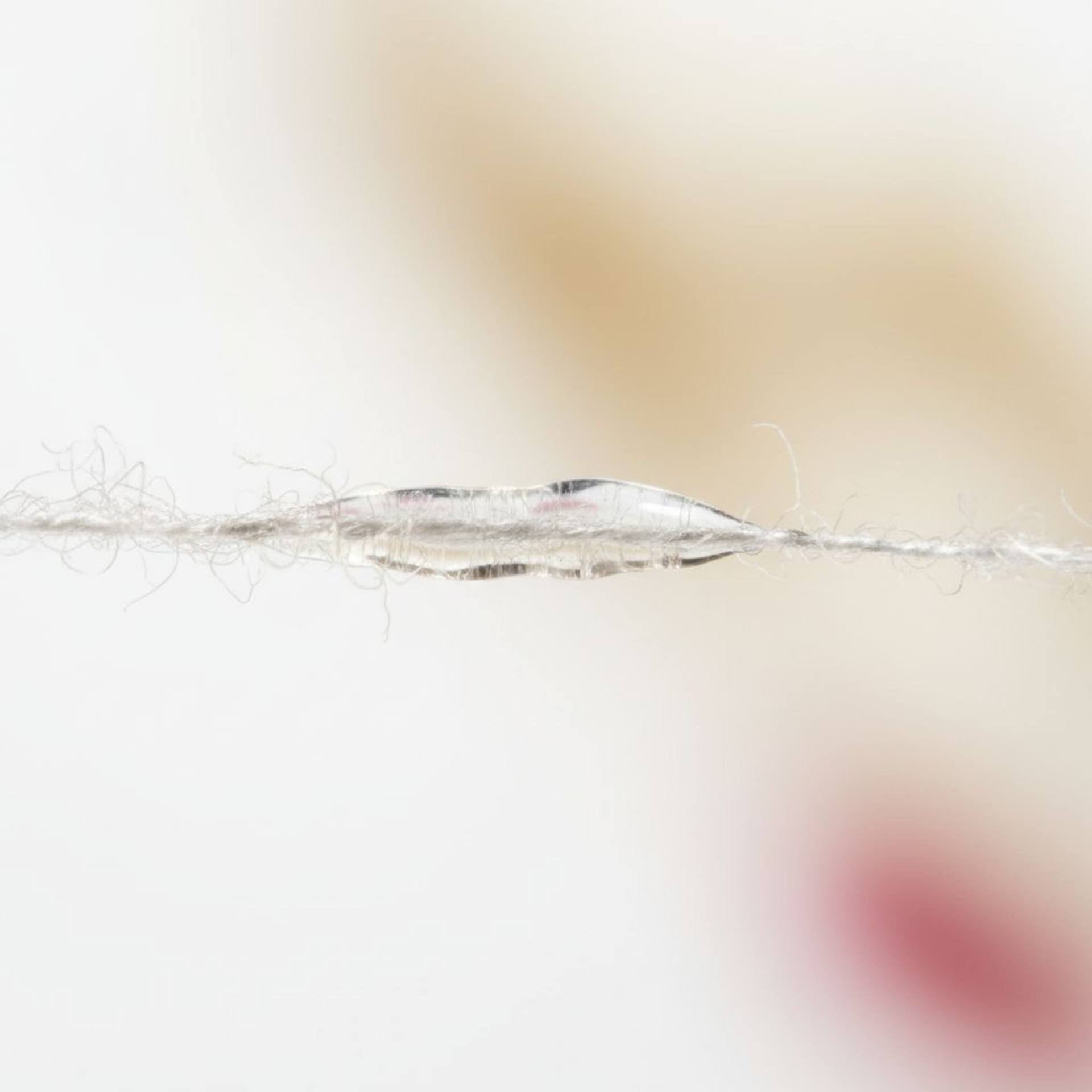
Cellulose fibers, like cotton, linen, and viscose, have a negatively charged surface after detergent washing. This comes from carboxyl and hydroxyl groups plus traces of anionic surfactants from the powder that don't wash away completely even with rinsing.
Home fabric softener is typically a cationic surfactant, most often a quaternary ammonium ester (esterquat). The exact CAS number depends on the manufacturer and fatty chain length, so there is no single universal designation for the whole category.
The positively charged head of the molecule binds electrostatically to the negatively charged fiber. The fatty tails, derived from C16-C18 fatty acids, point outward and create a thin slippery layer. The result is less friction between fibers, meaning soft feel, and fewer static charges when tumble drying.
That same layer giving the soft feel is hydrophobic and blocks water from penetrating deep into the fiber. That's why towels and terry fabrics lose absorbency with regular softener use. It's a side effect of the same mechanism, not a separate flaw.
Choosing softener depends on fabric type, not on brand.
Which fabrics benefit from softener
Do
- Everyday cotton clothes and cotton bedding, where softness and static reduction matter more than absorbency.
- Use moderate amounts per label, added to the softener dispenser, not directly into the drum.
Don't
- Towels and terry fabrics: the slippery layer blocks absorbency.
- Sportswear and breathable membranes: the layer clogs pores and reduces moisture wicking. Sportswear makers recommend against it in care instructions.
- Wool and silk without a dedicated formula: different surface charge profile, risk of uneven coating and stiffness.
Most laundry detergents use anionic surfactants, like alkylbenzene sulphates. Softener is cationic, so mixed with detergent in the same water bath, they neutralize each other electrostatically and form an insoluble complex.
That's why washing machines have separate compartments for powder and liquid softener, triggered in different cycle phases, not one shared dispenser.
Common mistake: adding softener with detergent at wash start
Adding softener by hand along with detergent at the start of the wash, skipping the dispenser and cycle phase, reduces the effectiveness of both products and leaves whitish streaks on fabric. This is the precipitated cationic-anionic complex.
Skin irritation after softener usually comes not from the cationic ingredient itself, but from fragrance compounds trapped on the fiber after washing. Risk increases with cold water washing, which rinses away product residue less effectively.
Fragrance allergens in fabric softener
These substances are on the EU list of fragrance allergens requiring mandatory labelling above 0.01% concentration, according to Regulation (EC) 648/2004 on detergents, Annex VII. Children, people with atopic dermatitis, and those with contact allergies are advised to use fragrance-free variants or skip softener in favour of mechanical methods.
How to restore towel absorbency
Skip softener every few washes to prevent the slippery layer from building up and let absorbency return. No chemistry needed. Dryer balls and vigorous shaking before hanging will help.

Now you know the theory. Practice can be less forgiving.
If you would rather not risk your favourite piece, leave it to the specialists at Gorące Żelazko laundry in Lublin.


Common questions about fabric softener
The blame lies with that same slippery layer responsible for the soft feel. It reduces water penetration into the fiber, and the effect builds with each wash. Towels and other terry fabrics feel this most when used regularly. The answer is less frequent softening when washing this type of fabric.
For most people, yes, because the cationic ingredient itself rarely causes skin reactions. Contact allergy sufferers and those with atopic dermatitis may react to the fragrance compound in the product. For this group and for children, fragrance-free versions are safer.
Not recommended. Breathable membranes lose their moisture-wicking ability under the slippery softener layer, which is why sportswear and technical clothing makers advise against it in care instructions.
Vinegar works differently. It dissolves soap residue and calcium carbonate deposits left on the fiber, which gives an indirect softening effect. But it does not create a cationic layer or reduce static charges the way softener does.