Home chemistry vs store stain remover: what works best
Vinegar, baking soda, and salt vs commercial stain remover: we test what really removes stains.

A stain always appears at the wrong moment: fresh and wet, or dried after a full day at work. Do you reach for vinegar from the kitchen or head to the shop for a stain remover?
The answer depends on what type of stain you're dealing with, because home chemistry and shop-bought products work on completely different mechanisms. Professional laundry distinguishes five main types of soils: protein-based (blood, egg, milk, sweat), fatty (oil, grease, cosmetics), tannin-based (coffee, tea, red wine, fruit), dye (ink, grass, paint), and resinous (tar, chewing gum, adhesives).
Each type responds to a different chemical mechanism, so there's simply no single universal answer about what's better.
Home stain removal methods
How vinegar, baking soda, and salt actually work
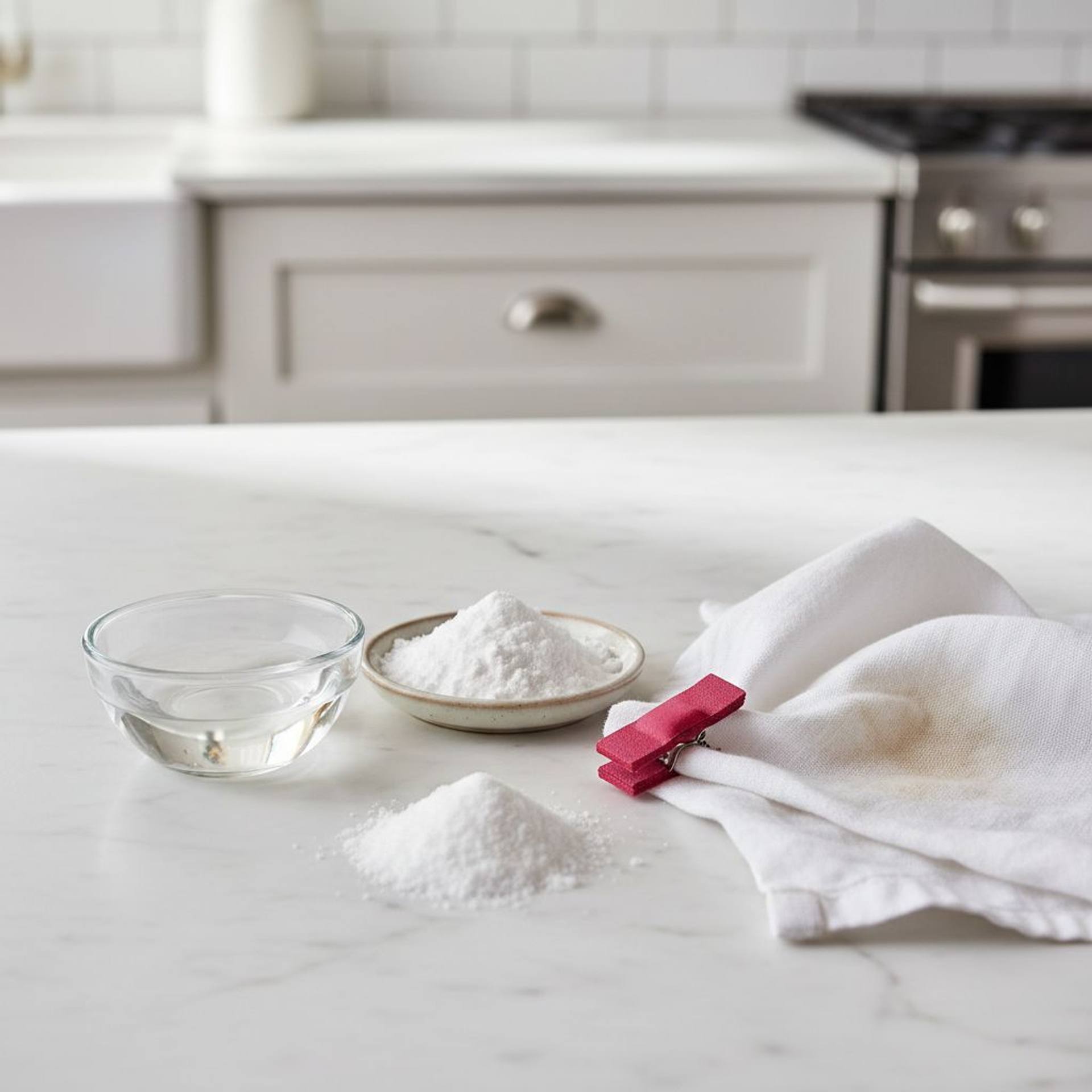
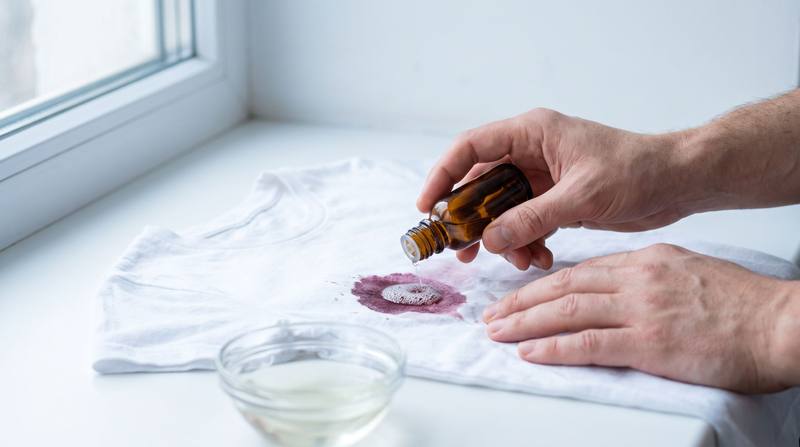
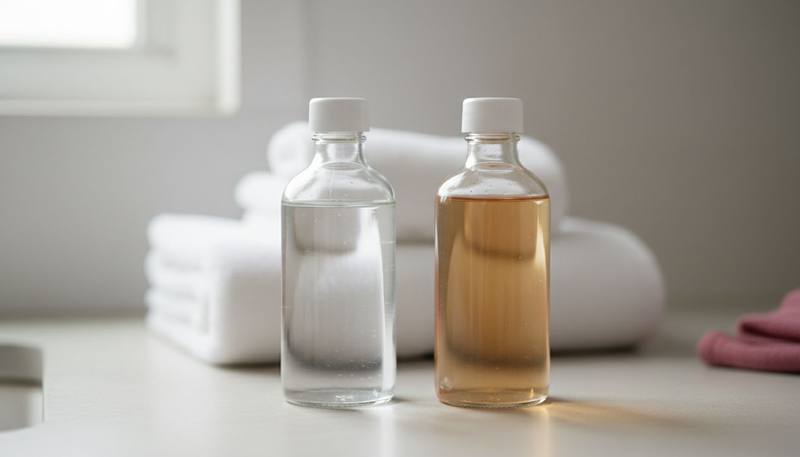
Distilled vinegar (acetic acid, CAS 64-19-7) works well on tannin-based and odour stains. At typical concentrations of 6-10%, it usually requires no special classification. At the upper limit, it crosses into skin and eye irritation territory, so diluting it is wise.
Baking soda (sodium bicarbonate, CAS 144-55-8) handles grease and odour well, working gently with a mild abrasive and absorptive action. It carries no classification as a hazardous substance. Table salt (sodium chloride, CAS 7647-14-5) has a different profile: it mainly helps with fresh red wine stains by extracting the dye before it soaks deeper into the fibre.
The popular recipe of baking soda plus vinegar sounds powerful, but chemically it's just neutralisation: you get water, carbon dioxide, and sodium acetate. The end product isn't stronger than either ingredient alone: that's recipe language, not chemistry.
Distilled vinegar (acetic acid 6-10%)
CAS 64-19-7Household acid dissolves tannins and neutralises odours, but at higher concentrations it irritates skin and eyes.
- Tannin-based stains (coffee, tea, wine)
- Neutralisation of unpleasant odours
- At around 10% concentration, it acts irritating to skin and eyes
- Always test on a hidden area of the fabric first
Since both worlds work through different mechanisms, the advantage doesn't belong to one side at all, it depends on the specific stain. The ratings below are qualitative, because there's no single standard directly comparing home methods to shop stain removers. They're based on laundry practice, not a single laboratory result.
Protein stain (blood, egg, milk, sweat)
Rinse fresh stains with cold water and salt. For dried stains, reach for an enzymatic stain remover, it will handle what home methods can't.
Never use hot water. Above around 40°C, protein denatures and the stain binds permanently to the fibre.
Fatty stain (oil, grease, cosmetics)
Baking soda with a little dish soap gives moderate results. A D-limonene-based solvent (CAS 5989-27-5) works well to very well.
Tannin stain (coffee, tea, red wine)
Salt at the fresh stage, then wash at 40°C, gives moderate and time-dependent results. Oxygen-based bleach from sodium percarbonate works better, but may lighten colour.
Test oxygen bleach on a hidden area first; there's a risk of fading the fabric's dye.
Dye stain (ink, grass, paint)
Methylated spirits gives variable results, depending on ink type. Specialist commercial solvent works well to very well.
Resinous stain (tar, chewing gum, adhesives)
Freezing and scraping removes most of the residue mechanically, but home chemistry alone is weak here. Commercial solvent stain remover gives very good results.
Mistakes that make the problem worse
The classic mistake is hot water on protein stains: above around 40°C, protein denatures and binds permanently to the fibre instead of washing away. Oxygen or chlorine bleach on wool or silk destroys the protein fibres with the same mechanism meant to remove the stain. Soaking too long in hydrogen peroxide lightens the fabric's dye locally, an effect hard to reverse.
Never mix these products
Sodium hypochlorite, meaning chlorine bleach (CAS 7681-52-9), mixed with ammonia or vinegar releases toxic chloramine vapours and chlorine gas. This is a real health hazard, not just an effectiveness problem. General rule: never combine products from different chemical categories without checking compatibility on the label.
Before you use a stronger product
Test it first on a hidden area of the fabric, such as an inside seam. Work in nitrile gloves, in a well-ventilated space, and keep products away from children.
When to take items to professionals
Warning signs to recognise
DIY approach or laundry?
Do
- Treat fresh, surface-level stains on cotton or linen with a home remedy right away; reaction time with the fibre is then short
- Check the care label and test a stronger product on a hidden area before use
Don't
- Don't try another method on an old, set-in stain; you're just deepening the damage
- Don't experiment on fabric marked for dry cleaning only
- Don't mix products from different chemical categories

Now you know the theory. Practice can be less forgiving.
If you would rather not risk your favourite piece, leave it to the specialists at Gorące Żelazko laundry in Lublin.


Frequently asked questions
It depends on stain type. For fresh protein stains, salt and cold water work well, but on dried stains, enzymatic stain remover has the edge. With resinous or dye stains, home chemistry usually loses to specialist commercial solvent.
The fabric itself, usually not: at typical 6-10% concentration, vinegar has no hazardous material classification. Colour is another matter, on delicate fibres and intense dyes, acetic acid can weaken it, so test on a hidden area first. At higher concentrations, skin and eye irritation is also a concern, so dilute if needed.
No. The most dangerous is mixing chlorine bleach with ammonia or vinegar, because the reaction releases toxic fumes. Never combine products from different chemical categories without checking compatibility.
When the stain is old or set by high-temperature washing, when the fabric is delicate, or when the care label says dry cleaning only. Home methods in those situations more often worsen the damage than remove it.
About the author
Małgorzata Małecka
Owner of the Gorące Żelazko laundry
Małgorzata Małecka runs the Gorące Żelazko laundry in Lublin. Together with her team, she makes sure customers' clothes, shoes and fabrics come back clean and in the best possible condition.