Stains on fleece: a complete guide
Grease, mud, blood and set-in smoke smell, DIY and professional methods

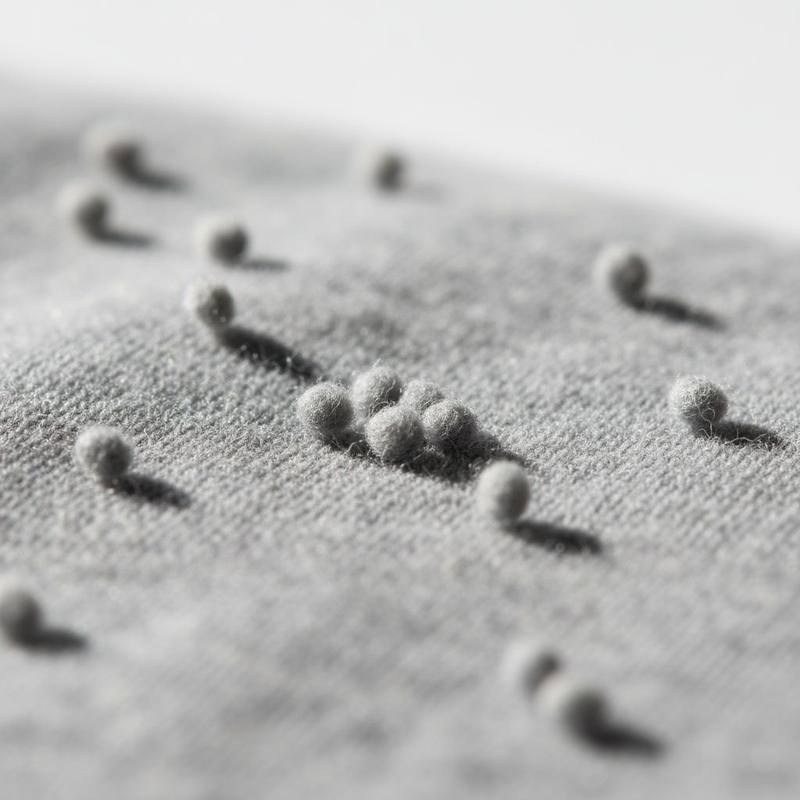
The nap structure hides some staining deep between the fibers, where detergent cannot always reach without aggressive treatment. Fleece is most often a polyester fiber brushed into a dense, fluffy nap that traps heat wonderfully, but that same structure makes stains harder to remove. Before the garment goes into the wash, it helps to know which method fits a given stain, because the wrong order of steps often sets the stain instead of removing it.
It is important to say this honestly: very stubborn fatty stains, washed multiple times without results, may not come out 100% even with professional treatment. More aggressive mechanical treatment risks damaging the nap itself, so patience and the right order of steps matter more than sheer scrubbing force.
Why stains cling to fleece more than to cotton
a short explanation of the fiber structure that explains the rest of the guide
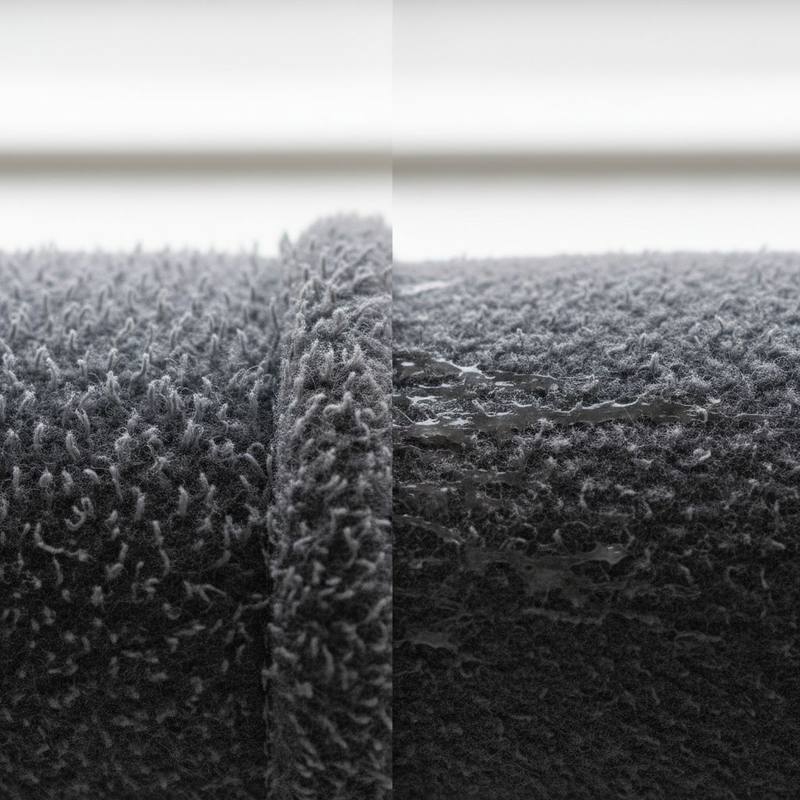
Fleece is most often made from polyester fiber, mechanically brushed to create a dense, fluffy nap. The same structure that traps warm air so well also creates a dense network of microscopic channels between the fibers. Grease and oil seep into those channels by capillary action and hide beyond the reach of ordinary rinsing, so water alone rarely works.
The fiber surface is also hydrophobic, meaning it resists wetting, which on one hand makes muddy or watery stains easy to rinse away before they set, and on the other makes grease hard to flush out without a surfactant's help. The longer a stain sits untouched, the deeper it works into the nap, and grease stains also yellow over time, even after a seemingly successful wash.
First aid: before you throw fleece into the wash
a few minutes right after staining matter more than any product
- 1
Remove the excess
Gently scrape off or shake off any solid excess of the stain before applying anything to it.
- 2
Don't rub it dry
Rubbing a dry stain works it deeper into the nap and widens the stained area instead of lifting it.
- 3
Identify the stain
Blood, grease and mud each need a different water temperature, so figure out what you're dealing with before you start rinsing.
- 4
Treat it on the spot
Apply the right product directly to the stain, and only once it has worked, put the whole item into the wash.
Most common fleece stains
Grease and oil (kitchen, bicycle, sports equipment)
Apply dish soap liquid directly to the stain and wait 10-15 minutes before washing. The surfactant in the liquid breaks down grease trapped on the hydrophobic PET surface, hard to rinse with water alone.
Cosmetics (foundation, cream)
Use an alcohol-based stain remover, previously tested on an inconspicuous fabric area. Oils and silicones from cosmetics stick strongly to the fiber, so one treatment may not be enough.
Mud
Wait until mud completely dries, only then brush or shake off excess. Washing on wet mud just works the stain deeper into the nap.
Blood (fresh)
Rinse the stain immediately with cold water, never warm or hot, because proteins in blood denature in heat and set permanently. Only then wash normally.
Warm water on fresh blood stains sets them irreversibly.
Set-in smoke or sweat smell
Soak garment in a solution of baking soda or vinegar for 15-30 minutes before proper washing. Volatile aroma compounds penetrate the nap structure and regular washing does not fully remove them on first attempt.
Rules for washing fleece with stains
Even once a stain lifts, the wrong machine settings can set it right back in or wreck the nap.
Wash temperature
30 to 40 degrees is enough for most fleece stains and protects the fiber's elasticity. Higher heat does not remove grease more effectively, it just wears down the nap faster.
No fabric softener
Softener coats the fibers in a thin film that blocks fleece's breathability and weakens its ability to wick moisture away.
Low-heat drying
High dryer heat melts and sets any remaining grease into the fiber structure, so fleece is better dried on low heat or air-dried.
No chlorine bleach
Chlorine weakens and yellows synthetic fiber, and on protein-based stains such as blood it sets them further instead of removing them.
More aggressive mechanical treatment, hard scrubbing or repeated washing at high heat risks damaging the nap itself. Fleece fibers can matt or flatten permanently, and once that happens the fabric loses some of its thermal properties regardless of whether the stain eventually comes out.
What never to do with fleece
mistakes that set a stain in permanently instead of removing it
Fleece in a nutshell
Do
- React right away: a fresh stain always comes out easier than a dried one.
- Test a product on an inconspicuous seam before using it on a visible stain.
- Dry on a hanger or on low heat until you're sure the stain is fully gone.
Don't
- Don't dry fleece at high heat or iron it while a stain is still uncertain, heat melts the fiber and sets the stain.
- Don't use chlorine bleach, it weakens and yellows the synthetic nap.
- Don't wash a fresh blood stain in warm water, the protein denatures in heat and binds to the fiber permanently.
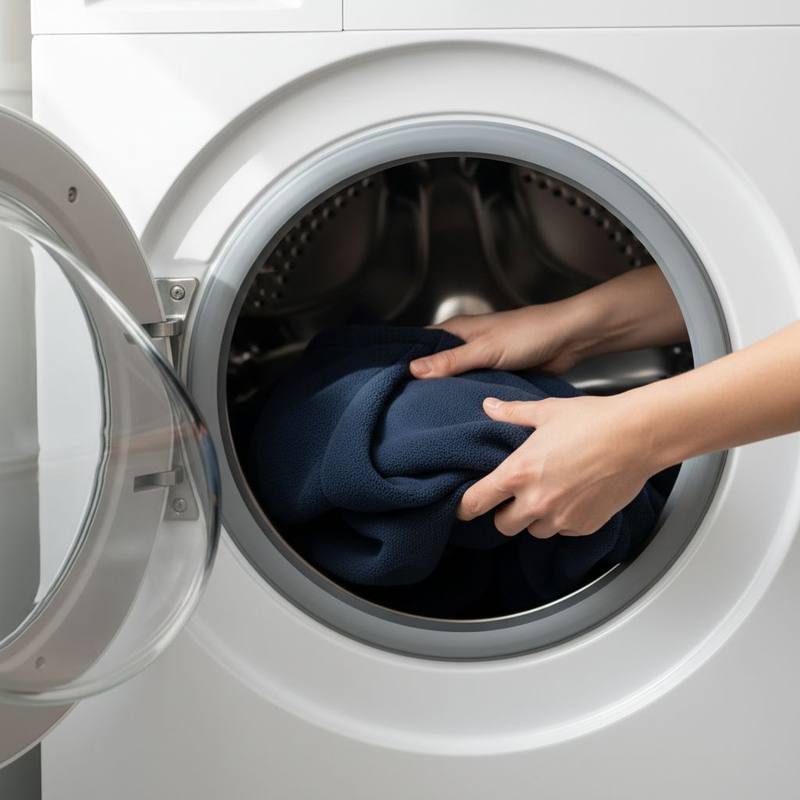
Once the stain is out, wash the whole item on a program suited to fleece, usually at 30 to 40 degrees, avoiding a high spin cycle where possible since it mechanically deforms the nap. Before drying, check the stain against the light, because wet fabric can be misleading and hide leftover staining.
If a mark is still visible, repeat the treatment rather than drying the item. Heat from a dryer or an iron sets virtually any type of stain into a thermoplastic fiber, so it is better to spend a few extra minutes checking than to turn a removable stain into a permanent one.
When to take fleece to a laundry
A large stain, a membrane jacket, or an item with a care label allowing only professional cleaning is a signal not to risk another DIY attempt. It is also worth handing an item to specialists when an earlier attempt left streaks or changed the texture of the nap, since further home treatment usually only deepens the problem.

Now you know the theory. Practice can be less forgiving.
If you would rather not risk your favourite piece, leave it to the specialists at Gorące Żelazko laundry in Lublin.


Frequently asked questions
Apply dish soap directly to the stain and wait 10 to 15 minutes before washing at 30 to 40 degrees Celsius. The surfactant breaks down grease sitting on the hydrophobic PET surface, which water alone won't rinse out.
Wait until the mud is completely dry, then shake or brush off the excess. Washing wet mud only rubs the dirt deeper into the pile.
Rinse the stain immediately with cold water, never warm or hot, because blood protein denatures in heat and sets permanently. Only after rinsing, wash the garment normally at 30 degrees Celsius.
No. Fleece is a thermoplastic fiber, so an iron melts it and sets any stain still left in the fabric. Creases disappear on their own once the item dries on a hanger, ironing is not needed here.
Partly. Soaking the item in a baking soda or vinegar solution for 15 to 30 minutes before washing removes most volatile odor compounds, but a very set-in smell can take two or three wash cycles before it disappears completely.
About the author
Małgorzata Małecka
Owner of the Gorące Żelazko laundry
Małgorzata Małecka runs the Gorące Żelazko laundry in Lublin. Together with her team, she makes sure customers' clothes, shoes and fabrics come back clean and in the best possible condition.