Pilling and static on fleece fabric
Why knit fleece pills faster than plain-weave polyester, and how to manage it

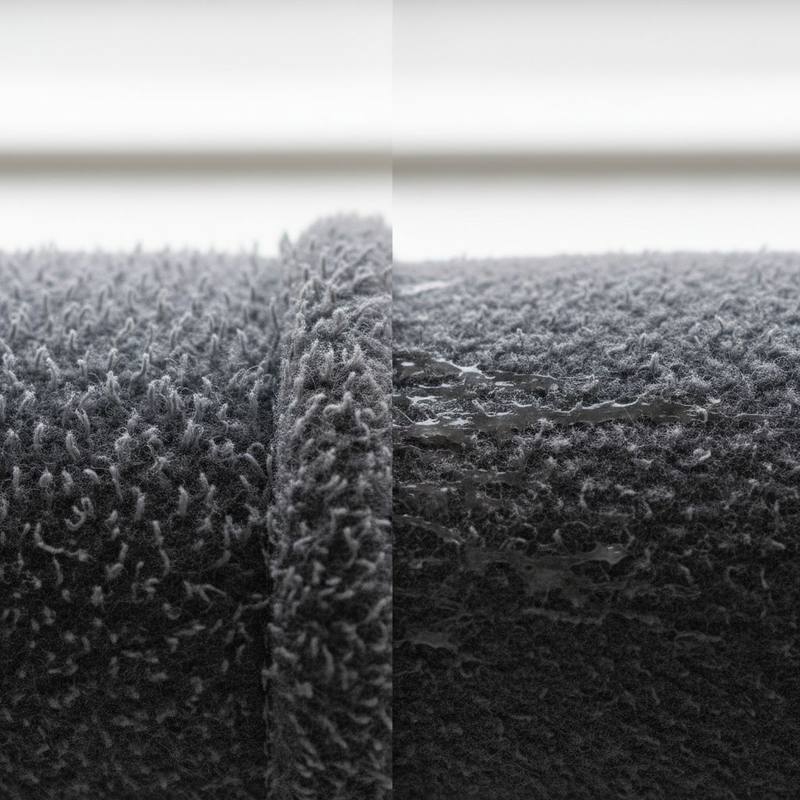
Pilling is tiny balls on the fabric surface, formed from tangled, protruding fiber ends that partially tear away from the knit structure due to friction. However, they do not fall off completely, but instead get caught in neighboring nap fibers.
The problem is that PET forms continuous fibers, very resistant to breaking, so once formed, pilling does not shed easily, the way it does on fabrics made from shorter fibers. The balls remain firmly embedded in the nap, which paradoxically makes fleece visually more prone to visible pilling than, say, cotton, even though the PET fiber itself is mechanically stronger.
The difference comes from structure: nap, unlike smooth, woven plain-weave polyester, simply has more protruding fiber ends for pilling to catch on. That is why knit fleece on a sweatshirt or a blanket pills faster than, say, a jacket lining made from the same raw material.
What intensifies pilling and static on fleece
the conditions and friction behind both effects
To assess a fabric's susceptibility to pilling, the industry uses a lab test, the Martindale method, standardized as ISO 12945-2 and rated on a scale of 1 to 5, where 5 means no pilling. The lower the rating, the sooner visible balls appear on the surface.
Pilling is intensified by washing with rough-textured fabrics like denim or terry towels, high spin speeds, and tumble drying, where friction between layers of fabric is constant and intense. It is also intensified by wearing the garment under a backpack, suspenders, or a seatbelt, where friction is pointwise and repetitive, so balls form fastest there.
There is also electrification: polyester is a weak conductor, so triboelectrification intensifies at air humidity below 30 to 40 percent, typical of the heating season. Dry air and friction against other layers of clothing make fleece pick up an electrostatic charge, so it clings to the body or sparks when taken off.
Fleece pilling and static, by the numbers
1 to 5, where 5 means no pilling
below 30 to 40 percent
high, which is why pilling does not shed on its own
backpack, suspenders, seatbelt
How to safely remove pilling from fleece
step by step, without risking cut knit threads
- 1
Stretch and smooth the fabric
Lay the sweatshirt or blanket on a flat surface and gently stretch the section with pilling, so the balls stand away from the nap and detach more easily.
- 2
Use a fabric shaver or an anti-pill comb
A mechanical fabric shaver trims the balls with an even blade, without pulling threads. An anti-pill comb works more gently, so it suits thinner, more delicate nap better.
- 3
Shake it out and check under light
After going over the whole surface, shake out the fabric to remove the trimmed balls, and check it under light for any spots you missed.
Never do this
Do not use a razor or a knife to remove pilling. One careless move and the blade cuts through not just the balls, but the base knit threads too, leading to holes and unraveling nap in that spot.
How to prevent pilling and static day to day
washing and drying habits that curb both problems
The way you wash fleece has the biggest effect on how fast it pills. Washing it separately from rough fabrics like denim, towels, or clothing with velcro reduces the friction that triggers pilling. Low spin speed and a lower wash temperature further protect the nap structure.
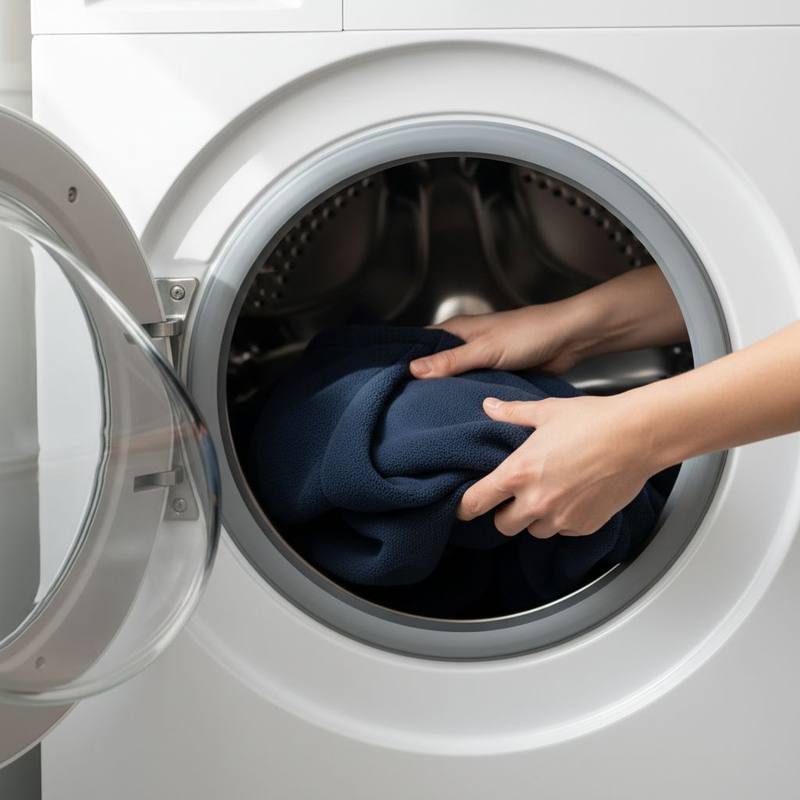
A mesh laundry bag acts as a buffer: it limits direct contact between fleece and other fabrics in the drum and protects cuffs and the area around the zipper. Turning the sweatshirt inside out, in turn, protects the visible outer layer of nap, since friction shifts to the inner side instead.
Line drying instead of tumble drying limits extra friction after washing. If a tumble dryer is the only option, it is worth setting a low temperature and a shorter cycle.
When drying fleece during the heating season, run a room humidifier or add a splash of vinegar to the rinse. Raising humidity limits the buildup of electrostatic charge, so the sweatshirt electrifies less and clings less to other layers of clothing.
Pilling and static in a nutshell
Do
- Remove pilling with a mechanical fabric shaver or an anti-pill comb
- Wash separately from rough fabrics like denim or towels
- Set a low spin speed
- Use a humidifier or a vinegar rinse for static
Don't
- Do not use a razor or a knife to remove pilling
- Do not wash with velcro or denim
- Do not tumble dry if pilling is already visible
When to take fleece to a laundry
the point past which home methods no longer help
When a professional laundry is worth it
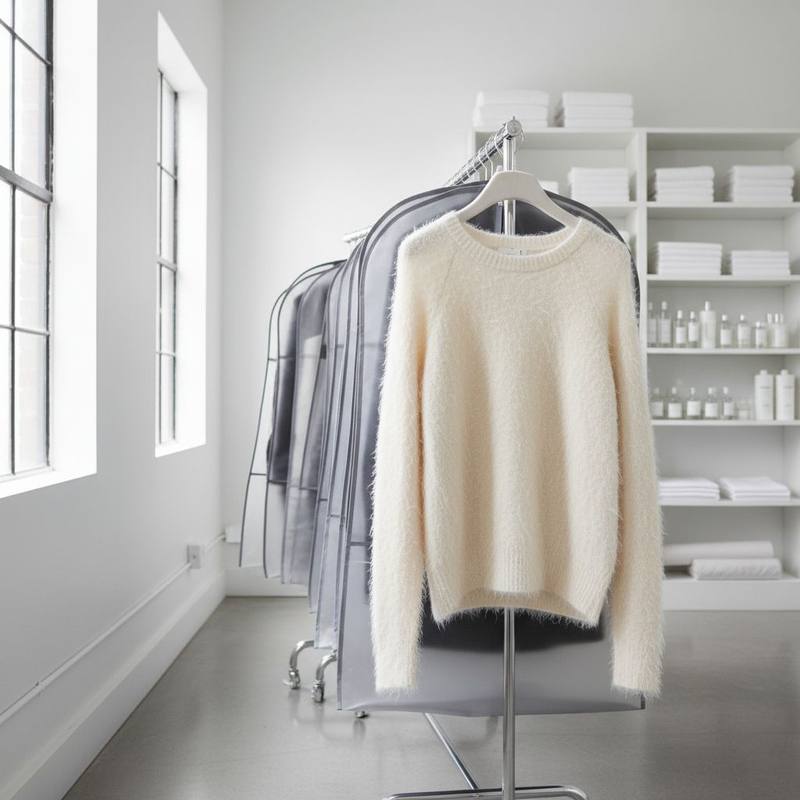
Home methods handle the odd ball of pilling and occasional static, but for a heavily pilled, favorite fleece, or a blend fabric with added wool or elastane, it is worth handing the item to specialists. Professional washing matches the program to the fabric's exact composition, which limits the risk of making the pilling worse at the next wash.

Now you know the theory. Practice can be less forgiving.
If you would rather not risk your favourite piece, leave it to the specialists at Gorące Żelazko laundry in Lublin.


Frequently asked questions
Because continuous PET fibers are very resistant to breaking, so pilling does not shed, it just gets caught in the dense nap. Washing with rough fabrics, high spin speeds, and point friction under a backpack or suspenders all intensify it.
With a mechanical fabric shaver or an anti-pill comb, never a razor or a knife, because one careless move cuts through the base knit threads and leaves holes.
Polyester is a weak conductor, so it easily builds up electrostatic charge, especially at low air humidity during the heating season. A vinegar rinse and a room humidifier both help.
Yes. A lower temperature together with a low spin speed reduces friction between fibers in the drum, so fewer fiber ends stick out of the nap and fewer balls form with each wash.
Yes, a mesh laundry bag limits direct contact between fleece and other fabrics in the drum, which reduces the friction responsible for pilling, especially when washing alongside heavier items like jeans or towels.
About the author
Małgorzata Małecka
Owner of the Gorące Żelazko laundry
Małgorzata Małecka runs the Gorące Żelazko laundry in Lublin. Together with her team, she makes sure customers' clothes, shoes and fabrics come back clean and in the best possible condition.