Hard water and laundry: why detergent doesn't foam
Calcium and magnesium ions block surfactant before it works. Learn how this affects your laundry and what to do about it.

You add powder to the washing machine, the cycle finishes, and there's no foam at all. Clothes come out dull, sometimes grey, even though you wash regularly. Hard water is almost always the culprit, not faulty detergent.
Calcium and magnesium ions dissolved in water bind to surfactant before it can do anything about dirt. That's why powder doesn't foam in the washing machine, even when you dose it exactly according to the package instructions. You haven't done anything wrong. It's just the chemistry of your tap water that's undermining your efforts.
Below is the mechanism step by step, concrete costs of this phenomenon, and what you can do about it.
Why detergent doesn't foam in hard water
Calcium and magnesium ions bind surfactant before it can work
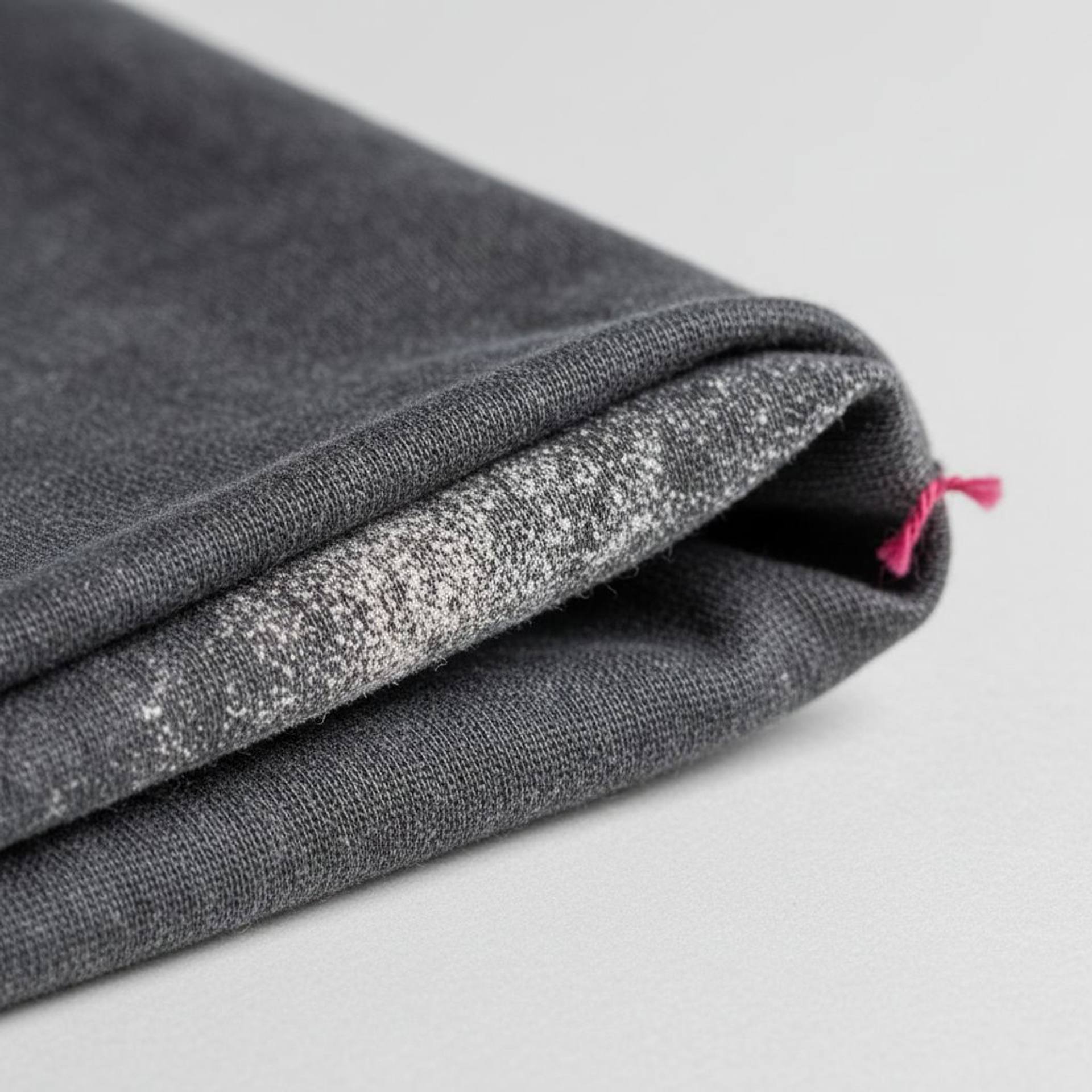
Most washing powders and gels contain anionic surfactants, most commonly linear alkylbenzenesulfonate sodium (LAS). In hard water, these molecules react with Ca2+ and Mg2+ ions, forming insoluble calcium-magnesium salts, commonly known as 'soap scum'.
This reaction uses up surfactant before it can lower the water's surface tension and form foam. In practice, the active dose of detergent is lower than the amount you measure into the drawer.
The phenomenon intensifies with temperature. Calcium carbonate solubility decreases with heating, so above around 60°C limescale deposits faster. You see and feel the effect in stiffened, greying cotton fabrics and deposits on the heating element and washing drum.
Below is a water hardness scale so you can check which category your tap water falls into. The classification thresholds correspond to the standard water hardness scale, including the PN-C-04554 standard, and the measurement itself is done using the reference method ISO 6059:1984, which is EDTA titration. Water in Lublin, due to the limestone substrate of the Lublin region, typically falls into the hard or very hard category. You'll find the exact value in your local water company's report.
Water hardness scale
below 4°n · below 71 mg CaCO3/l · below 0.7 mmol/l
4-8°n · 71-143 mg CaCO3/l · 0.7-1.4 mmol/l
8-18°n · 143-321 mg CaCO3/l · 1.4-3.2 mmol/l
above 18°n · above 321 mg CaCO3/l · above 3.2 mmol/l
No foam is not just inconvenient for washing. It's a real cost: you use more detergent than needed, and your washing machine and fabrics pay the price. Here's exactly how much.
Limits of home washing in hard water: when DIY fails
How to check water hardness, dose detergent, and know when to use a laundry service
Before you send your laundry out, it's worth trying four steps that limit the effects of hard water at home. None of them require specialist equipment.
- 1
Check your water hardness
Use a test strip available at hardware stores or get the data from your water company's water quality report. This is the foundation. Without it, you're dosing blind.
- 2
Adjust your detergent dosage
With hard water, the package dosage usually isn't enough because some surfactant binds with calcium and magnesium ions before reaching the dirt. Increase the dosage according to the manufacturer's table for hard or very hard water.
- 3
Add a water softener
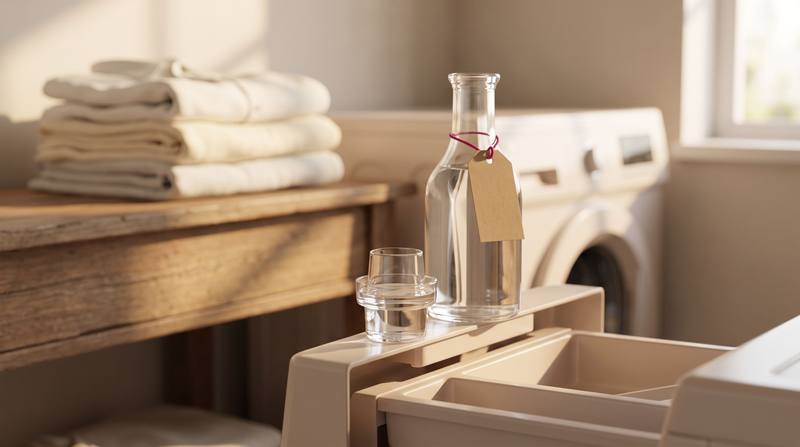
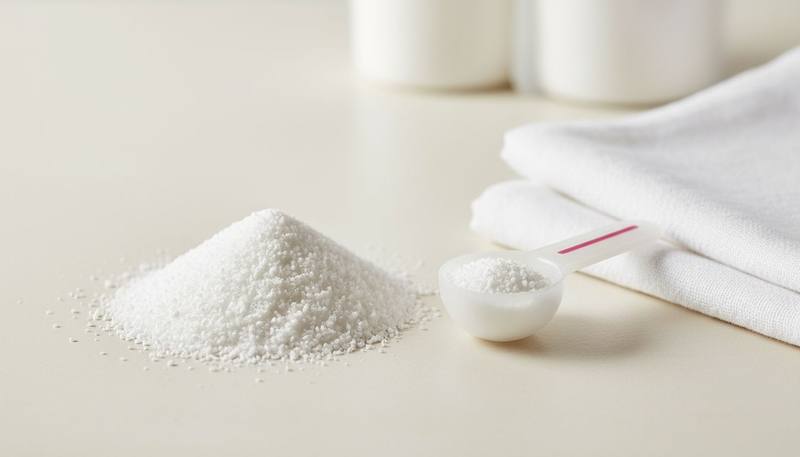
Washing soda (calcined soda) in amounts of one to two tablespoons per load or a Calgon-type product based on sodium hexametaphosphate bind calcium and magnesium ions before they can block surfactant. This is a different product from fabric softener.
- 4
Descale your washing machine regularly
Run an empty cycle with citric acid at high temperature to dissolve limescale deposits on the heating element and drum. Do this every few to dozen washes, depending on your water hardness.
Fabric softener is not the same as water softener
Rinse fluid from the machine drawer softens fibres, not water, so it won't help with the lack of foam in hard water. The most common mistake is adding more detergent when foam is still absent, instead of adding water softener to the wash bath. Concentrated washing soda in pure form irritates skin and eyes, so wear protective gloves. Concentrated acetic acid, or vinegar essence above about 90%, is corrosive and causes skin burns, so gloves are essential, not optional, when working with it in pure form.
Professional laundries soften water using ion exchange method: a resin exchanges calcium and magnesium ions for sodium ions, reducing hardness to nearly zero. Home methods limit the effects of hard water but don't eliminate it as effectively.
If you have very hard water and wash wool, silk, or bedding, sending your laundry to a laundry service is a rational choice, not a failure. Softened process water makes a difference that's hard to replicate in a home washing machine.

Now you know the theory. Practice can be less forgiving.
If you would rather not risk your favourite piece, leave it to the specialists at Gorące Żelazko laundry in Lublin.


Frequently asked questions
Not directly, but limescale deposits on the heating element and drum over time reduce heating efficiency and accelerate component wear. Regular descaling with citric acid limits this risk.
The easiest way is to use a test strip from a hardware store or check your water company's water quality report. The reference method is EDTA titration according to ISO 6059:1984 standard.
No. Rinse fluid works on fibres through cationic surfactants and doesn't affect water hardness. For this purpose, you need a separate water softener, such as washing soda or a product based on sodium hexametaphosphate.
We described above the safety rules for working with concentrated washing soda and concentrated acetic acid in pure form. Used in small, approximate amounts directly in the wash, vinegar and washing soda are safe for fabrics and washing machines.
About the author
Małgorzata Małecka
Owner of the Gorące Żelazko laundry
Małgorzata Małecka runs the Gorące Żelazko laundry in Lublin. Together with her team, she makes sure customers' clothes, shoes and fabrics come back clean and in the best possible condition.