Tweed: Felting and Moths
Why tweed felts more easily than other wool, and how to protect it from moths

Tweed has two separate, though related, risks: felting under hot water and friction, and moths, which feed on pure wool. This guide explains the mechanism behind both and shows how to safely store a blazer or coat seasonally. You'll find the definition and varieties of tweed in the main guide to the fabric, linked at the bottom of the page.
Why tweed felts faster than other wool
The science of fiber compression and diagonal weave
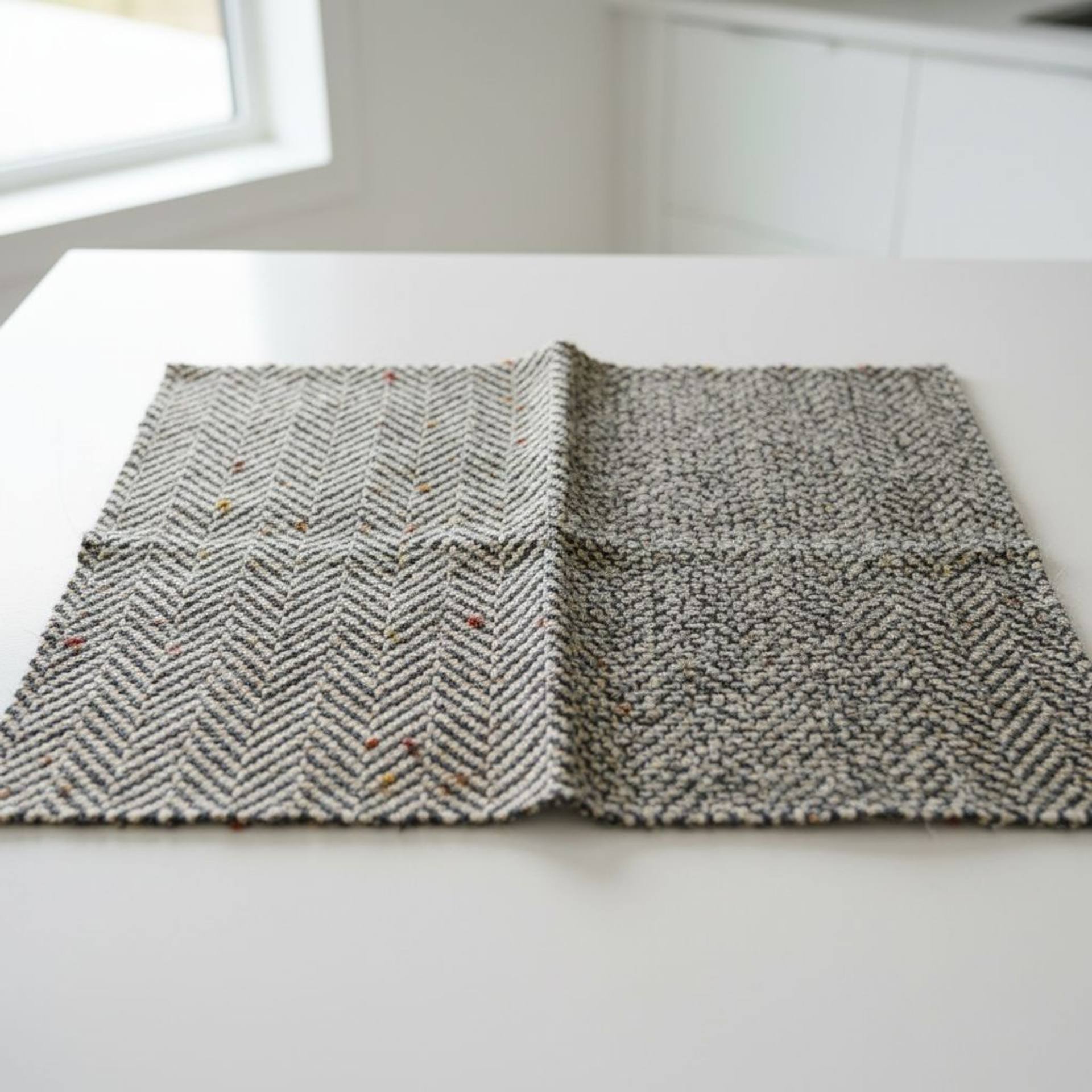
Tweed starts with a different base risk than most smooth combed fabrics, and that's before it even gets to your washing machine. It's already partially felted at the factory in the fulling process, which is where its characteristic, compact texture comes from.
The problem starts when this felting continues uncontrollably in home washing, for example on a cotton cycle at 40 to 60°C. Because the fabric is already close to the threshold of full felting, it needs less heat and friction to cross the point of no return than smooth combed wool starting from a much lower level of compression.
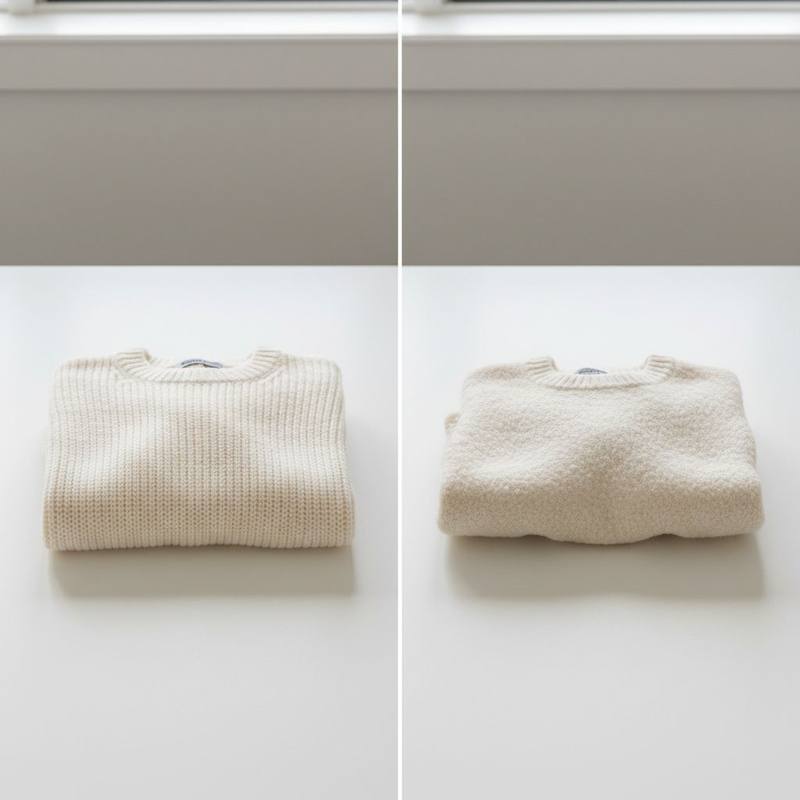
Hot water, mechanical friction, and dense weave together cause irreversible compression of the fabric structure and distortion of the pattern, herringbone or houndstooth. The effect is difficult to reverse even professionally: the fabric becomes visibly stiffer and thicker, and the pattern loses sharpness of outline.
Tweed as a woven material is less elastic than knits, so it's more prone to permanent creasing and mechanical damage at stress points like blazer elbows or skirt knees.
On the other hand, the thick, tightly twisted yarn of tweed is less prone to pilling, or matting, than thin cashmere or merino knits. Short, loose fibers simply don't emerge from such a dense thread structure.
Good to know
The full mechanism of wool felting and ways to rescue already felted or shrunken fabric are described separately in a guide about wool felting. If your sweater or woolen fabric has already matted, you'll find concrete rescue steps there.
Tweed and moths
Safe seasonal storage of blazer or coat

Tweed as pure wool, which is animal keratin, is attractive food for clothing moth larvae (Tineola bisselliella). The complete development cycle of a larva in home conditions, at temperatures of 20 to 25°C and relative humidity of 60 to 70%, takes 60 to 90 days. In this time, a female lays 40 to over 100 eggs.
The dense texture of tweed has a practical disadvantage here: it makes visual inspection of early signs of feeding difficult, because small holes can be invisible in the coarse surface. In practice, this means you often detect moth damage only at an advanced stage, when the damage is already obvious.
Seasonal tweed storage in a nutshell
Do
- Wide, shaped hanger, never wire
- Breathable cotton or nonwoven bags
- Cedar wood, lavender, cloves refreshed every 3-6 months
- Item completely clean and dry before storage
- Storage humidity 50-55% RH
- Air for minimum 24h before putting in the wardrobe
Don't
- Sealed PVC film: lack of circulation promotes moisture and mold
- Hiding with traces of sweat or fat, which attract larvae
- Humidity above 65% (risk of mold) or below 40% (over-drying of fiber)
Good to know
Complete guides about moths and wool storage are described separately: for cashmere in a guide about moths and cashmere storage, and generally for wool, pilling, and moths in a separate article devoted to these topics.

Now you know the theory. Practice can be less forgiving.
If you would rather not risk your favourite piece, leave it to the specialists at Gorące Żelazko laundry in Lublin.


Most common questions about tweed felting and moths
Tweed is already partially felted at the factory in the fulling process, so it takes less heat and friction to reach full, irreversible felting than smooth combed wool. Avoid water washing of structural items and high ironing temperatures.
It depends on the extent of shrinkage. With minor wrinkling, try gently stretching the damp fabric to its original shape and dry it flat, away from heat sources, never in a dryer. With obvious compression or a distorted herringbone or houndstooth pattern, home methods usually aren't enough and a tailor or dry cleaner evaluation is needed, sometimes with unpicking and re-mounting reinforcement. More rescue methods are in the guide about wool felting.
Yes, tweed as pure wool is attractive food for clothing moth larvae. The complete development cycle takes 60-90 days in typical home conditions, and the dense texture makes early feeding signs hard to spot.
Use a wide, shaped hanger and breathable cotton bag, not sealed PVC film. Refresh cedar wood, lavender, or cloves every 3-6 months. The item must be completely clean and dry before storage, and storage humidity should be 50-55% RH.