Washing a Down Jacket
Temperature and detergent chemistry: why low temperatures protect fiber structure

You're holding a jacket in your hand in front of the washing machine and hesitating. This jacket is a real investment, and one wrong wash seems irreversible. This fear has a physical basis. The procedure of washing down at home is fully feasible, however, as long as you understand why specific parameters matter.
The surface of each down cluster is covered by a thin layer of natural oils (lipids) with a slightly acidic pH of 4.5 to 6.5. This is what gives down its water-repellency, or resistance to soaking, and resilience. Specialized detergents marked "down wash" are designed for this same range: neutral pH, usually 5.5 to 7, with no protease enzymes and no optical brighteners. Enzymes, specifically proteases, break down protein structures, and a down cluster is a protein structure (keratin-like), so repeated washing with regular universal detergent with enzymes gradually degrades it.
Three Tag Symbols You Must Decipher Before Washing a Down Jacket
Temperature and washing program
30°C, maximum 40°C, on a gentle or "wool" program, with no pre-spin. Limit spin to 400-600 rpm and use a washing machine with a capacity of at least 6-7 kg, so the fill can move freely.
Hand washing
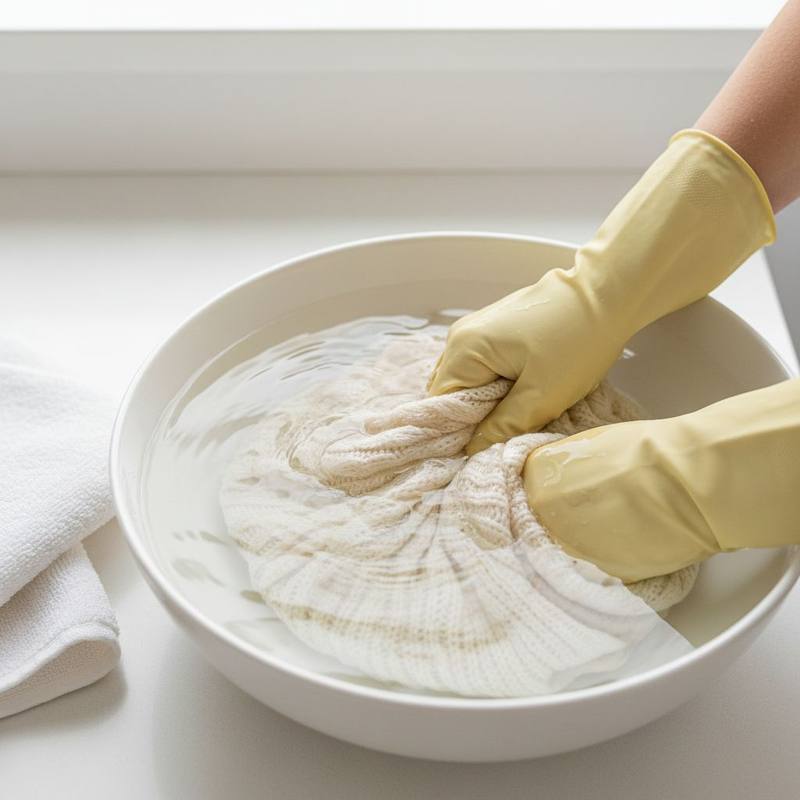
A real alternative if you don't have access to a machine with adequate capacity. Do it in a tub at the same temperature parameters, pressing the material with your hands, never wringing or twisting the fabric.
Prohibition of bleaching and harsh chemicals
Detergent is exclusively specialized "down wash" with pH 5.5-7, with no protease enzymes and optical brighteners, and chlorine is completely excluded. Rinse at least two additional cycles beyond standard, because residual detergent after drying stiffens down just like fabric softener does.
Fabric softener is forbidden with down without exception: it coats the clusters with a thin, waxy layer that permanently blocks their ability to expand after drying. Equally risky are protease enzymes found in most universal washing detergents: they degrade the protein structure of the cluster with each subsequent wash, accelerating irreversible loss of resilience.
Hand washing is a real alternative if you don't have access to a machine with adequate capacity. It's done in a tub at the same temperature and detergent parameters as with a machine. Technique is key here: down is rinsed patiently by pressing the material with your hands, never wringing or twisting the fabric. Repeated, gentle rinsing is more important than the force of the pressure.
A separate category is jackets with technical membranes, such as Gore-Tex and similar. The membrane has its own care chemistry, independent of the actual down fill. It requires additional waterproofing treatments after washing to maintain breathability and water resistance. That's a topic for a separate article; here it's enough to remember: if your jacket has a membrane, the standard "down wash" procedure is only half of proper care.

Now you know the theory. Practice can be less forgiving.
If you would rather not risk your favourite piece, leave it to the specialists at Gorące Żelazko laundry in Lublin.


Frequently asked questions
Fill power is the volume occupied by one ounce (28.35 g) of down after standardized compression and expansion, expressed in cubic inches per ounce (CUIN). The higher the number, the more air the cluster traps after expanding, and so the better it insulates at the same weight. In Europe this is measured by EN 12130 standard.
Yes, as long as the machine has a drum capacity of at least 6-7 kg and a gentle or "wool" program. Jackets with technical membranes like Gore-Tex additionally require separate care of the membrane itself, beyond standard down washing.
30°C, maximum 40°C. Higher temperature accelerates loss of natural oils from the cluster surface (pH 4.5-6.5) and increases the risk of fill stiffening.
Specialized "down wash" detergent, pH neutral 5.5-7, with no protease enzymes and optical brighteners. Fabric softener is absolutely forbidden: it coats clusters with a waxy layer that permanently blocks their ability to expand after drying.
About the author
Małgorzata Małecka
Owner of the Gorące Żelazko laundry
Małgorzata Małecka runs the Gorące Żelazko laundry in Lublin. Together with her team, she makes sure customers' clothes, shoes and fabrics come back clean and in the best possible condition.