Common stains on polyester
Fat, sweat, ink and paint: what to do before throwing in the washer

Polyester's hydrophobicity is a double-edged sword when it comes to stains. Water doesn't penetrate deep into the fiber, so mud or water-based marks are easy to rinse out before they set. Grease and oil, however, have a stronger affinity to the synthetic structure than to cotton cellulose, which is why they soak into polyester deeper and are harder to pull out.
The same material shows up today in jackets, sportswear, dresses, and home textiles, so a stain on polyester is an everyday event, not an exception. Before the item goes into the wash, it helps to know which method fits which stain, and why speed in the first few minutes decides the outcome.
Why grease clings to polyester more than to cotton
a short chemistry explanation that grounds the rest of this guide
Polyester fiber is a polymer chain, chemically close to plastics made from petroleum. Fats and oils, also hydrocarbon based, share a natural affinity with such a structure: like attracts like. Cotton is built from cellulose, which bonds more readily with water than with fat, so the same oil clings to it noticeably less.
On top of that comes the fabric's physical structure. The thin microfiber strands form a dense mesh of tiny channels, and grease works its way in capillary fashion and hides beyond the reach of ordinary rinsing. The longer a stain sits untouched, the more firmly it bonds, and grease residue tends to yellow over time, even after a wash that seemed successful.
First aid: before it even goes into the washer
the first few minutes after staining matter more than any product
- 1
Remove the excess
Gently scrape off any solid excess with a blunt edge before applying anything.
- 2
Don't rub
Rubbing pushes the stain deeper into the microfiber and spreads it instead of lifting it.
- 3
Rinse with cold water
Cold water under a running tap flushes out part of the stain before it has time to set.
- 4
Treat the spot directly
Apply the right product straight onto the stain, and only put the item in the wash after it has had time to work.
Catalog of common polyester stains
Grease or cooking oil
Apply dish liquid directly to the stain and wait 10-15 minutes before putting the item in the wash at 40degC.
An old stain, older than a week, is noticeably harder to remove.
Sweat and yellow stains under arms
Soak the stain in a solution of vinegar and water at a 1:1 ratio for 30 minutes, or optionally use 3% hydrogen peroxide on white polyester.
Effectiveness is limited on advanced stains, where aluminum salts from antiperspirant have already reacted with sweat.
Ballpoint pen ink
70% isopropyl alcohol or rubbing alcohol, dabbed with a cotton swab from the edge of the stain toward the center.
Ink dye can set into the microfiber structure, especially if the stain has already dried.
Fresh acrylic paint
Cold water and gentle scrubbing, as soon as possible after staining.
Never use hot water, it drives the paint pigment into the thermoplastic fiber structure and sets the stain permanently.
Wax or melted glue (for example from an iron)
Cool the stain with an ice cube, then gently scrape off the hardened excess.
If wax or glue soaked into fiber softened by heat, that's permanent structural damage that can't be undone.
Acetone or nail polish remover based on it doesn't dissolve PET right away, thanks to its crystalline structure the fiber tolerates short, few-second contact relatively well. Real damage, meaning weakened structure, a dulled surface, and leached stabilizers, only shows up with longer exposure or repeated contact. Always test first on a hidden part of the fabric before using acetone on a visible stain.
What never to do on polyester
mistakes that set the stain instead of removing it
Polyester in a nutshell
Do
- Test the product on a hidden part of a seam before using it on the stain.
- React right away: a fresh stain always comes out easier than a dried one.
- Air dry on a hanger until you're sure the stain is fully gone.
Don't
- Don't use chlorine bleach, it weakens and yellows synthetic fiber.
- Don't tumble dry or iron an item with an uncertain stain: heat melts the fiber and sets the stain.
- Don't hold acetone on the fabric longer than a few seconds, longer contact weakens the structure.
After removing the stain, wash the whole item on a program suited to polyester, usually 30 to 40 degrees, to avoid creasing and keep the fiber's elasticity. Higher temperature doesn't speed up degreasing on synthetics the way it does on cotton, and it raises the risk of melting the mark into the structure.
Before drying, check the stain against the light, wet fabric can be misleading and hide leftover residue. If a trace is still visible, repeat the treatment instead of drying. Heat from a dryer or an iron sets nearly every type of stain into thermoplastic fiber.
When to hand the item to a laundry
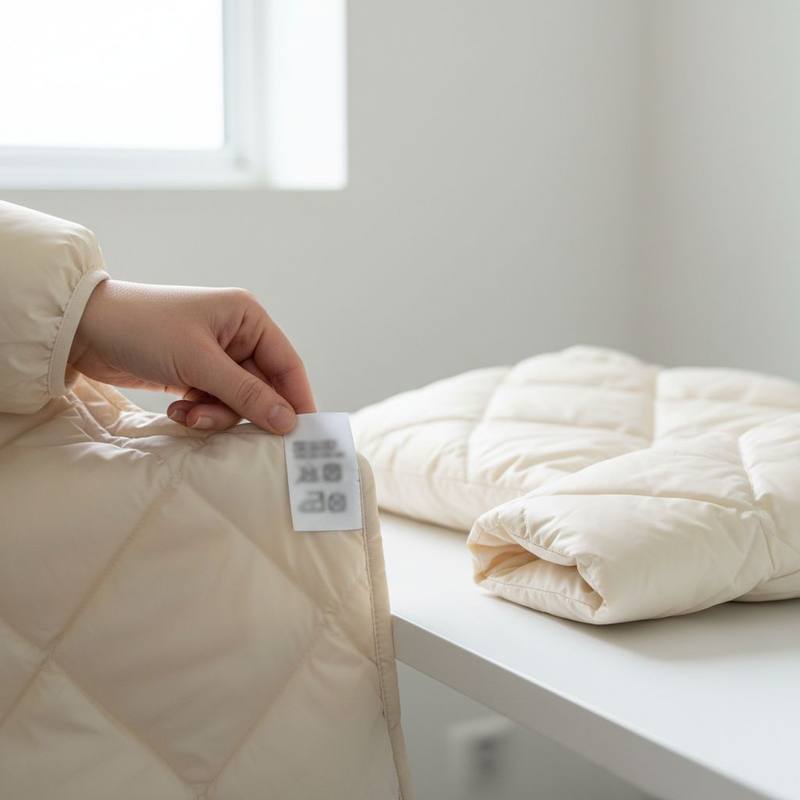
A large stain, a delicate knit, or a garment with a care label allowing only professional cleaning is a sign not to risk another home attempt. It's also worth handing the item to specialists when an earlier attempt left marks or changed the texture of the material.

Now you know the theory. Practice can be less forgiving.
If you would rather not risk your favourite piece, leave it to the specialists at Gorące Żelazko laundry in Lublin.


Frequently asked questions
Apply dish liquid directly to the stain and wait 10 to 15 minutes before washing the item at 40degC. Grease soaks into the hydrophobic fiber deeper than into cotton, so the faster you react, the better.
Soak the stain in a 1:1 vinegar and water solution for 30 minutes, and on white polyester you can use 3% hydrogen peroxide. Effectiveness drops on advanced stains where aluminum salts from antiperspirant have already bonded with sweat.
Short, few-second contact is usually tolerated well, but longer exposure weakens the structure and dulls the surface. Always test acetone first on a hidden part of the fabric.
Usually not. High temperature melts fat and dye into the thermoplastic fiber instead of flushing it out, so it's safer to stick to cold or lukewarm water on polyester stains.
A gentle micellar water or dish liquid applied to a cotton pad and worked in from the edge toward the center is usually enough. Mineral pigments can be stubborn, so the treatment sometimes needs repeating before the item dries.
About the author
Małgorzata Małecka
Owner of the Gorące Żelazko laundry
Małgorzata Małecka runs the Gorące Żelazko laundry in Lublin. Together with her team, she makes sure customers' clothes, shoes and fabrics come back clean and in the best possible condition.