Why microfiber smells
moisture trapped in the laundry basket, not bacteria from the body

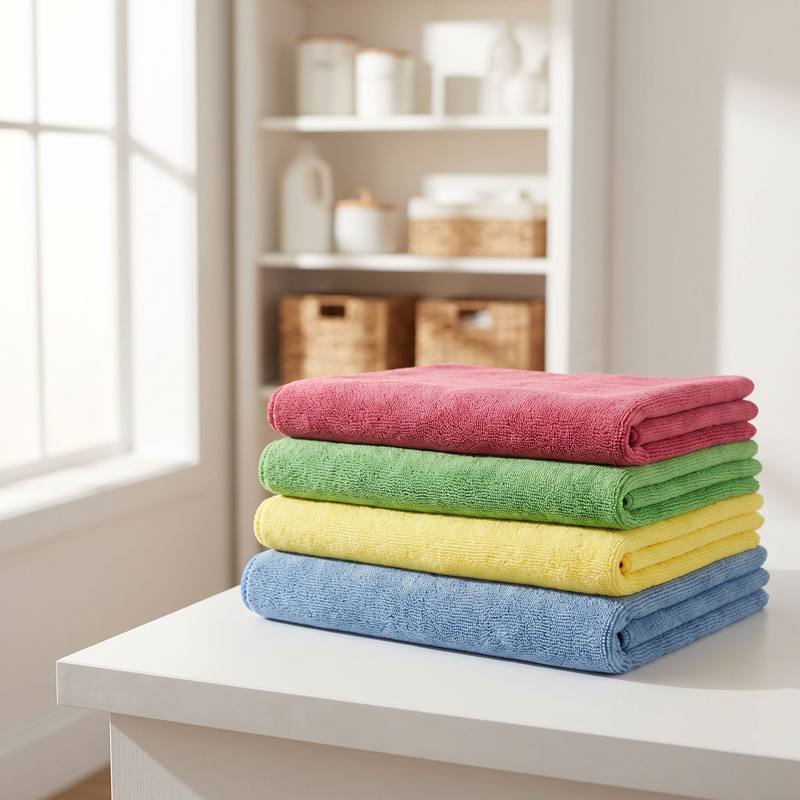
The odor of microfiber cloths and mops has a completely different mechanism than the one you know from sportswear. Here the culprit is moisture trapped in the laundry basket or mop bucket when the fabric doesn't fully dry between uses, not sweat absorbed directly by the fiber.
The problem affects any cloth or mop used intensively: for cleaning the kitchen, the bathroom, washing windows or floors. The more often the fabric ends up in a damp basket instead of being spread out to dry, the sooner the unpleasant smell appears, even if the cloth looks clean.
Why microfiber smells so easily
a fiber structure that favors bacterial growth
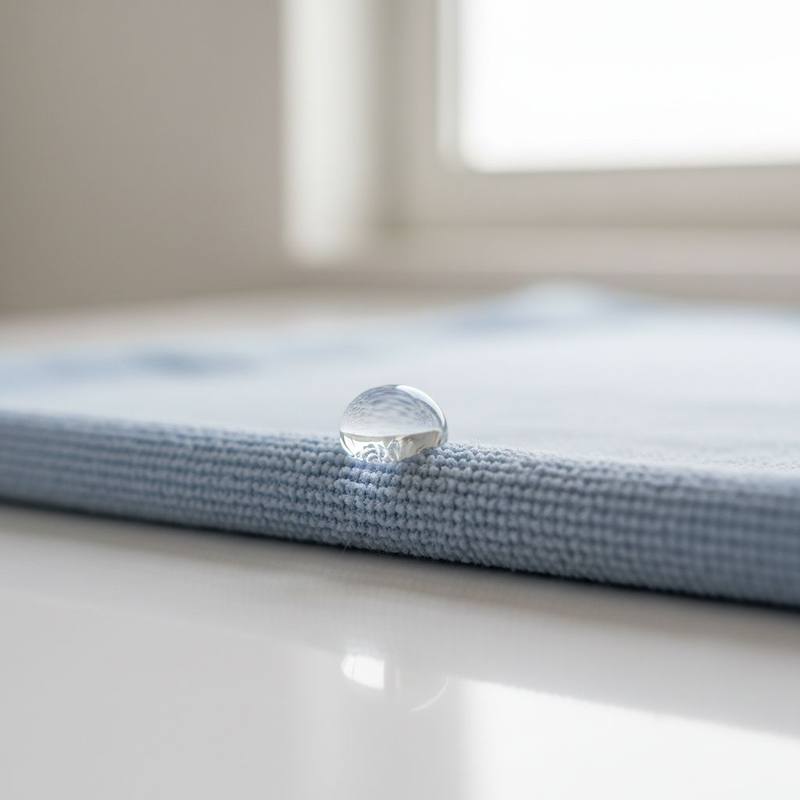
Microfiber is made of split polyester and polyamide strands, which gives it an enormous active surface area relative to its weight. That's why microfiber is so good at picking up dust and grease, but the same trait means more moisture stays trapped inside the structure than in an ordinary cotton cloth.
A damp, warm fabric full of microscopic channels is a good environment for bacteria to multiply, and their metabolism is what produces the unpleasant odor. The channels between the fibers hold water much longer than you can see with the naked eye, so a cloth can be damp inside even when it looks dry on the surface.
This is a completely different mechanism than the odor of polyester sportswear worn directly on the body, where bacteria feed on sweat on a hydrophobic fiber. We describe this topic separately, along with the details of the mechanism, in an article on polyester odor.
What favors bacterial growth in microfiber
Fabric not fully dried between uses, bunched up in a pile
A warm, closed space, for example a bucket under the sink
The longer a damp cloth sits unwashed, the stronger the smell
No circulation in a closed basket or a sealed bucket
How to prevent the smell day to day
four habits that break the bacterial growth cycle
- 1
Rinse right after use
Rinse the cloth or mop in warm water right after use, before dirt and moisture have a chance to set into the fiber structure.
- 2
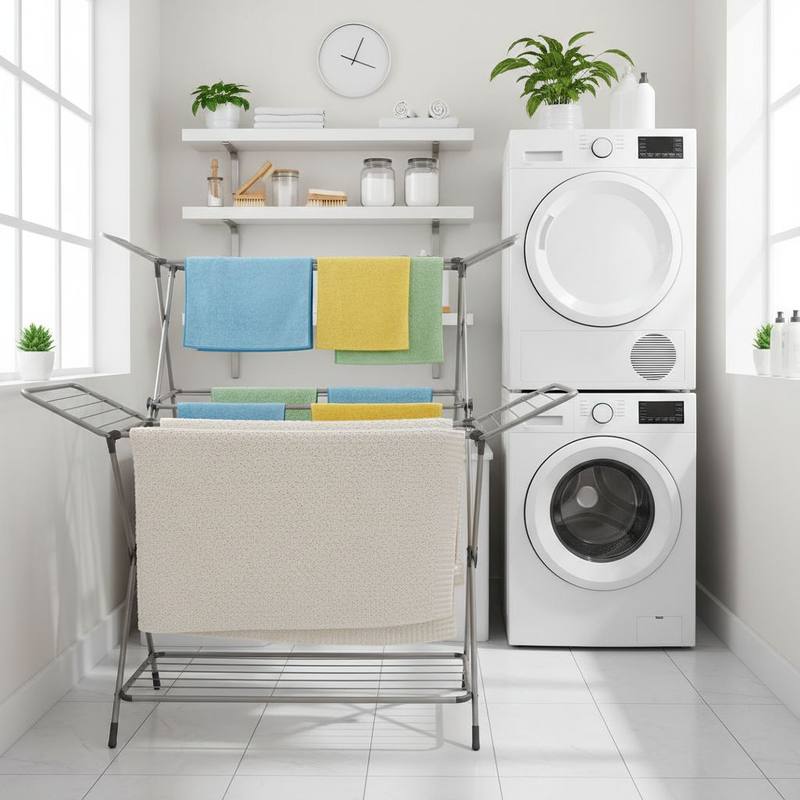
Always dry spread out
Dry the cloth or mop spread out, not bunched up in a pile in a basket or bucket, so air reaches the entire surface of the fabric.
- 3
Wash regularly, not occasionally
Cloths and mops used daily are worth washing every few days, at a temperature matched to how dirty they are, instead of waiting until the smell becomes noticeable.
- 4
Keep the basket and bucket airy
Keep the basket for dirty cloths and the mop bucket in a spot with air access, ideally with the lid left ajar, instead of sealed shut.
Don't use fabric softener on microfiber. Softener clogs the microscopic channels between the fibers, so the fabric loses its ability to absorb dust and moisture, and its residue trapped in the structure can itself start smelling unpleasant.
When the smell is already there
how to remove the odor before you reach for a new cloth
Soak the smelly cloth or mop in a warm water and vinegar solution in roughly a 1:1 ratio for half an hour, then wash it as usual. Vinegar helps break down the bacterial buildup that ordinary rinsing leaves behind in the fiber structure.
If the care label allows it, wash the microfiber at the highest temperature it can safely take, usually around 60 degrees. A higher temperature deals with bacteria more effectively than the cold water wash that ordinary cloths often get.
Drying outdoors and, when possible, in the sun further limits bacterial growth, since UV light works against them. This is a good way to freshen up a cloth that came out of the wash still carrying a faint smell.
Odor-free microfiber in a nutshell
Do
- Rinse the cloth or mop right after use
- Always dry it spread out, not bunched up in a pile
- Wash regularly, at a temperature matched to how dirty it is
- Keep the basket and bucket in an airy spot
Don't
- Don't use fabric softener, it clogs the fiber structure
- Don't leave a wet cloth bunched up in the basket for long
- Don't dry microfiber together with fabrics that shed lint
This same moisture mechanism also applies to microfiber blankets and bedding, though there's another separate problem there: fabric pilling caused by friction in the washing machine. Large surfaces, like a blanket or a bedspread, take longer to dry than a small cloth, so it's even easier for moisture to sit in bedding put away in a closet while still damp.
Good to know when machine washing
Wash microfiber cloths and mops separately, without towels or cotton or terry cloth items. Microfiber builds up static and attracts lint from other fabrics, which reduces its absorbency and, at the same time, makes it easier for moisture to stay trapped deeper in the structure.

Now you know the theory. Practice can be less forgiving.
If you would rather not risk your favourite piece, leave it to the specialists at Gorące Żelazko laundry in Lublin.


Frequently asked questions
Usually it's moisture trapped in the laundry basket or mop bucket when the fabric doesn't fully dry between uses. This promotes bacterial growth on the damp structure. This is a different mechanism than odor in polyester sportswear worn on the body.
Rinse the cloth or mop in warm water right after use and always dry it spread out, not bunched up in a basket or bucket. Moisture trapped in bunched fabric is the main environment for the bacteria that cause the smell.
No. In cloths and mops it's about moisture sitting in a basket or bucket when the fabric doesn't dry between uses. In sportswear the mechanism is different: bacteria feed on sweat on the hydrophobic fiber worn on the body. That second topic is covered in a separate polyester odor guide.
Yes. Soaking in a warm water and vinegar solution in roughly a 1:1 ratio for half an hour helps break down the bacterial buildup behind the smell, before you put the fabric through an ordinary wash.
Better not to. Microfiber builds up static and attracts lint from cotton or terry cloth, which reduces its ability to absorb moisture and makes the smell more likely to linger.
About the author
Małgorzata Małecka
Owner of the Gorące Żelazko laundry
Małgorzata Małecka runs the Gorące Żelazko laundry in Lublin. Together with her team, she makes sure customers' clothes, shoes and fabrics come back clean and in the best possible condition.