Cotton Shrank After Washing: What Now
A step-by-step home method to stretch the fabric back, and the honest limit of what can still be saved.

A cotton t-shirt shrank in the wash and now looks a size too small. It's one of the most common problems with cotton clothing, especially something freshly bought. Before you set it aside, check what can still be rescued at home and where the real limit lies.
Why cotton shrinks after washing
Before you start rescue mode, it's worth understanding what actually happened. Water temperature that was too high, or too-hot drying of unsanforized cotton, or accumulation of many high-temperature drying cycles: these are the most common causes.
Distinguish between two types of shrinkage. The first is relaxation shrinkage: fibers simply return to their natural state before stretching during manufacturing. The second, worse type, is felting: intensive mechanical drum action at high temperature compacts the weave and batters the material structure. This distinction determines how much you can realistically recover.
Knits are the most vulnerable, for example cotton t-shirts or sweatshirts, because the looser knit weave pulls in more easily. Woven fabrics, like poplin or denim, tend to shrink less, though they're not entirely immune.
Shrinkage scale by temperature
Shrinkage of 2 to 4%
Shrinkage of 3 to 6%
Shrinkage of 5 to 8%
An extra 3 to 5% on top of the wash result
How to try rescuing shrunken cotton
- 1
Soak and soften fibers
Soak the garment in lukewarm water with a small amount of hair conditioner or rinse aid for 15-30 minutes. This softens the fibers and makes them easier to stretch in the next step. Plain hair conditioner works the same way: it coats the fiber and makes it more elastic.
- 2
Stretch gently while drying
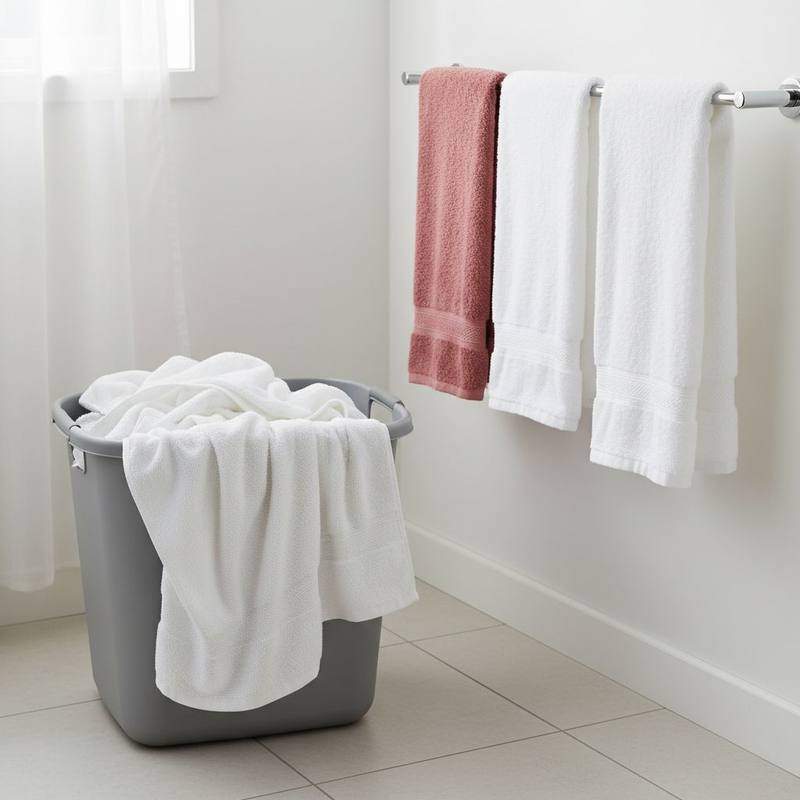
Lay the fabric flat and gently stretch it by hand as it dries. Work gradually, not forcefully, to avoid damaging the fibers. It's best to work on a terry towel laid on a flat surface, which soaks up excess moisture and stops the fabric from sliding around.
- 3
Pull to original shape and pin
Pull the material to its remembered or original shape, pin the corners (e.g., to a towel or board), and let it dry completely in this position. Check the size from time to time by laying the garment against another, unshrunk item of the same type, to gauge your progress.
The effectiveness of this method is partial. It works best with minor shrinkage of a few percent and with fresh problems, not shrinkage that's been building over weeks of repeated washes. Fiber quality matters too: combed, higher-grade cotton tolerates stretching better than cheap, short-staple yarn, which wears through faster.
Before stretching the whole garment, test the method on a hidden spot, such as an inside seam, to see how the fabric reacts.
Shrunken cotton: what to do, and what not to
Do
- Soak in lukewarm water, never hot
- Stretch the fabric only once it's damp and soft
- Dry flat, pinned to a towel or a board
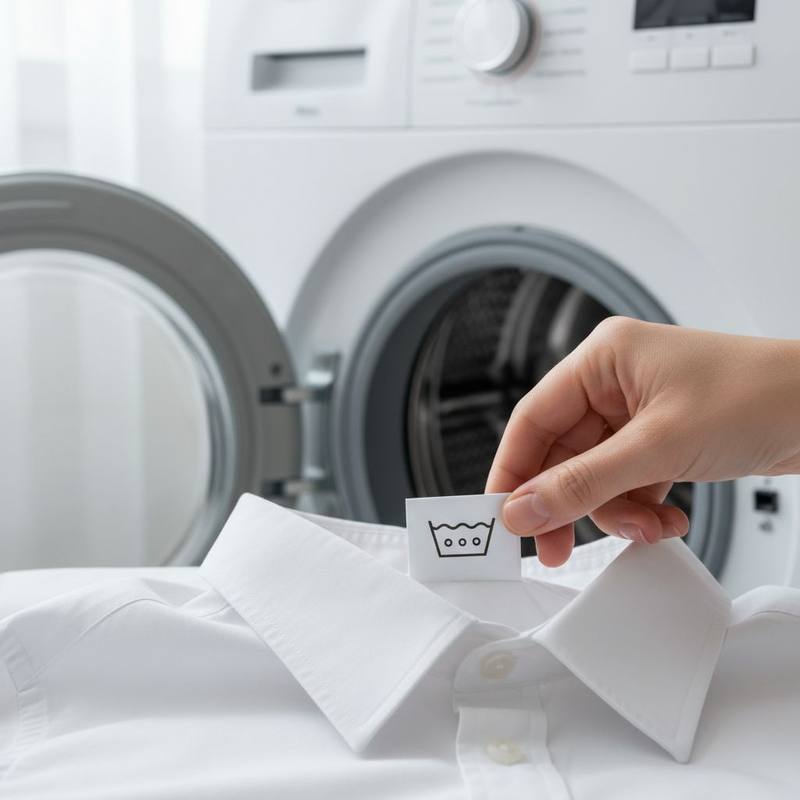
- Check the label before washing for a temperature-sensitivity warning
Don't
- Don't put the shrunken item back in the dryer
- Don't wring or pull it forcefully in one direction
- Don't iron the fabric before it dries in the stretched position
- Don't assume another wash at low temperature will undo the shrinkage on its own
The honest limit
Honest limit
Felting shrinkage, the stiffening and thickening of the material, is irreversible in home conditions. You can tell by touch: the material feels stiffer and less elastic than before washing, and it's harder to stretch even after soaking. A professional laundry can use fiber-relaxing agents and controlled stretching on steam forms, but even that doesn't guarantee full recovery of the original size with serious shrinkage.
How to wash cotton to avoid a repeat
Always wash a new cotton item separately the first time, at a lower temperature than you'll use afterwards. If the label says „sanforized” or „pre-shrunk”, the fabric has already been pre-shrunk at the factory and the risk of further shrinkage is minimal. Washing new items in a delicates bag further limits the drum's mechanical action.
Dry cotton on a low heat setting or naturally on a line. A tumble dryer on high heat is the most common cause of shrinkage that's hard to reverse, even when the wash itself was safe for the fabric. Heat hits hardest right after washing, while fibers are still warm and relaxed.

Now you know the theory. Practice can be less forgiving.
If you would rather not risk your favourite piece, leave it to the specialists at Gorące Żelazko laundry in Lublin.


Frequently asked questions
Soak it in lukewarm water with a bit of hair conditioner or rinse aid for 15-30 minutes, then gently stretch it by hand while drying flat, pulling to the original shape. This works best with minor, fresh shrinkage. If felting (stiffening) has occurred, home results will be only partial.
With fresh, minor relaxation shrinkage you can recover a good part of the size by soaking and stretching. Felting shrinkage, the stiffening of the weave, is practically irreversible at home.
Cotton fibers are stretched during manufacturing and, in contact with water and heat, return to their natural state. That is why the biggest shrinkage happens on the first wash and dry, especially with fabrics not marked sanforized.
Yes, cotton shrinks on its first wash because the fibre releases tension built up during manufacturing. The scale depends on temperature: 2 to 4% at 30°C, 3 to 6% at 40°C, and up to 5 to 8% at 60°C and above. A tumble dryer adds a further 3 to 5% on top of that. Fabrics labelled „sanforized” or „pre-shrunk” have already been shrunk at the factory, so they shrink only minimally afterwards.
Low temperature matters most: 30°C keeps shrinkage to 2 to 4%, while 60°C can produce as much as 5 to 8%. Always wash a new garment separately the first time, at a lower temperature than you'll use afterwards. Avoid the tumble dryer, or use a low heat setting, since it adds a further few percent of shrinkage. If the label says „sanforized”, the fabric has already been pre-shrunk at the factory and the risk is much lower.
About the author
Małgorzata Małecka
Owner of the Gorące Żelazko laundry
Małgorzata Małecka runs the Gorące Żelazko laundry in Lublin. Together with her team, she makes sure customers' clothes, shoes and fabrics come back clean and in the best possible condition.