How Cotton Is Made
from field and harvest, through ginning and spinning, to weaving and finishing

Before cotton reaches your wardrobe as a shirt or bedding, it travels a long road: from the seed boll on the cotton plant, through ginning and spinning, to weaving and finishing. Below we break this process into seven steps.
- 1
Cultivation
Cotton (genus Gossypium) is grown in the subtropical and tropical climate belt. The largest producers of raw cotton are India, China, the United States, Brazil and Pakistan, and together these countries account for the majority of the world's harvest. The plant needs a long, frost-free growing season, usually 180 to 200 days, temperatures of 20 to 30°C, and 700 to 1,300 mm of annual rainfall, or adequate irrigation in drier regions.
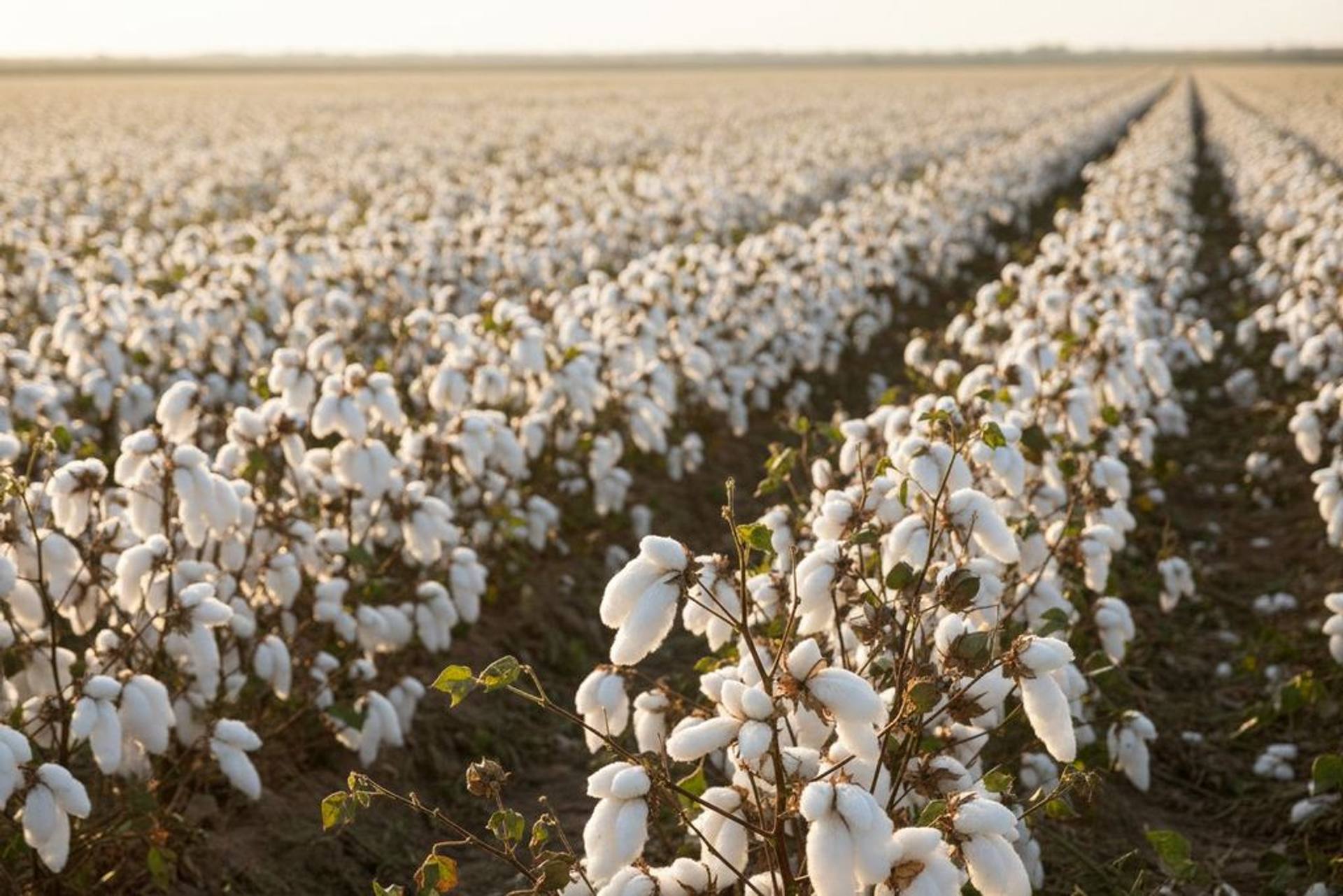
Cotton is an unusually demanding crop when it comes to pest protection. Historically, the biggest threat to cultivation in the United States was the boll weevil (Anthonomus grandis), which devastated a large share of plantations across the American South in the early twentieth century and forced a wholesale change in farming practice across the region. Today the most serious pest remains the cotton bollworm, controlled with insecticides or, increasingly, with genetically modified varieties (Bt cotton) that produce their own insecticidal protein.
Irrigation for cotton cultivation has proved ecologically controversial. The classic example is the desiccation of the Aral Sea in Central Asia, caused largely by the diversion of the Amu Darya and Syr Darya rivers to irrigate plantations in Uzbekistan and Kazakhstan from the 1960s onward. The episode remains one of the most frequently cited illustrations of the cotton industry's impact on the natural environment.
- 2
Harvesting
The seed pods on a cotton plant do not ripen all at once, so harvesting typically stretches over several weeks and is often carried out in stages. The plant reaches full maturity when the green pod splits open to reveal the white, fluffy mass of fibre surrounding the seeds. In highly mechanised countries such as the US or Australia, defoliants, chemicals that cause the leaves to drop, are applied before harvest, making machine picking easier and reducing the amount of trash that ends up mixed with the fibre at the gin.
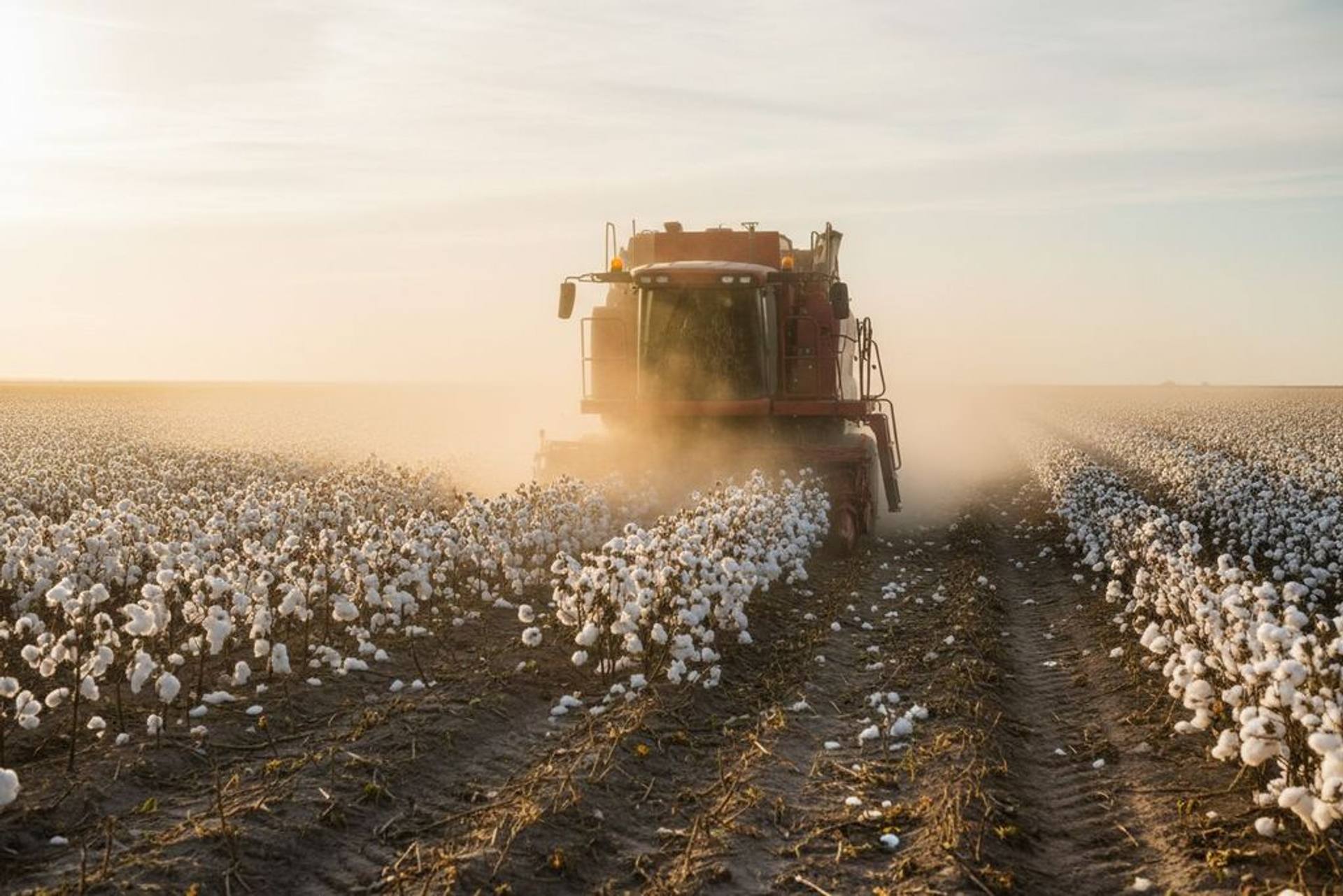
Mechanical harvesting uses two types of machine. Spindle pickers use rotating spindles that twist the fibre out of open, mature bolls only, leaving the rest of the plant intact for a later pass. Strippers remove everything from the branch, including unripe bolls and stem fragments, which speeds up harvesting but requires more intensive cleaning of the fibre afterwards.
Hand-picking, still practised in India, Pakistan and parts of Africa, lets pickers select only fully ripe bolls across several passes through the field. This eliminates any admixture of immature or damaged fibre, which is why hand-picked cotton is considered cleaner and commands a higher price as a raw material, even though the process is far more labour-intensive than machine harvesting.
- 3
Ginning
A cotton gin is a machine that separates the fibre from the seeds it is firmly attached to. The breakthrough invention in this field, the saw gin, was patented by Eli Whitney in 1793 and multiplied the efficiency of fibre cleaning many times over compared with hand separation, which had an enormous impact on the growth of the American cotton industry.
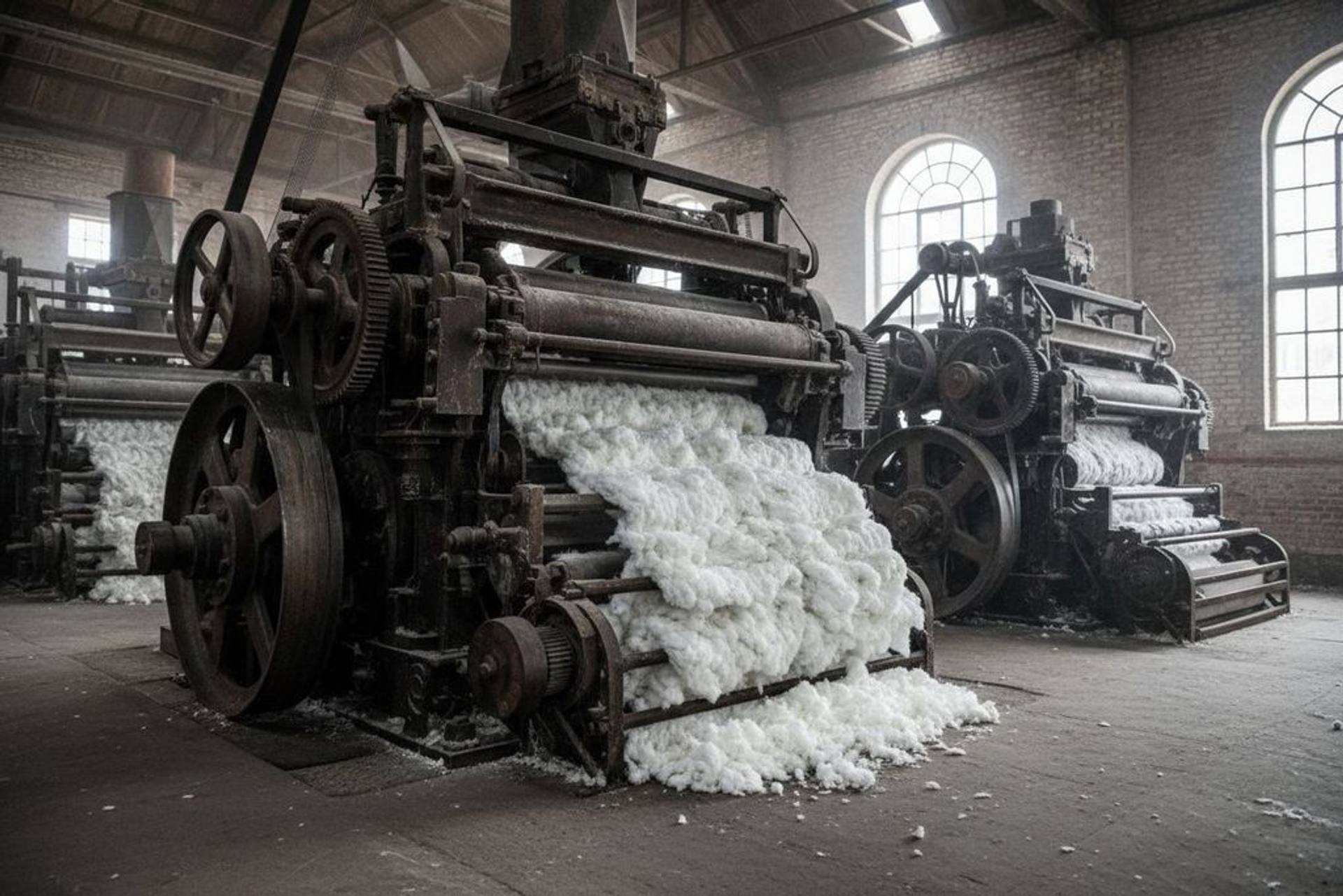
Two main types of gin are used today. Saw gins, with rows of toothed metal discs that pull the fibre away from the seed, are faster and used for short-staple Upland cotton. Roller gins, gentler machines that squeeze the fibre between a rotating roller and a fixed knife, are used for long-staple varieties such as Pima or Egyptian cotton, where overly aggressive separation could damage and shorten the valuable long fibres.
One kilogram of raw seed cotton yields roughly 330 grams of clean fibre. The remainder is mostly seed, and it is far from waste: cottonseed oil is pressed from it for use in the food and cosmetics industries, and the leftover meal is used as cattle feed. The husks are sometimes used as organic fertiliser or as a raw material for paper production.
- 4
Cleaning and carding
Fibre leaving the gin still contains plant debris: leaf fragments, stem particles and fine dust. The cleaning stage uses machines with rotating beaters and screens that mechanically shake out and remove most of this debris without damaging the fibre's structure. The quality of this stage has a direct bearing on the cleanliness and consistency of the yarn produced later.
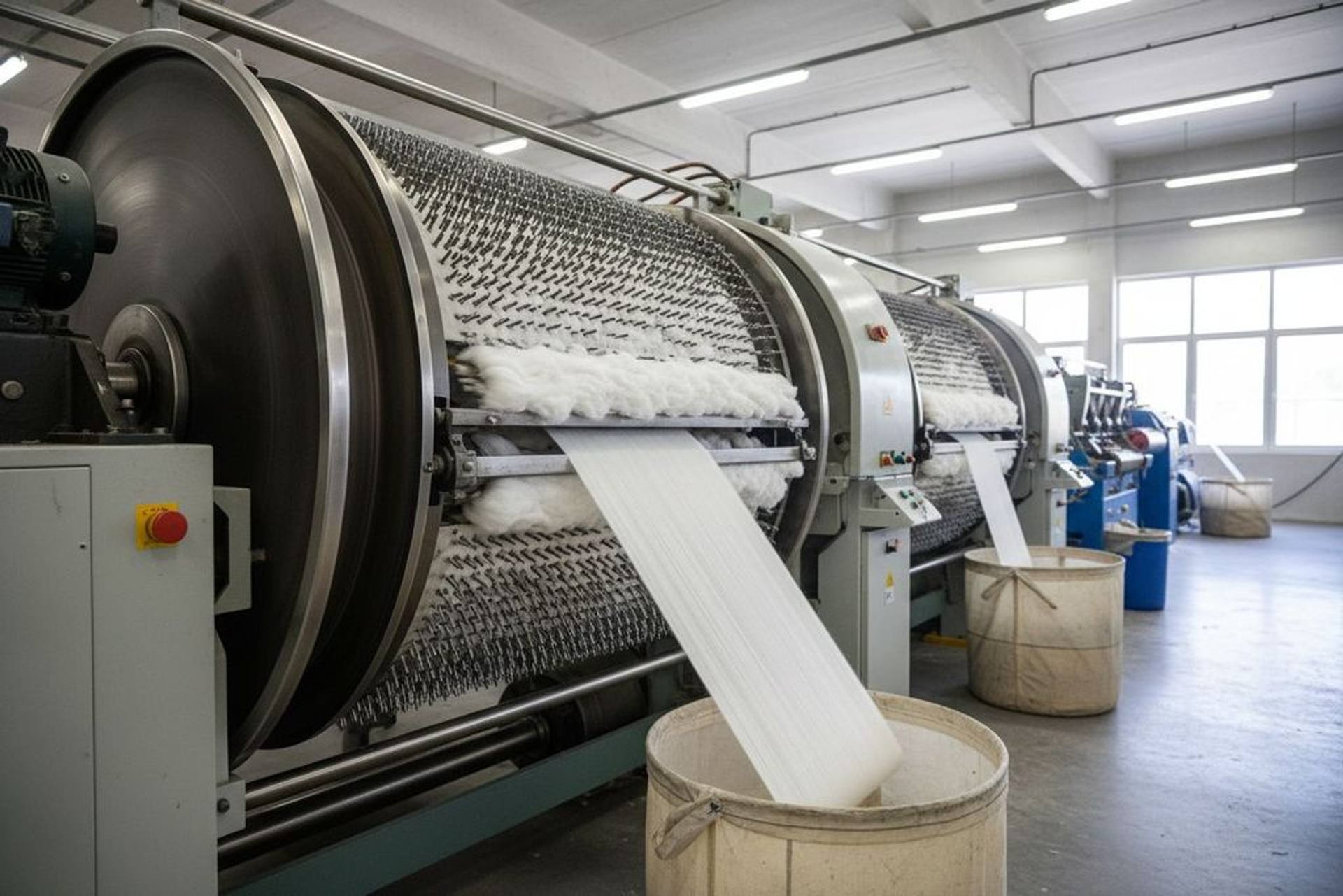
Carding is the process of combing the cleaned fibre on a machine fitted with a cylinder covered in fine metal teeth. The fibres are separated, aligned parallel to one another and formed into a loose, thin rope known as a card sliver. This stage also removes short, damaged fibres and small tangled clumps (neps) that would otherwise reduce the quality of the finished yarn.
For higher-quality fabrics, an additional stage, combing, is carried out after carding. A specialised machine removes fibres shorter than a set length threshold and further straightens and aligns the remaining long fibres. Yarn spun from combed sliver is finer, smoother and stronger than carded-only yarn, which is why it is used for premium shirting and bedding.
- 5
Spinning
Carded or combed sliver moves on to spinning machines, where it is drawn out and twisted into a thread known as yarn. Twist, the number of turns per unit of length, determines the yarn's properties: a higher twist produces a stronger but harsher-feeling thread, while a lower twist gives greater softness at the cost of strength.
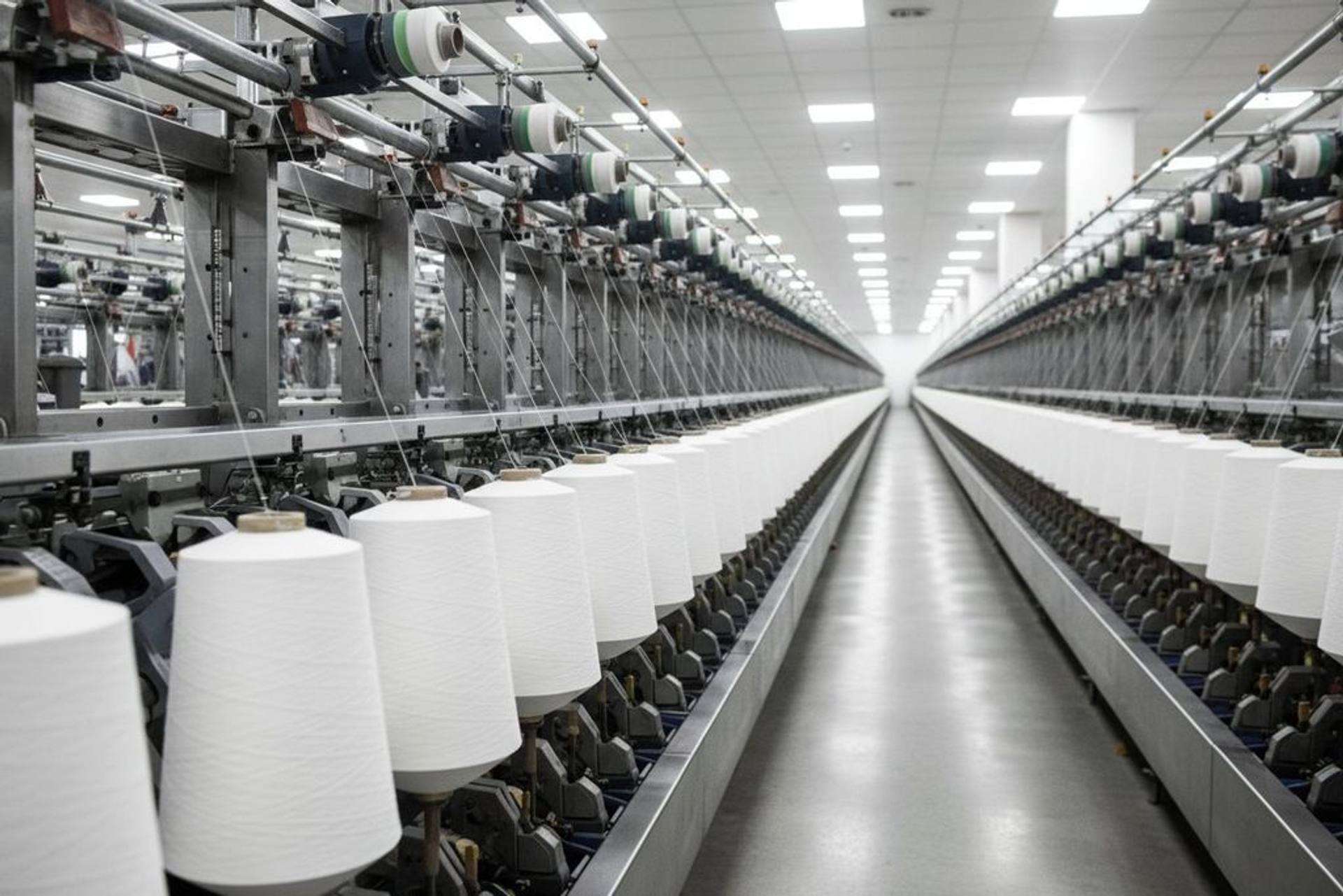
Ring spinning remains the most widely used method and is regarded as producing the highest-quality, strongest yarn, though it is relatively slow. A faster and cheaper alternative is open-end (rotor) spinning, used mainly for coarser yarns destined for everyday fabrics such as denim or budget bedding.
Yarn thickness is expressed as a metric count (Nm): the higher the number, the finer the thread. Nm 40 is a typical shirting standard, while counts above Nm 100 are reserved for the most luxurious, silky-smooth bedding fabrics. Premium shirt makers often quote the yarn count on the finished fabric, for example as "2/120", meaning two threads of count 120 twisted together.
- 6
Weaving or knitting
Finished yarn is turned into two fundamentally different kinds of material. Woven fabrics are made on a loom, where warp threads, stretched lengthwise across the loom, interlace at right angles with weft threads fed across. The basic weaves are plain weave (percale, poplin), satin weave (giving a smooth, glossy surface) and twill weave (used, among other things, to make denim).
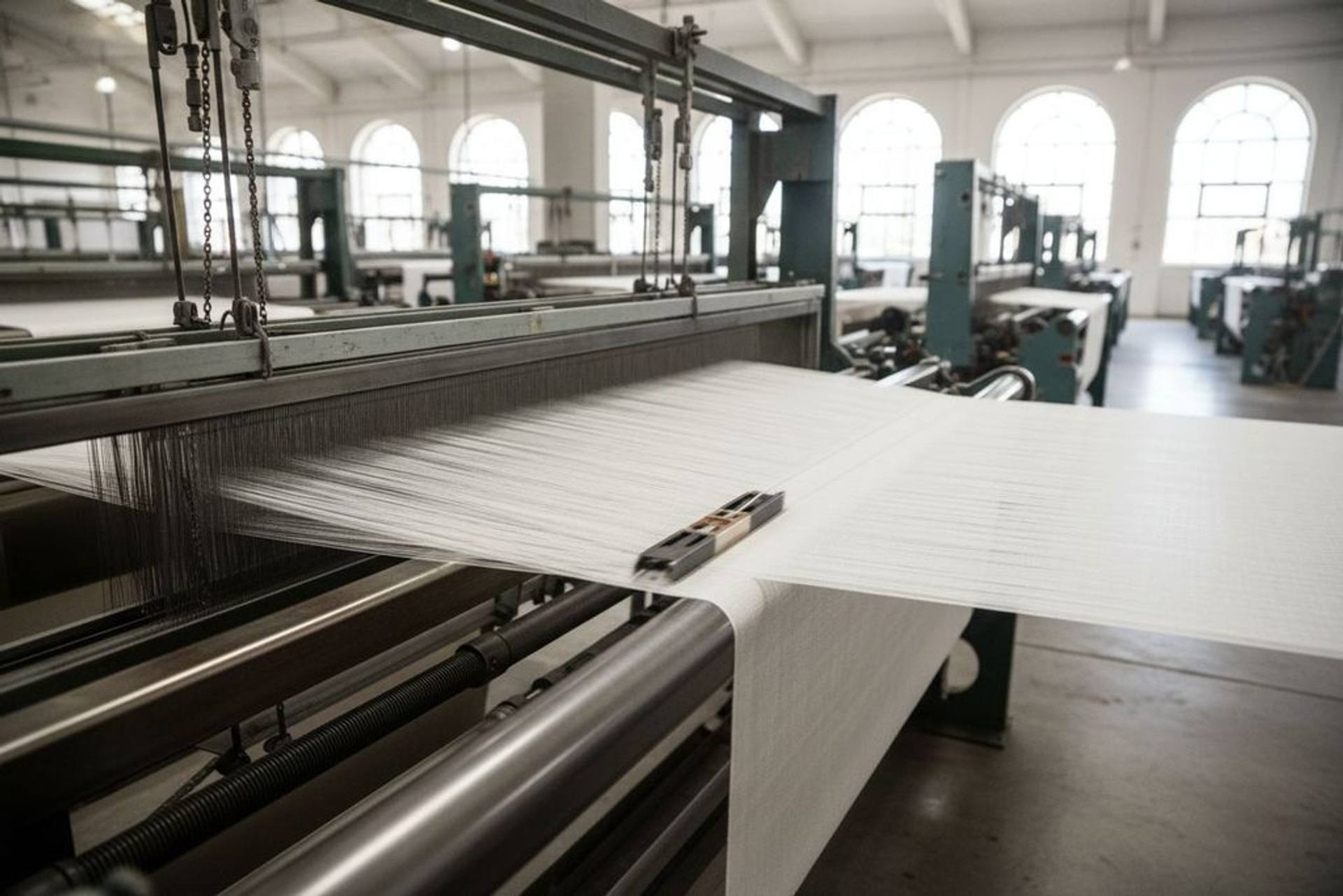
Knits are formed in a completely different way: a single thread is formed into successive loops linked together, much like hand-knitting but done by machine at far greater speed. Single jersey produces a stretchy, soft fabric typical of t-shirts, while double-knit fabrics such as interlock are thicker and warmer.
Fabric density is measured by the number of warp and weft threads per square inch of material, known as thread count. Higher density generally means a smoother, more durable and more expensive fabric, though beyond a certain point further increases in thread count become largely a marketing claim rather than a noticeable difference in quality. Modern industrial looms, such as air-jet or water-jet looms, carry the weft thread across using a jet of compressed air or water instead of a mechanical shuttle, reaching speeds far beyond those of traditional machines.
- 7
Finishing
Raw fabric coming off the loom or knitting machine still goes through a series of finishing processes before it becomes clothing. The first of these is often singeing: the fabric is passed quickly over an open flame or a heated plate, burning off the loose fibre ends that protrude from the surface and giving the material a smoother finish, particularly important for satin.
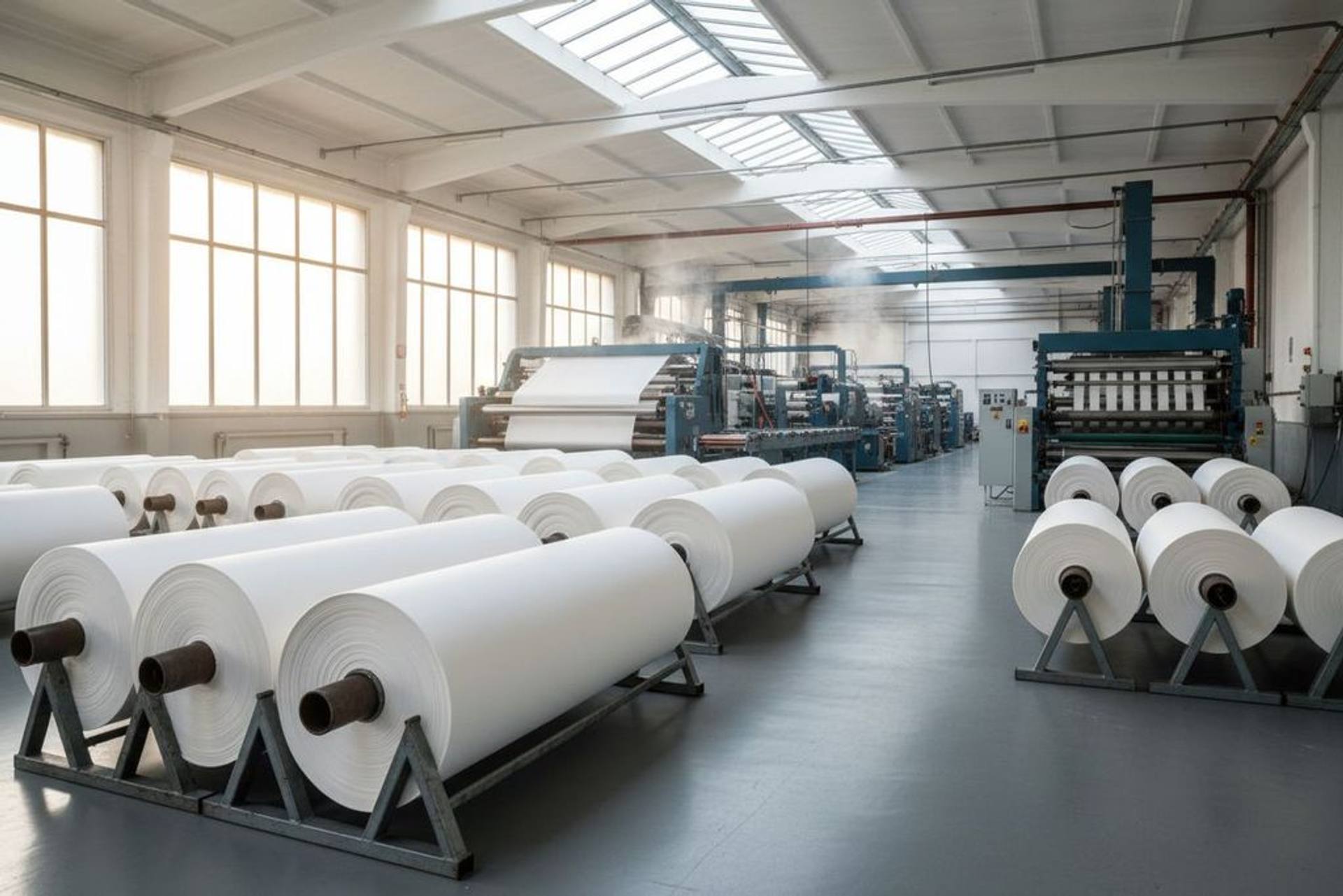
Mercerisation, developed by John Mercer in the mid-nineteenth century, involves briefly immersing the fabric in a concentrated sodium hydroxide solution under tension. The process changes the fibre's cross-section from flat to more rounded, giving the fabric a lasting sheen, better dye uptake and slightly greater strength. Further stages include chemical bleaching, which removes the fibre's natural cream tint, and dyeing or printing a pattern.
Sanforisation, patented by Sanford Cluett in 1930, is a controlled, mechanical pre-shrinking of the fabric before it is cut and sewn, so the finished garment shrinks only slightly during the first few home washes. A separate category of finish is easy-care fabric, set with formaldehyde-based resins, which stiffen the fibre's structure and reduce its natural tendency to crease, at the cost of a potential allergy risk for people sensitive to formaldehyde.

Now you know the theory. Practice can be less forgiving.
If you would rather not risk your favourite piece, leave it to the specialists at Gorące Żelazko laundry in Lublin.


Frequently Asked Questions
Sanforization is a controlled, mechanical pre-shrinking process carried out at the factory before the garment is even sewn, patented by Sanford Cluett in 1930. Thanks to this process, the finished item only shrinks slightly during the first few home washes, instead of losing several percent of its size straight away. Look for "sanforized" or "pre-shrunk" on the label.
Mercerization is a process developed by John Mercer in the mid-19th century, involving briefly immersing the fabric in a concentrated sodium hydroxide solution under tension. It changes the fibre's cross-section from flat to more rounded, giving the fabric a lasting sheen, better dye uptake, and slightly more strength. That's why many good-quality shirts and yarns mention mercerization on the label.
The key figure is thread count, the number of warp and weft threads per square inch: a higher count usually means a smoother, more durable, and pricier fabric. It's also worth checking the fibre length on the label, since names like Pima, Supima, or Giza/Egyptian point to longer, finer, stronger fibres. Beyond a certain point, though, a higher thread count is mostly a marketing figure rather than a noticeable difference in quality.
Look for information about fiber length (extra long staple = ELS), variety name (Pima, Supima, Giza/Egyptian), or thread count on bedding. GOTS or OEKO-TEX certifications are additional indicators of processing quality and chemical safety.
By fiber length. Egyptian cotton (Giza variety) has 28 to 35 mm fiber vs. 24 to 27 mm in standard Upland. Longer fiber = thinner yarn = softer, more durable fabric with natural luster. The price is proportionally higher.
About the author
Małgorzata Małecka
Owner of the Gorące Żelazko laundry
Małgorzata Małecka runs the Gorące Żelazko laundry in Lublin. Together with her team, she makes sure customers' clothes, shoes and fabrics come back clean and in the best possible condition.