Shirt cuff stains: ink, grease, makeup
Shirt cuffs collect more dirt than the rest of your shirt. We know a separate method for each one.

A shirt cuff is a double layer of fabric, usually 100% cotton or a cotton-polyester blend. It's the spot closest to your hand, so it collects the most: ballpoint pen from your pocket, grease from a door handle or bicycle chain, foundation streaks or lipstick marks when you touch up your makeup with your hand.
The seam in the cuff drives pigment and grease deeper than on the smooth surface of the shirt. Good news: a fresh stain comes off much more easily than one already washed in hot water or pressed with an iron.
Your first move, before reaching for anything else
Rinse the stain with cold water from the underside of the fabric, pushing the dirt outward. Don't rub it with circular motions. That only spreads the stain. And don't dry or iron the shirt while the stain is still there, because heat will set it in.
Ink, grease and makeup are chemically three different things, so one universal method won't work. Ballpoint ink is oil-based dye, gel ink is water-based pigment with glycol, and permanent marker adds resins and is hardest to remove.
Grease is a hydrocarbon that won't dissolve in water. Makeup is oil, silicone and mineral pigment, and lipstick adds wax on top.
Ink, grease, makeup: a separate method for each stain
Ballpoint pen ink
Cotton ball with isopropyl alcohol or denatured alcohol, pressed from the underside of the fabric.
Gel ink
First cold water with enzymatic detergent, then alcohol on the pigment itself.
Permanent marker
Acetone or isopropyl alcohol, applied in spots, without rubbing.
Acetone damages acetate fibres (acetate, triacetate), check the label.
Machine or chain grease
Dish soap worked directly into the stain, then wash in warmer water.
Foundation or blush
Detergent with surfactants and a touch of glycerine, gently worked in from the underside.
Mineral pigments may leave faint discolouration even after the grease lifts.
Lipstick
First chill the wax with an ice cube in a bag and scrape off the excess, then use a grease solvent.
Before reaching for a solvent
Always test alcohol or acetone on an unseen part of the fabric first, ideally inside the cuff. Acetone damages acetate fibres, acetate and triacetate, so check the label before use. Isopropyl alcohol is flammable and can irritate skin. Make sure you have good ventilation and wear gloves.
Mistakes with complex stains
why multi-layer stains need a different strategy
The double layer of the cuff makes it hard to rinse through completely, so mistakes are harder to fix than with a single stain on smooth shirt fabric. Three different stains on one shirt tempt you to handle everything with one universal method.
That shortcut usually ends with a bigger stain than you started with.
Under the magnifying glass: do and don't
Do
- Rinse with cold water from the underside of the fabric right after it gets dirty
- Chill lipstick wax with an ice cube in a bag before scraping it off
Don't
- Don't rub the stain with circular motions
- Don't wash in hot water before removing ink stains
- Don't soak coloured fabrics too long in bleach
Never together
Don't mix chlorine bleach with any product containing ammonia. The reaction produces chloramines, toxic gases that irritate airways.
When professional chemistry can't help
the limits of home enzyme treatments
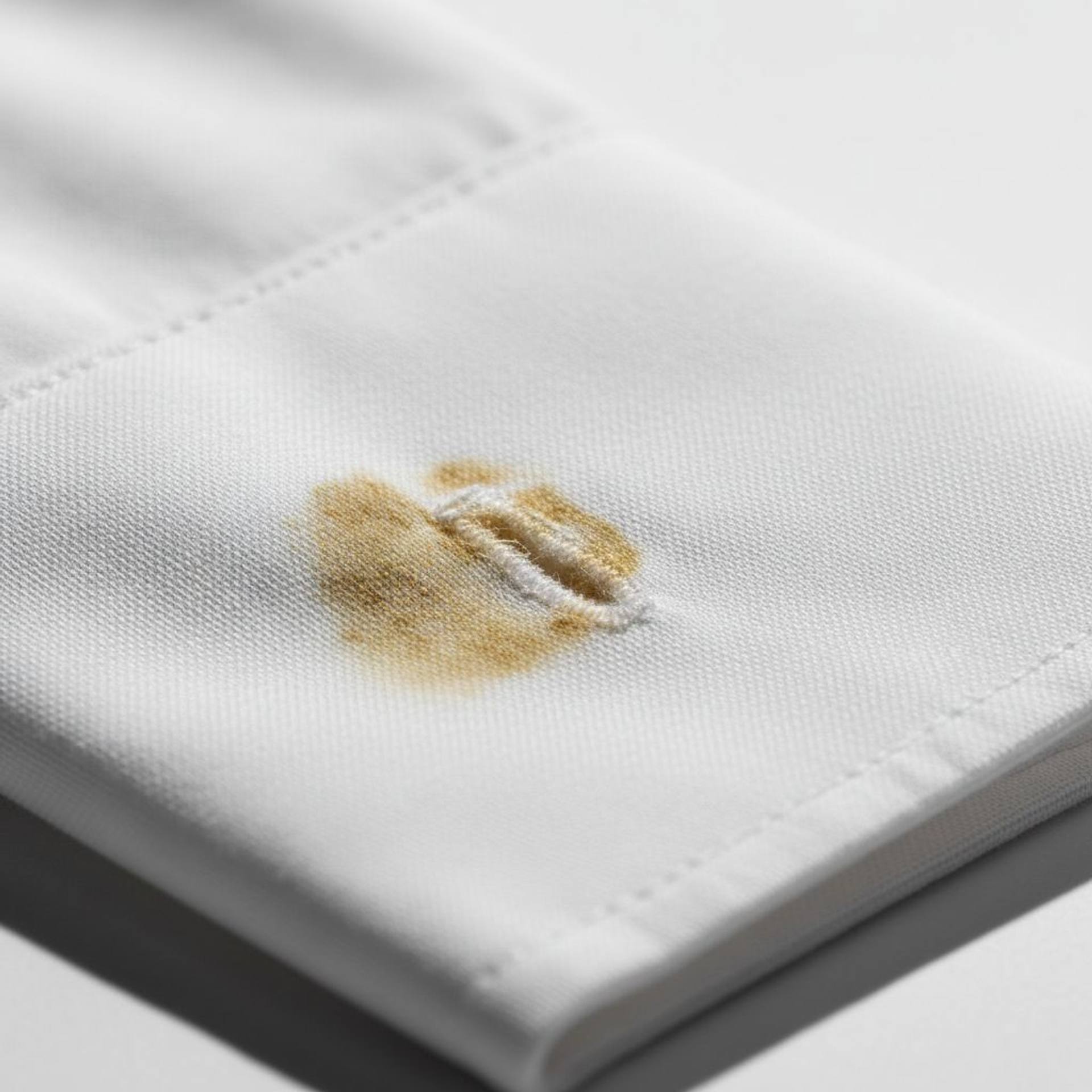
Home methods work best on fresh stains removed within the first few hours. Effectiveness drops noticeably once the stain has set through hot water washing or ironing.
No method, home or professional, guarantees 100% success on a stain that's already been set by high heat.
What to do when the first try isn't enough
- 1
Check before you dry
Look at the cuff before drying and ironing. Wet fabric can be deceiving.
- 2
Repeat targeted treatment
Instead of washing the whole shirt again in hot water, repeat the method matched to the specific stain type from the table above.
- 3
Hand it to the professionals
If the stain is still visible after two tries, or the fabric is delicate like silk or wool, it's time for professional stain removal.

Now you know the theory. Practice can be less forgiving.
If you would rather not risk your favourite piece, leave it to the specialists at Gorące Żelazko laundry in Lublin.


Frequently asked questions
Rinse with cold water from the underside of the fabric to push the pigment outward instead of driving it deeper. After testing on an unseen spot, finish with a cotton ball of isopropyl alcohol or denatured alcohol, pressed from underneath.
Yes, but first rub dish soap directly into the stain to dissolve the grease. Then wash the shirt in warmer, not hot water.
Don't dry or iron the shirt. Repeat the targeted treatment for that specific ink type, and if it still won't lift, take it to a professional dry cleaner.
Take it to a professional when home attempts don't work or the fabric is delicate like silk or wool. Same applies to old or large stains that were set by hot water and professional solvents can no longer shift.