Polypropylene
A complete knowledge guide to the world's lightest textile fiber

"Is it going to melt?" is a question you usually ask yourself one step too late. You're staring at a rigid, translucent stain where, just moments ago, the sleeve of your thermal base layer used to be. Maybe you got here after an unsuccessful ironing session. Maybe your favorite sports shirt came out of the dryer in an odd, slightly stiffened state.
In both cases, you're in the right place. The culprit is polypropylene, a fiber that follows completely different rules in home care than cotton or even polyester.
Before we get to the warnings, though, polypropylene deserves one surprising fact. It is the only commonly used textile fiber with a density lower than water: 0.90 to 0.91 g/cm3. It literally floats on the surface. No cotton, no polyester, no nylon can do this. All of them are denser than water and sink. This single number explains most of what polypropylene can do and what it cannot tolerate.
This material is everywhere, though you rarely consciously recognize it. Thermal base layers for running, a carpet in the living room, a protective mask, a big-bag on a construction site, a sailing rope, a disposable diaper: all of this can be the same polymer in completely different forms. In this guide, you'll learn its properties, applications, and how it compares to polyester, nylon, and merino wool. Practical washing, odor and stains are covered in a separate series of short guides, which we link to further below.
The Melting Fiber Mystery
Why polypropylene melts at the lowest temperature among technical fibers
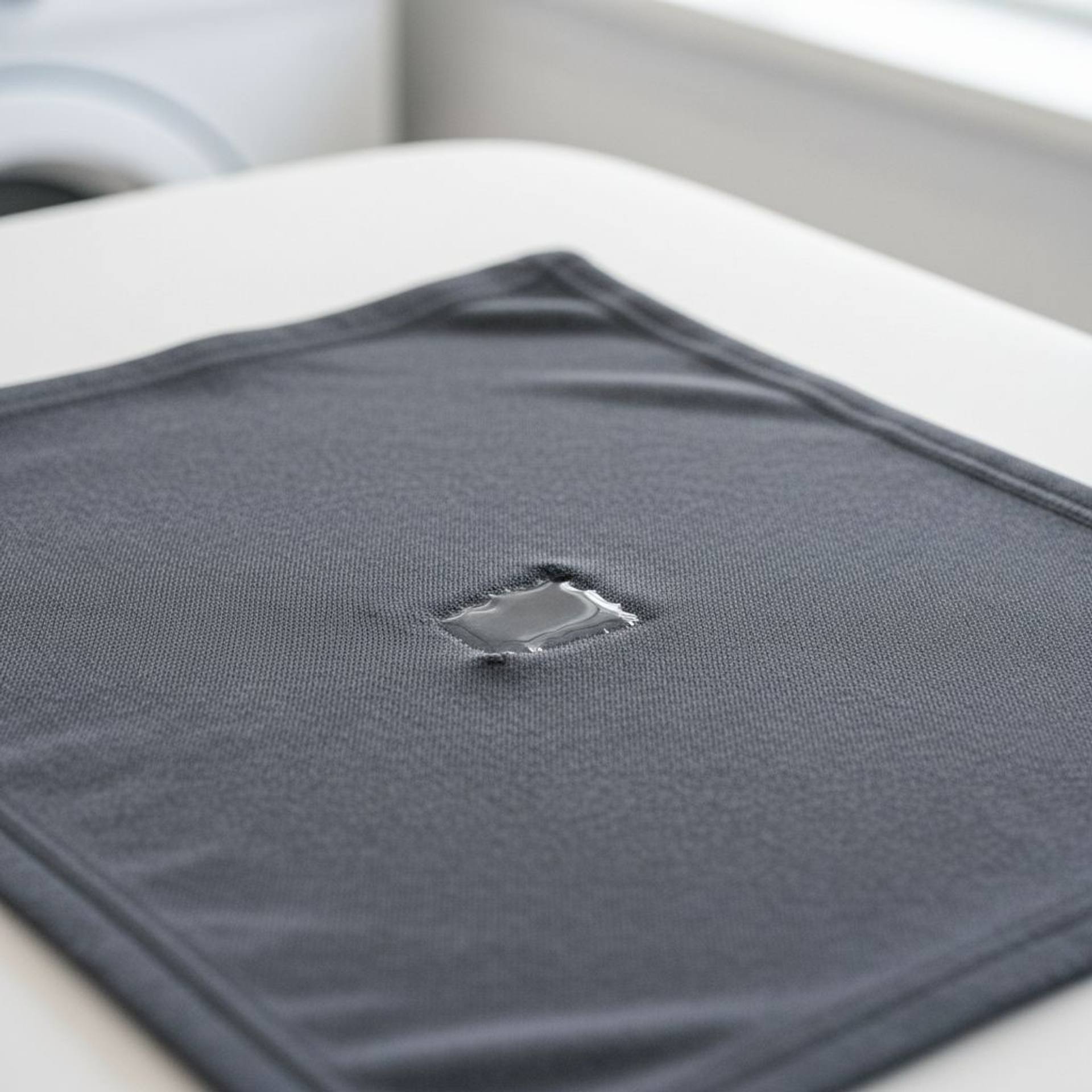
Polypropylene melts at temperatures of 160 to 175 degrees Celsius, typically around 165 degrees Celsius for the most common isotactic homopolymer. This is one of the lowest melting temperatures among all textile fibers, both technical and natural. For comparison: polyester melts only in the range of 250 to 260 degrees Celsius, and nylon 6.6 even higher, at 255 to 265 degrees Celsius. The difference reaches nearly 100 degrees Celsius.
The problem is that a typical household iron on the cotton or linen setting reaches a heating plate temperature in the range of 190 to 220 degrees Celsius. This is well above the melting point of PP. Even the seemingly safe "silk/synthetic" setting on many irons hovers in the range of 110 to 150 degrees Celsius. This is a borderline zone, and sometimes even an exceedance of the threshold at which polypropylene begins to lose its structure.
What's worse, the fiber begins to soften even before it melts. The heat deflection temperature under load (HDT, ASTM D648 method) for PP is typically 100 to 120 degrees Celsius. The Vicat softening point (ASTM D1525), on the other hand, falls in the range of 140 to 155 degrees Celsius. This is not a single hard number, but a range that depends on the measurement method and the load on the sample. However, the practical conclusion is identical: before visible melting occurs, the fiber is already in a state where it is easy to deform or damage with heat.
Fun fact: where did polypropylene come from
Polypropylene's ability to form durable, strong fibers is due to Ziegler-Natta catalysts, developed in the 1950s by Karl Ziegler and Giulio Natta, which earned them the Nobel Prize in Chemistry in 1963. The first industrial producer of isotactic polypropylene was the Italian company Montecatini, which sold it under the brand Moplen from 1957 onwards. On the textile fiber market, it also circulated under the trade names Meraklon and Herculon, which still appear on older labels today.
Properties of Polypropylene
Density, hydrophobicity and chemical resistance in numbers
Behind polypropylene's exceptional properties lies one chemical characteristic: isotacticity. This term describes the way methyl groups are arranged along the polymer chain, in this case ordered on one side of the carbon backbone. Such a regular arrangement allows chains to pack tightly and crystallize. The atactic form, with randomly scattered methyl groups, remains amorphous and sticky, completely unsuitable as a textile fiber.
The degree of crystallinity of typical PP fiber falls in the range of 50 to 70%, depending on the degree of chain orientation and stretching conditions during spinning. The higher the orientation, the closer to the upper end of this range. You can think of it as the difference between a pile of randomly tossed sticks and a carefully arranged bundle: the more organized the structure, the more strength you get from the same amount of material. It is thanks to this crystallinity that PP achieves such a good strength-to-weight ratio while maintaining such low density.
Physical Properties of Polypropylene
0.90 to 0.91 g/cm3, the only textile fiber lighter than water
0.01 to 0.1% (for comparison cotton 7 to 8.5%, wool 13 to 16%)
160 to 175 degrees C, typically around 165 degrees C
from minus 20 degrees C to minus 10 degrees C
4.5 to 8.0 g/den (approximately 40 to 71 cN/tex)
15 to 35%
approximately 17.4 to 18%, burns freely and drips burning droplets
A density below one has very concrete practical consequences. First, PP literally floats, which is why it is used to make sailing ropes and cords that don't sink even when wet. Second, with the same volumetric thickness of yarn, PP weighs significantly less than comparable polyester yarn. This makes it the material of choice wherever every gram counts.
Moisture regain near zero means the fiber practically absorbs no water into its interior. Moisture transport occurs only capillarily, along the fiber surface, not through absorption. This phenomenon is called wicking and is the foundation of thermal base layer operation: sweat is transported to the outside of the fabric instead of being absorbed and trapped against the skin.
This same hydrophobicity has a price, though. The absence of moisture in the fiber means no natural dissipation of electrostatic charges, which is why PP is exceptionally prone to static electricity. This is especially true of dry, winter air and friction in the tumble dryer. Chemically, the fiber is very resistant to acids and bases, but has two weak points: poor UV resistance without additives and a distinct oleophilicity. The latter means a tendency to absorb fats and oils, covered in more detail in our guide to stains on polypropylene.
Where PP Hides
From thermal base layers to carpets and geotextiles
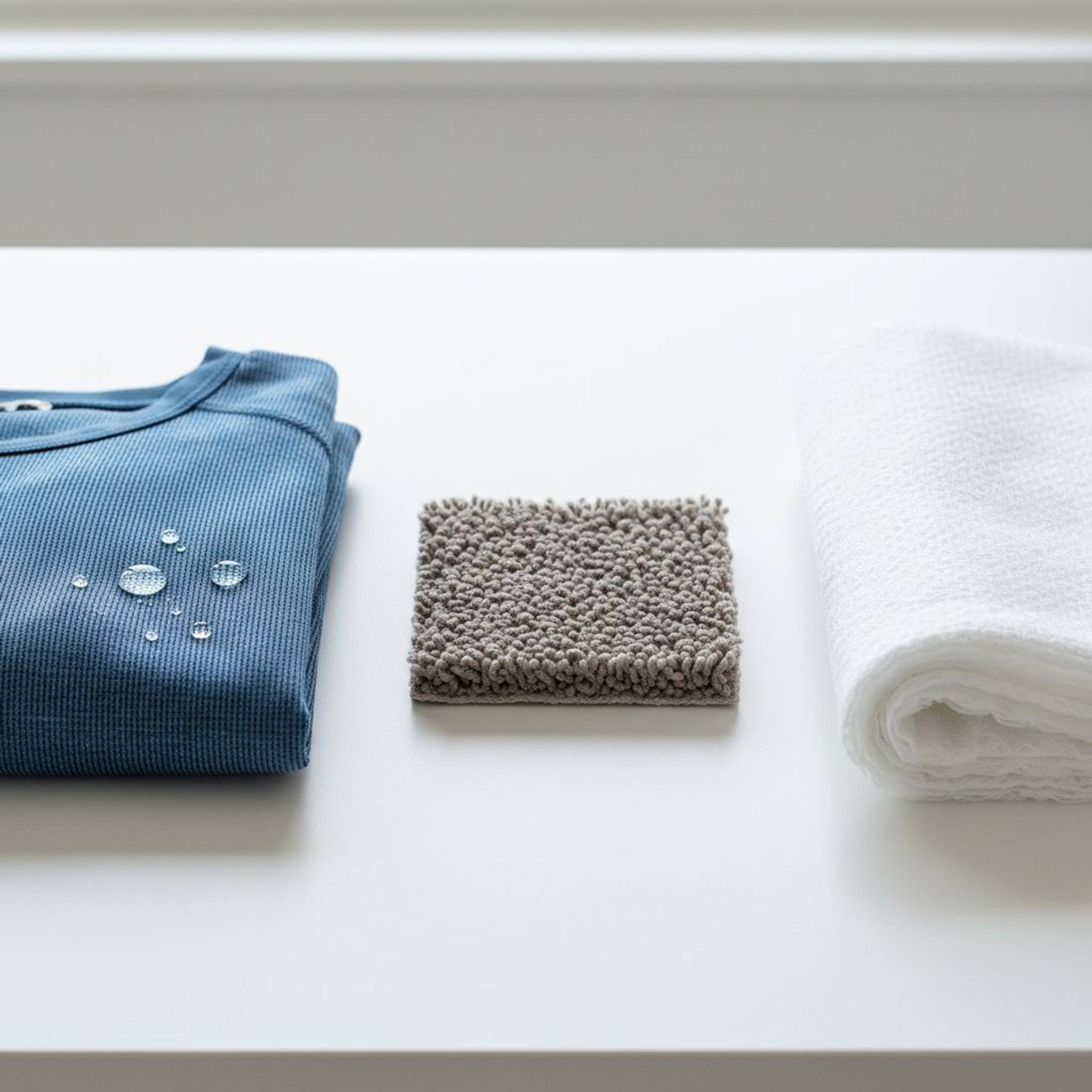
Polypropylene is a fiber that doesn't have a name in the average user's head. You buy a thermal base layer for training, a carpet for the living room or a protective mask, but you rarely think about it consciously as "something made of polypropylene." This is different from cotton or wool, whose names are widely known and recognizable.
The surest clue is the label. Look for the 100% PP symbol in the raw material composition, or, on older products, trade names like Meraklon or Herculon. If you see the description "quick-drying," "base layer" or "moisture-wicking," in many cases it's polypropylene behind it. This same function, however, is sometimes also achieved by polyester.
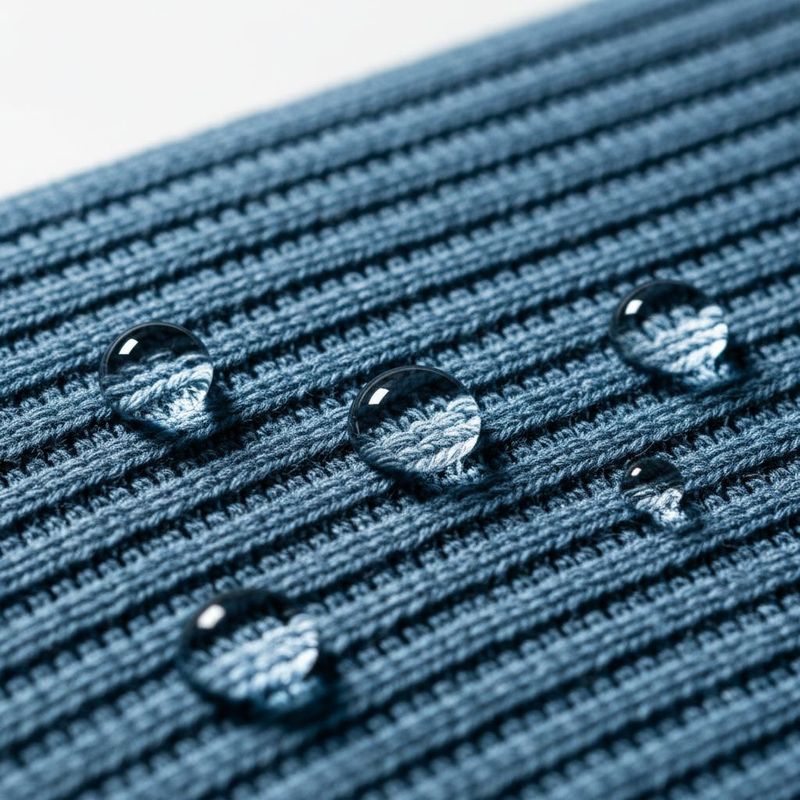
Thermal Base Layer
Sports knits, base layer
It leverages the zero water absorption of the fiber, so sweat is transported away from the skin to the outside of the fabric instead of being trapped in it. This is the most important and most demanding maintenance application of polypropylene in clothing.
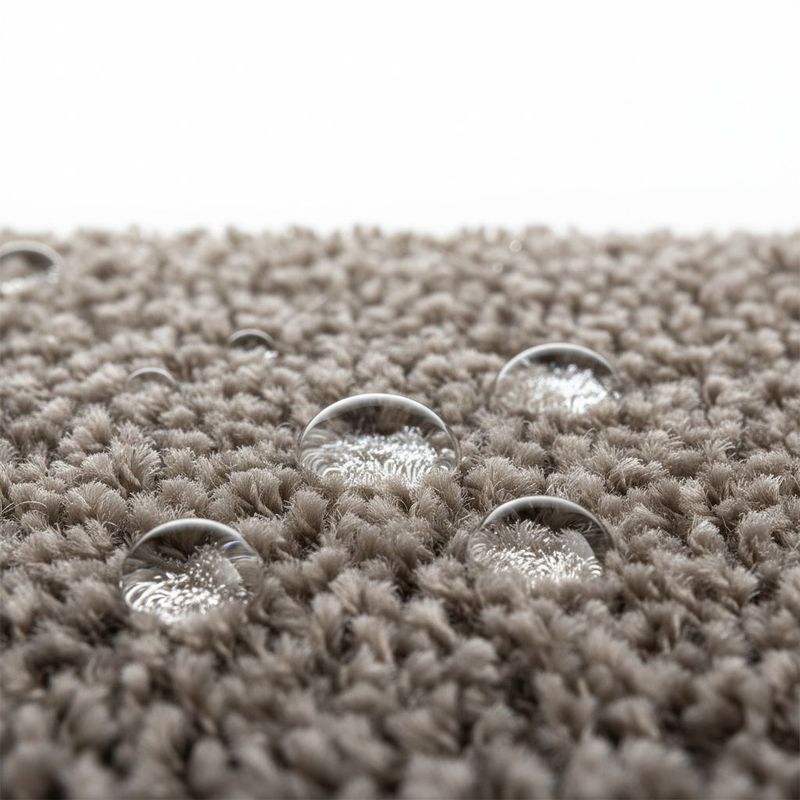
Carpet and Flooring
BCF yarn (Bulked Continuous Filament)
Continuous, textured BCF yarn made from polypropylene is a popular choice in home carpets and contract flooring because it does not absorb moisture or water-based stains. However, it requires a different maintenance regime than clothing made from the same fiber.
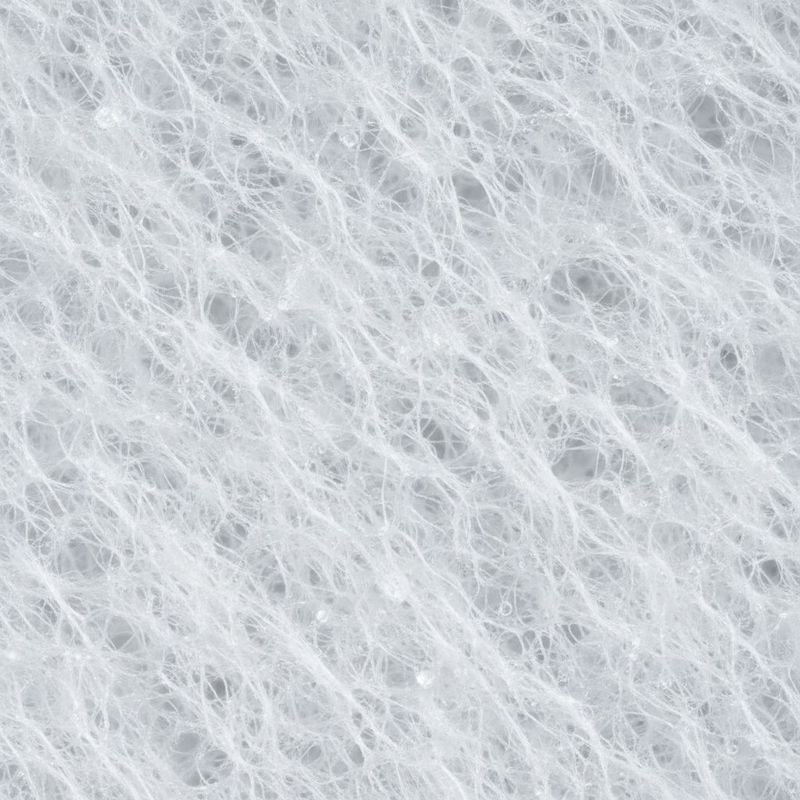
Technical Nonwoven
Spunbond and meltblown
The non-woven form of polypropylene, produced by spunbond and meltblown methods, goes into protective masks, diapers, disposable aprons, construction geotextile and big-bag type bags. This is an application where the low allergenicity of the fiber has direct health significance.
Sailing Ropes and Cords
The only floating fiber
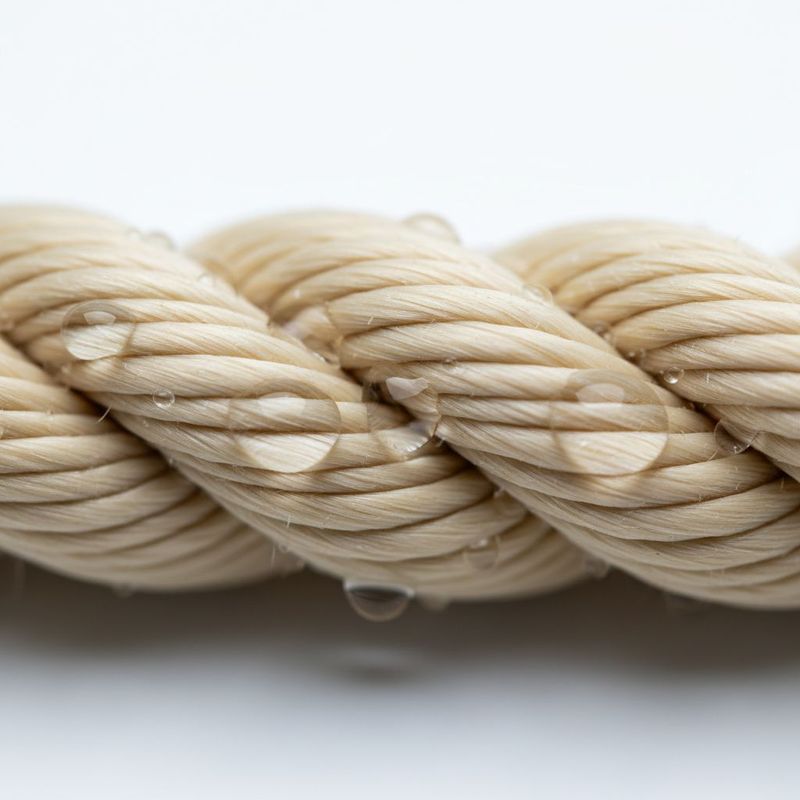
Because of its density lower than water, polypropylene ropes float on the surface instead of sinking, making them the standard in sailing and rescue equipment. This is an application where low weight and buoyancy matter more than wearing comfort.
If you recognized your thermal base layer or sports tracksuit in this lineup, you're probably also wondering whether it's actually a good choice for training or a mountain trip. Before we move on to practical care in the dedicated guides, see how polypropylene stacks up against the main contenders.
Polypropylene Against the Rest
Polyester, nylon and merino wool in direct comparison
If you're facing a choice of base layer or sports clothing before the season, it's worth knowing the differences between the main candidates. PP has a density of 0.90 to 0.91 g/cm3, less than polyester (1.38 g/cm3) and nylon (1.14 g/cm3), and is the only one of the three lighter than water. It melts already at 160 to 175 degrees C, the lowest of the compared fibers: polyester tolerates 250 to 260 degrees C, and nylon 6.6 255 to 265 degrees C, so it requires noticeably more careful thermal care than its competitors. Full washing instructions for both fabrics live in our guides on how to wash polyester and how to wash nylon.
Choose PP When
Absolute lightness and fastest drying matter, for example in extreme conditions or minimal equipment weight.
Choose Polyester When
You need versatility and easier everyday maintenance thanks to a higher melting point, you can even carefully iron it through a cloth.
Choose Merino When
Priority is natural odor resistance and thermal comfort across a wide range of temperatures, from cold to exertion.
Is Polypropylene Safe
Allergies, skin contact and microplastics
Polypropylene itself has low allergenic potential and is chemically inert to skin, which is why PP nonwoven in the form of spunbond and meltblown goes into protective masks, diapers and surgical drapes. Any skin reactions usually come from production additives, such as dyes or finishes, not the polymer itself, so it's good practice to wash a new PP product before first wearing it directly against the skin. Like all synthetics, PP releases microfibers during washing, which you can limit with a lower temperature, a shorter cycle and a full drum load.
Every practical topic gets its own short guide, so you can jump straight to the answer you need instead of scrolling through one long text. The full series:
- How to wash, dry and iron PP thermal base layers
- Why PP thermal base layers smell despite washing
- Carpets and stains on polypropylene

Now you know the theory. Practice can be less forgiving.
If you would rather not risk your favourite piece, leave it to the specialists at Gorące Żelazko laundry in Lublin.


About the author
Małgorzata Małecka
Owner of the Gorące Żelazko laundry
Małgorzata Małecka runs the Gorące Żelazko laundry in Lublin. Together with her team, she makes sure customers' clothes, shoes and fabrics come back clean and in the best possible condition.