Cotton Properties
breathability, absorbency, durability and wrinkle resistance in numbers

The summary below brings together cotton's key performance figures in one place, from breathability and moisture absorption through durability and crease resistance to recommended washing and ironing temperatures. Cotton wins on wearing comfort, hypoallergenic performance and full biodegradability, while its main weaknesses next to synthetic fibres are poor crease resistance and a tendency to shrink on the first wash. Each property below comes with a specific figure and a short note on what it means for everyday wear and care.
92 / 100
High breathability comes from the structure of the cotton fibre itself, which as a natural material lets air pass through freely. This means the body doesn't overheat even under a layer of clothing, something especially valued by anyone wearing cotton directly against the skin. A score of 92 out of 100 puts cotton right at the top among natural fibres for wearing comfort.
8.5% regain
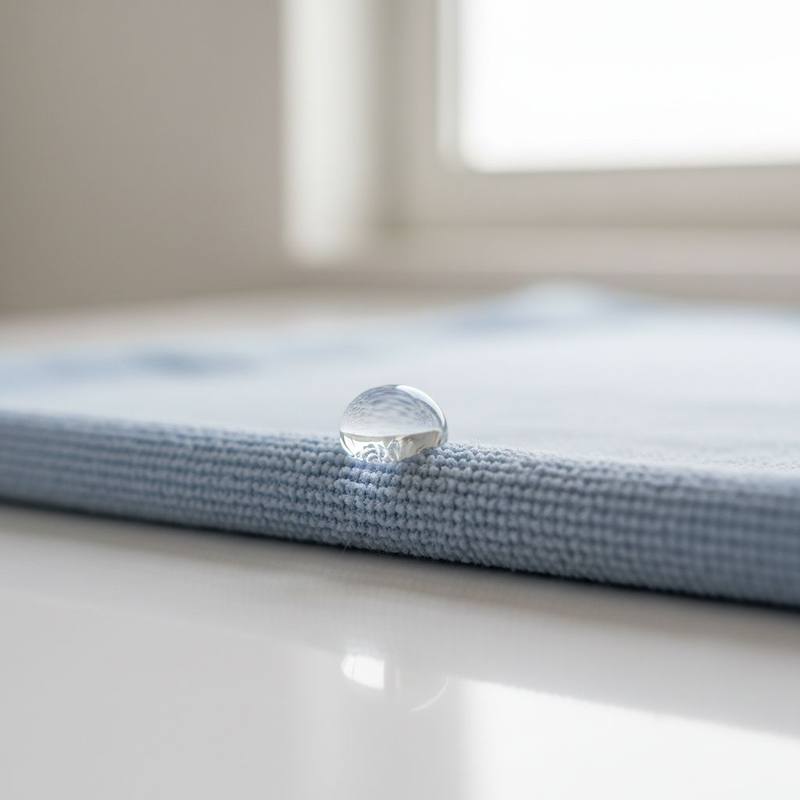
Cotton absorbs moisture almost instantly, and thanks to the hollow centre of the fibre, the lumen, it releases that moisture just as quickly back into the surrounding air. A standard regain of 8.5% under the ISO test means the fabric doesn't turn unpleasantly damp or clingy even during heavy sweating. That's why cotton t-shirts and bedding stay comfortable even on hot days.
95 / 100
Pure cotton cellulose is one of the safest materials for direct skin contact and rarely triggers an allergic reaction. A score of 95 out of 100 makes it the material of choice for underwear, children's bedding and clothing for anyone with atopic dermatitis. Any irritation is usually caused not by the fibre itself but by additives such as dyes, formaldehyde in easy-iron finishes, or pesticide residues.
200 to 300 washes
With proper care, a cotton fabric can withstand 200 to 300 wash cycles before visible signs of wear appear. This reflects the fibre's fairly high mechanical strength, though it still falls short of synthetic fibres when it comes to resisting stretching. In practice, a well-maintained cotton garment can serve for years of regular use.
28 to 40 cN/tex
A single cotton fibre reaches a strength of 28 to 40 cN/tex, and its strength actually increases by 18 to 25% when wet. This is one of the few properties where cotton gets stronger rather than weaker when soaked, which explains why it copes so well with frequent, intensive washing. It also means the fabric rarely tears during a normal machine wash.
25 / 100
Poor crease resistance is cotton's most well-known weakness, a result of cellulose chains that bend out of shape easily under pressure. A score of just 25 out of 100 means the fabric needs regular ironing if a smooth finish matters to you. A mercerised finish or an elastane blend can partly offset this.
30 to 60°C
Choosing the right washing temperature comes down mainly to colour. Coloured garments wash best at 30 to 40 degrees to protect the dyes from fading, while white cotton can safely go up to 60 degrees without damaging the fibre. Higher temperatures remove bacteria and soiling more effectively, but they also speed up natural wear.
150 to 200°C
Cotton tolerates fairly high ironing temperatures, from 150 to 200 degrees, setting it apart from more delicate synthetic fibres. The best results come from steam ironing while the fabric is still slightly damp. A temperature that's too low won't smooth the fibre properly, while the right setting can tame even a badly creased shirt.
4 to 8%
The first wash accounts for most of a cotton fabric's shrinkage, since it releases tension built up during manufacturing. Depending on the temperature, shrinkage ranges from 2 to 4% at 30 degrees up to 5 to 8% at 60 degrees and above. The process is irreversible, so new clothes are best washed separately and at a lower temperature than the target, unless the label indicates a sanforized fabric.
1 to 5 months
As a purely plant-based cellulose fibre, cotton breaks down in soil within just 1 to 5 months, earning it the maximum biodegradability score. Polyester, by comparison, takes over two hundred years to do the same. That means worn-out cotton clothing or cloths can be composted or left to decompose naturally, rather than sitting in landfill for decades.
Pilling (bobbles): short fibers (below 20 mm) break during friction and form balls. Most susceptible: flannel, cheap jersey. Pima and Egyptian cotton (long fiber) pills rarely. Already formed bobbles are removed with a fabric shaver.

Now you know the theory. Practice can be less forgiving.
If you would rather not risk your favourite piece, leave it to the specialists at Gorące Żelazko laundry in Lublin.


Frequently Asked Questions
Much less than synthetic fabrics. As a natural fibre, cotton readily absorbs and releases moisture from the air, which limits the build-up of static charge on its surface. Static becomes more of an issue with cotton blends containing polyester, or in very dry winter air.
Percale, thanks to its dense plain weave, has a cool-to-the-touch, matte finish that feels pleasantly cool against the skin in summer. Cotton itself has very good breathability, so regardless of weave it carries heat and moisture away well. Cotton sateen, while elegant and smooth, tends to feel warmer than percale because of its denser satin weave.
With proper care, cotton withstands 200 to 300 wash cycles before visible signs of wear appear. This comes from the relatively high strength of the cellulose fibre, which additionally becomes 18 to 25% stronger when wet instead of weakening.
About the author
Małgorzata Małecka
Owner of the Gorące Żelazko laundry
Małgorzata Małecka runs the Gorące Żelazko laundry in Lublin. Together with her team, she makes sure customers' clothes, shoes and fabrics come back clean and in the best possible condition.