Newsprint on clothes: how to remove it
Newsprint transfer can be removed when you know why water alone isn't enough. Step-by-step method and when to take the item to a dry cleaner.

Newsprint transfer on a shirt or tablecloth appears unexpectedly. You sat on a newspaper you'd read, wrapped something in it during a move, or mistakenly used it as a pressing cloth under the iron. The result is a gray, smudged impression of letters that looks concerning.
The first instinct is to wet the stain with water. That's a mistake: water spreads the pigment across a larger area of fabric instead of removing it. Before you reach for anything wet, it's worth understanding what you're actually dealing with.
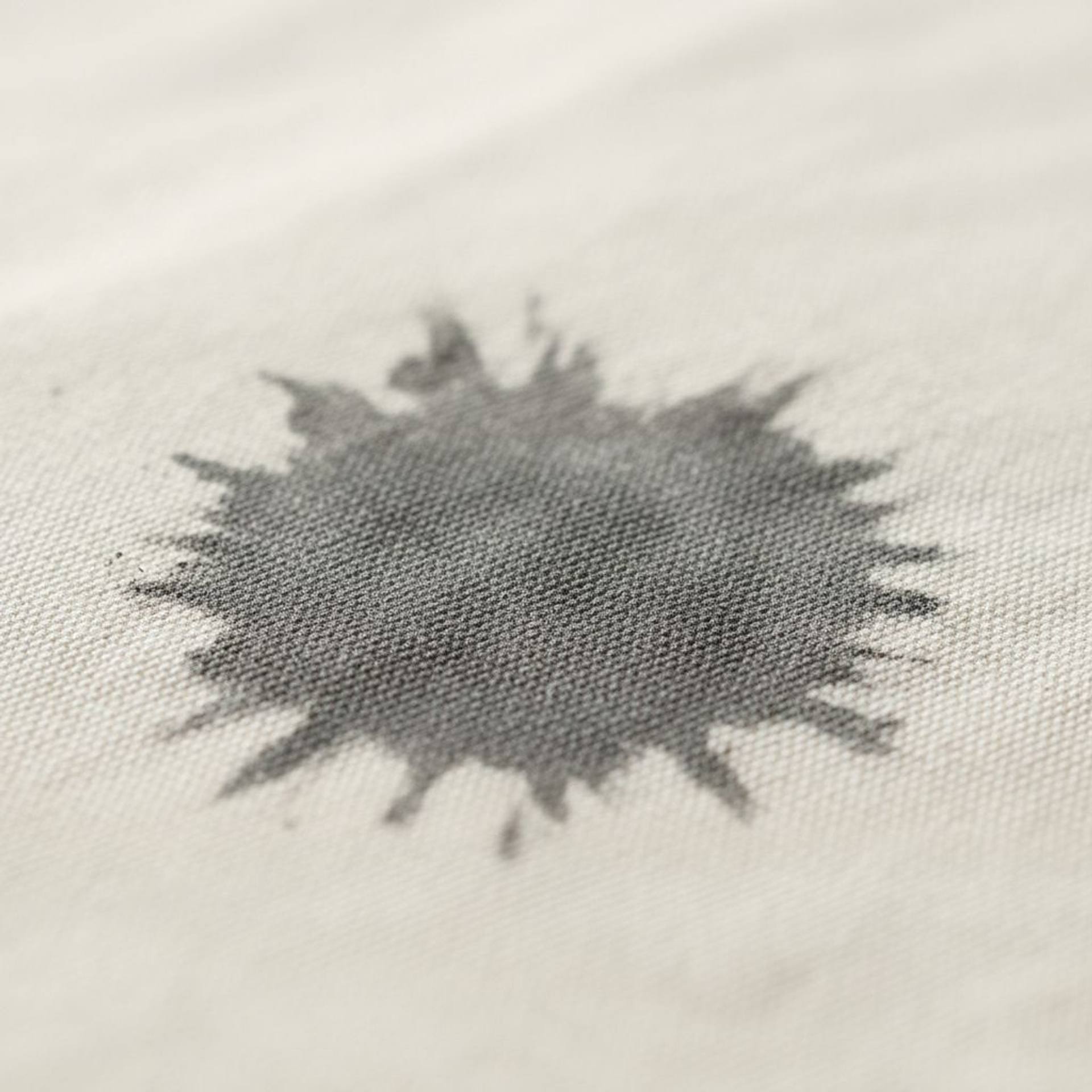
Modern newspaper ink is mostly soot, a black carbon pigment. It's suspended in mineral oil or, increasingly with color prints, in a binder based on soybean oil.
This pigment doesn't dissolve in water, but it dissolves very well in organic solvents and fats. This is why detergent and water alone won't work: you need to break down the oily base first, then wash.
Printer ink and solvents: how to actually remove it
The order of steps that won't spread or set the pigment
The method works in four steps, from dry to wet and from solvent to detergent, in exactly the same order as the stain itself is built.
There's one rule: work from the underside of the fabric, point by point, moving from the outside of the stain toward the center. Otherwise you'll spread the pigment over a larger area.
- 1
Brush off the dry pigment
Before you touch the stain with anything wet, gently brush or rub off any loose powder. No rubbing, no tissue: that works the pigment deeper into the weave.
- 2
Blot with isopropyl alcohol from underneath
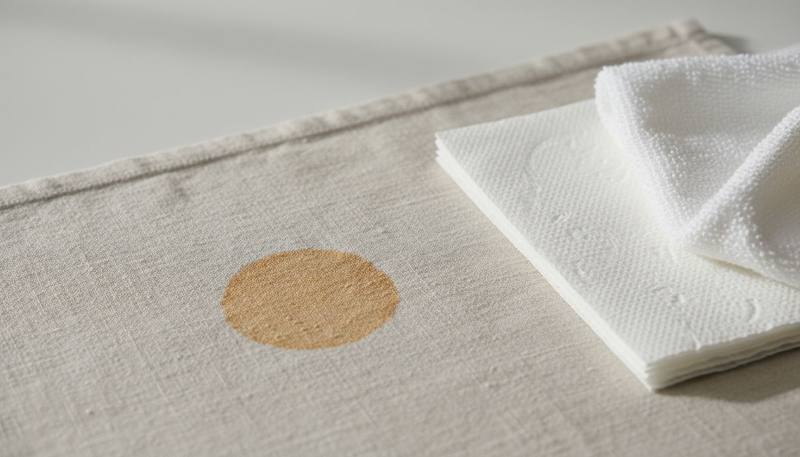
Place a paper towel under the fabric, blot the stain from above with isopropyl alcohol or denatured alcohol. Move from the outside of the stain toward the center so you don't spread it.
- 3
Degrease and rinse
Rinse with cold water, apply a degreasing dish soap, and rub with gentle circular motions.
- 4
Wash in the fabric's recommended program
Wash in the program recommended on the care label. On white cotton, you can spot-treat with 3% hydrogen peroxide before the main wash.
Before you use isopropyl alcohol or hydrogen peroxide, test it on a hidden part of the fabric, such as an inner seam. This is especially important for dyed fabrics: color loss in the test spot is a much smaller problem than color loss on the visible stain.
Before you try the method above, check what not to do. Several instinctive actions make the stain worse instead of removing it.
Do
- Brush or rub off the dry pigment before you touch the stain with a damp cloth
- Remove the oily base with a solvent before putting the item in the wash
Don't
- Don't rub the dry stain with a tissue or your hand, just brush it: rubbing will spread the soot over a larger area
- Don't wash in hot water right away without pre-treating: high temperature pushes the oil deeper into the fiber
- Don't iron the stained area, even through protective fabric: this thermally sets the grease and transfers more pigment from newspaper residue
- Don't use colored wet tissues or universal stain removers without testing on dyed fabric
Home methods have their limits. Old, dried, or heat-set stains often won't come out at home. Alcohol-based solvents can damage certain fibers, such as acetate or triacetate, or dull the shine of silk and felt wool with harder rubbing.
Here's a quick overview of which fabrics work for DIY and which are better taken straight to a dry cleaner.
White cotton, white linen
Isopropyl alcohol and spot-treatment with 3% hydrogen peroxide before washing. Low risk, home method fully acceptable.
Colored cotton, colored linen
Isopropyl alcohol without hydrogen peroxide, mandatory color test in a hidden spot before use.
Natural silk
Brief contact only after testing on a hidden area. Risk of losing shine and water marks, better take to dry cleaner.
Wool
Risk of felting with harder rubbing, dry cleaning recommended.
Acetate, triacetate
Alcohol solvent dissolves the fiber. Dry cleaning only, no home attempts.
Polyester and synthetic blends
Low to medium risk, always start with a test on a hidden area.

Now you know the theory. Practice can be less forgiving.
If you would rather not risk your favourite piece, leave it to the specialists at Gorące Żelazko laundry in Lublin.


Frequently asked questions
Yes, if the stain isn't already heat-set, meaning it hasn't been through hot water washing or ironing. The fresher the stain, the higher the success rate of the home method.
Isopropyl alcohol dissolves the oily base of the pigment, so it works on the stain's mechanism. On delicate fabrics like silk, wool, or acetate, it requires caution and testing on a hidden spot.
Use the program recommended on the fabric care label, only after the solvent pre-treatment step. Washing in high temperature right away without pre-treating sets the pigment.
That's a sign of heat-setting. Further home attempts will then have limited success, so it's better to take the item to a dry cleaner instead of washing it again at home.