Does Mohair Shed? Is Hair Loss From Sweaters Normal
We explain why this happens and how to reduce shedding from your mohair sweater

The short answer is yes, and it's normal. The slippery, smooth structure of the mohair cuticle, the same one that gives it exceptional luster, promotes “shedding” of individual fibers from the yarn, especially under friction. A purse strap rubbing against a sleeve is enough to see fine, light hairs on a black coat beside it.
It's a natural characteristic of mohair yarn, especially brushed mohair with raised fuzz, not a defect in a particular item or a consequence of poor washing. The intensity of the phenomenon gradually fades over time, but it can't be eliminated completely, only slowed down by handling the fabric gently.
Why Mohair Sheds Fibers
the fiber and yarn structure behind the halo effect
Shedding comes down to the structure of the mohair fiber itself, sourced from Angora goat hair. Unlike sheep's wool, where the scales on the fiber surface are clearly raised and interlock like roof tiles, mohair's cuticle lies almost flat and smooth. Fibers slide against each other instead of gripping, which gives mohair its characteristic luster but weakens how firmly individual hairs stay anchored in the yarn.
The second factor is yarn twist: fluffy sweaters are usually spun from loosely twisted yarn, which is what creates the delicate, raised fuzz known as the halo. The looser the twist, the more easily a fiber slips out under friction. Brushed mohair, combed to deliberately raise the fuzz, by design sheds more fibers than smooth, classic yarn.
What Determines the Strength of Shedding
Smooth and flat, less friction between fibers than in sheep's wool
The loose twist typical of fluffy sweaters releases fibers more easily than tightly twisted yarn
Brushed mohair with raised fuzz sheds more than smooth, classic yarn
A new sweater sheds the most, and intensity clearly declines over time
Shedding is most noticeable in the first weeks of wearing a new item. The surface of freshly spun yarn always carries a certain number of loosely bound fibers that weren't trapped deep in the twist during production. The first wash and the first contact with friction release exactly these hairs, and once the most weakly held ones fall away, the shedding rate noticeably slows down. That's why an old, well-worn mohair sweater usually sheds less than one straight from the store, even though it's been through more washes.
How to Reduce Hair Shedding
Do
- Wear mohair with an intermediate layer against bag straps and contact points to reduce direct friction
- Store mohair separately from black and smooth fabrics where loose hairs will be most visible
- Gently brush out the item instead of brushing it vigorously
Don't
- Don't rub stained areas intensively
- Don't wear a bag strap in exactly the same spot for extended periods
- Don't dry mohair in a tumble dryer
Shedding vs. Pilling
two different phenomena that are easy to confuse
Hair shedding is a different problem than pilling, or bobbling. Pilling happens when short, broken fibers on the surface tangle together under friction into small balls, held in place by longer, intact fibers around them. Shedding is something else entirely: the whole fiber leaves the yarn and falls away instead of curling into a ball.
Pilling on mohair occurs more rarely than on merino wool, precisely because of the smooth cuticle. It appears more often in blends of mohair with synthetic fibers, such as acrylic or nylon, popular in yarns that reinforce sweater durability. Pure, high-quality mohair rarely pills, but it almost always sheds.
Most exposed to friction, and therefore to hair shedding and pilling, are: armpits, inside of sleeves and sides just at the bag strap. These are the first places worth checking if you want to assess the condition of your mohair item.
How to Wash Mohair Without Making Shedding Worse
gentle handling at every stage keeps friction to a minimum
- 1
Hand wash or use a protective wash bag
Hand washing in cool water or a cycle inside a mesh wash bag in the machine reduces mohair's friction against other fabrics and the drum.
- 2
Use a gentle wool detergent
A detergent made for wool and delicate fabrics foams less and doesn't need intensive rinsing, meaning less mechanical contact with the fiber.
- 3
Don't wring, blot with a towel
Roll the wet sweater in a dry towel and press gently to draw out excess water without fibers rubbing against each other.
- 4
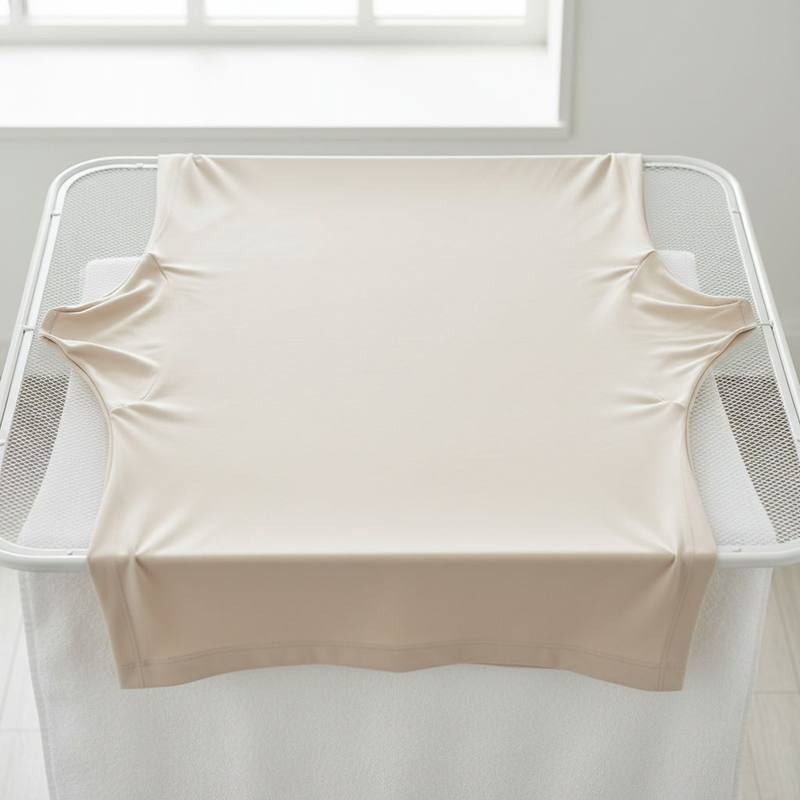
Dry flat, away from heat
Lay the sweater flat, away from radiators and sunlight. Drying it on a hanger stretches the fibers.
Mohair Care Rules
Hand washing
Cool water and gentle submerging instead of rubbing limits how many fibers come loose.
No bleach
Bleach weakens the keratin fiber, which makes shedding even worse.
Dry flat
A flat position keeps the shape and doesn't stretch the yarn, unlike a hanger.
No tumble drying
Heat and friction inside the drum is the fastest way to make mohair shed heavily.
Low-temperature ironing
If ironing is necessary at all, iron through a protective cloth, on a low setting, without pressing down.
A Quick Refresh Before Heading Out
Before you put on a mohair sweater, run a wide, soft clothes brush over it once, in one direction. This removes already loosened hairs from the surface before they can fall off on their own while you're wearing it.

Now you know the theory. Practice can be less forgiving.
If you would rather not risk your favourite piece, leave it to the specialists at Gorące Żelazko laundry in Lublin.


Frequently Asked Questions
The slippery, smooth structure of the mohair cuticle promotes shedding of individual fibers from the yarn under friction. This is a natural characteristic of mohair yarn, especially brushed mohair, not a product defect or consequence of poor washing.
Wear mohair with an intermediate layer against bag straps and contact points, store it separately from black and smooth fabrics, and gently brush instead of vigorously. You can't eliminate it entirely, only slow it down.
Partly yes. Put the sweater in a plastic bag in the freezer for a day: the cold reduces static charge, so loose fibers lift less and fewer come off as you wear it. It's only a temporary aid, though, since shedding is heaviest when the sweater is new and fades over time.
No. It's a natural characteristic of the yarn resulting from the smooth cuticle and the loose twist typical of fluffy items. A complaint only makes sense once a sweater loses fibers at an excessive rate for many months, not from single hairs on nearby clothes.
Angora usually sheds the most, due to short, loosely anchored fibers. Mohair sits in the middle: shedding more than smooth cashmere yarn, but far less aggressively than classic angora. What matters most is cuticle structure and yarn twist, not the fiber type itself.