How to wash mohair
Step by step, without risking the fuzz

The basic rules for washing mohair are the same as for wool and other delicate animal fibers. This particular fabric, however, requires extra caution because of the fuzz, or halo, which easily becomes permanently flattened. Remember one thing at the start: friction is mohair's main enemy, not soaking alone.
- 1
Set the right temperature
Water maximum 30°C, ideally in the range of 20 to 25°C. Higher temperatures open keratin scales and increase felting risk.
- 2
Choose the right detergent
Use a product without proteolytic enzymes, with pH in the range of approx. 5.5 to 8.5. Specialized wool and delicate fiber liquid works best.
- 3
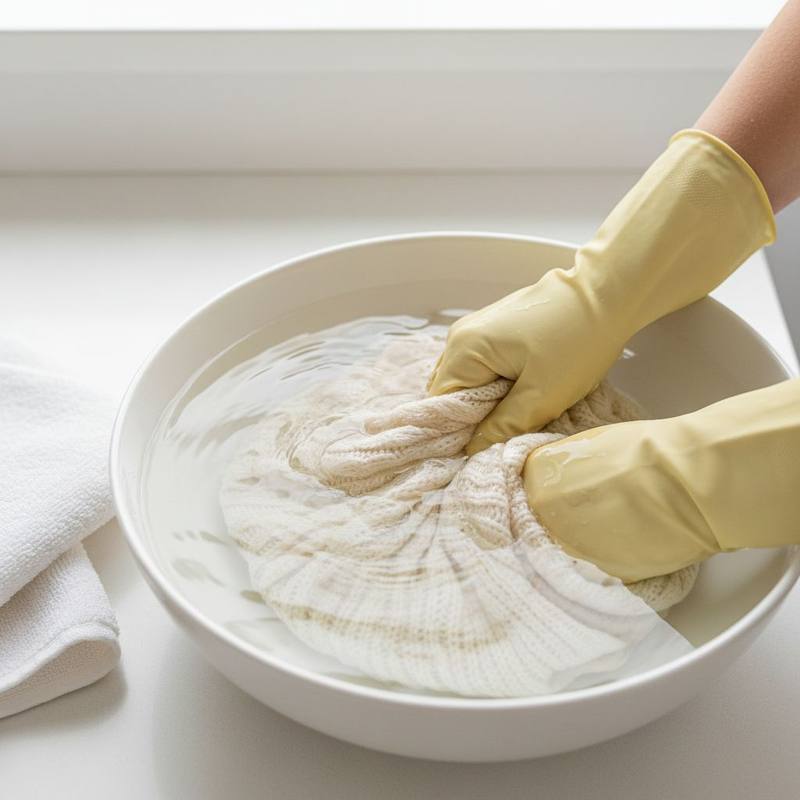
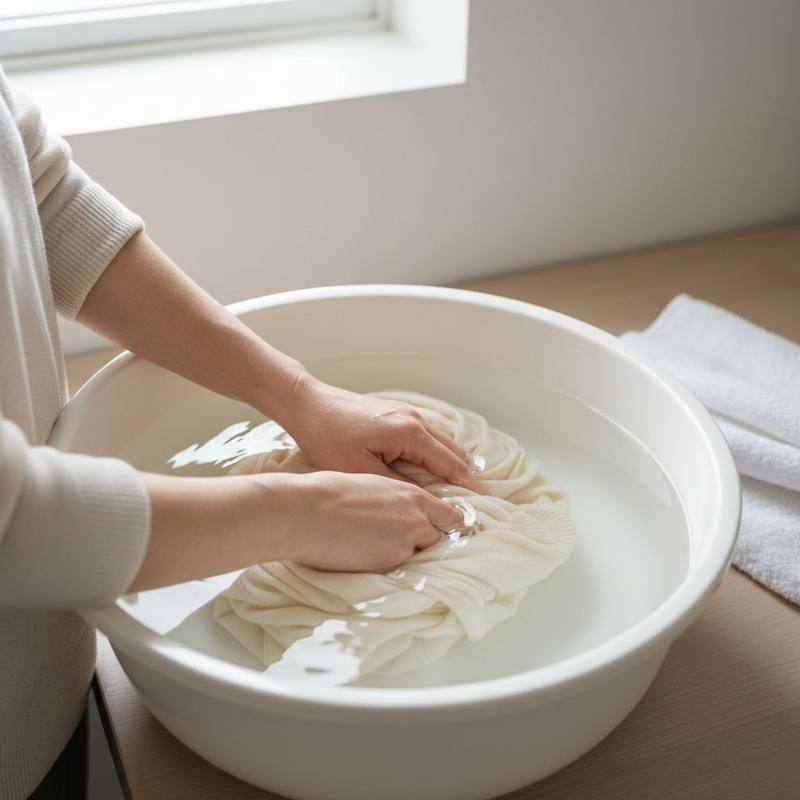
Submerge and gently squeeze
Submerge the item in water and gently squeeze, never rub, for maximum 5 to 10 minutes. Friction is the only real enemy of the fuzz at this stage.
- 4
Rinse at the same temperature
Do 2 to 3 water changes at the same temperature as washing. A sudden temperature difference between washing and rinsing is one of the most common causes of felting.
- 5
Remove excess water without wringing
Remove excess moisture by pressing the item in a dry terry towel. Never wring wet mohair, as this is the fastest way to damage fabric structure.
- 6
Dry flat and gently comb
Dry laid flat, away from sun and heat sources. During drying, gently comb the fuzz with your fingers to help the item recover its fluffiness.
The same guidance is confirmed by the symbols on the garment label. The ability to read them is especially useful when you buy something second-hand and the label with full material description has long disappeared.
Care symbols important for mohair
Washing
Hand wash, 30°C
A bowl of water with 30 and a hand submerged inside. The dominant recommendation on labels of sweaters and scarves from mohair.
No water washing
A crossed-out bowl means dry cleaning only. Typical for upholstery fabrics, blazers and coats with mohair lining.
Professional cleaning
Dry cleaning (P)
A circle with the letter "P" means cleaning with hydrocarbon solvent or perchloroethylene. Standard for suiting fabrics from mohair.
Bleaching
No bleaching
A crossed-out triangle. Chlorine irreversibly breaks the disulfide bonds of keratin, destroying luster and fiber structure.
Drying
No tumble drying
A square with a crossed-out circle inside. Heat and mechanical dryer movement together mean felting and permanent fuzz flattening.
Dry flat
The standard recommendation for brushed mohair knits. Hanging to dry stretches the wet item under its own weight.
Ironing
Iron to approx. 110°C
Iron with one dot, through a cloth. This is lower than standard wool setting (two dots, approx. 150°C), because direct iron base contact flattens the characteristic fuzz.
Home machine washing is technically allowed, but only with a wash bag and a wool or delicate fabric dedicated program. The risk of thermal shock and excessive drum mechanics is however noticeably higher than with hand washing, so for valuable mohair items hand washing remains the safer choice. General rules for washing wool and delicate programs, with full explanation of differences between machine programs, are described in a separate guide: How to Wash Wool: Temperature, Detergent, Spinning.
Avoid powders with optical brighteners and protease enzymes. They destroy the keratin protein of mohair just as effectively as they damage wool, even if the package says "for delicate fabrics."

Now you know the theory. Practice can be less forgiving.
If you would rather not risk your favourite piece, leave it to the specialists at Gorące Żelazko laundry in Lublin.


Frequently asked questions
No. Both are keratin fibers from animals, but mohair comes from a goat and wool usually from a sheep. Mohair has a smoother cuticle, higher luster and lower felting tendency than typical sheep's wool.
Depends on the class. Thin kid mohair, around 23 to 26 micrometers, is usually comfortable on skin. Thicker adult mohair, above 32 micrometers, exceeds the prickle factor threshold and can itch noticeably.
Not fully. Mohair generally irritates skin less than typical sheep's wool, partly because it contains less lanolin and fat. True allergy to keratin protein is rare but clinically documented, so mohair is not completely safe for all allergy sufferers.
Hand washing is definitely safer. Machine washing is allowed only in a wash bag on a wool or delicate program, but carries higher risk of thermal shock and excessive friction in the drum than hand washing.
Maximum 30°C, ideally in the range of 20 to 25°C. Rinsing should occur at the same temperature as washing to avoid thermal shock.
About the author
Małgorzata Małecka
Owner of the Gorące Żelazko laundry
Małgorzata Małecka runs the Gorące Żelazko laundry in Lublin. Together with her team, she makes sure customers' clothes, shoes and fabrics come back clean and in the best possible condition.