Modal has shrunk or stretched
What can still be fixed after shrinking or stretching, and what can no longer be undone

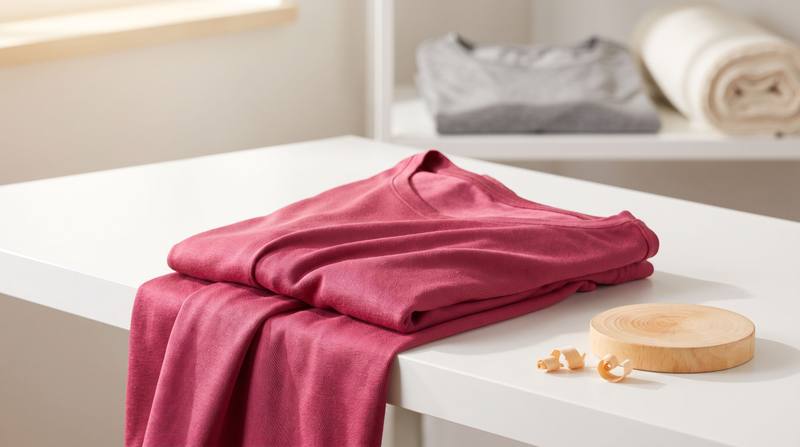
If you're here because your favorite modal shirt or pajamas came out of the wash smaller or stretched, know this is one of the most common reasons people look up information about this fabric.
Good news: modal, as a High Wet Modulus fiber, shrinks and stretches noticeably less than ordinary viscose. Bad news: both problems have different causes and different rescue methods, so before you act, it's worth understanding exactly what happened to the fabric.
Why modal shrinks
temperature, fiber relaxation and the difference from viscose
The most common cause of shrinkage is too high water or dryer temperature, often combined with skipping a test wash before the first full cycle. Modal fiber is formed and stretched under set tension during production. Hot water and dryer heat relax this structure, letting the cellulose chains retreat toward a naturally shorter form, meaning the fabric physically shrinks.
Post-wash shrinkage usually falls in the 2 to 5% range, enough to make your favorite t-shirt tight around the shoulders. That's still a better result than ordinary viscose, where shrinkage reaches 5 to 10%, because the HWM production modification limits this fiber relaxation.
Modal's shrinkage and strength compared to viscose
2 to 5%
5 to 10%
60 to 65% of dry strength
40 to 50% of dry strength
Why modal stretches
wet fabric weight and weakened fiber
Stretching has a different cause than shrinking: most often it's hanging wet, heavy fabric, like underwear or pajamas, on a hanger. Wet modal fiber, weakened to 60 to 65% of dry strength, can't support its own weight in a vertical position and stretches around the neckline or waist, wherever the wet fabric's weight concentrates most.
The same mechanism applies with too aggressive spinning at high speed or wringing by hand. Fiber in a wet state is more prone to permanent deformation than dry, which is why every action on wet modal fabric should be gentler than usual.
How to rescue shrunk or stretched modal step by step
None of these methods guarantee full success, but they raise the odds of saving the garment, especially right after you notice the problem.
- 1
Soak in lukewarm water
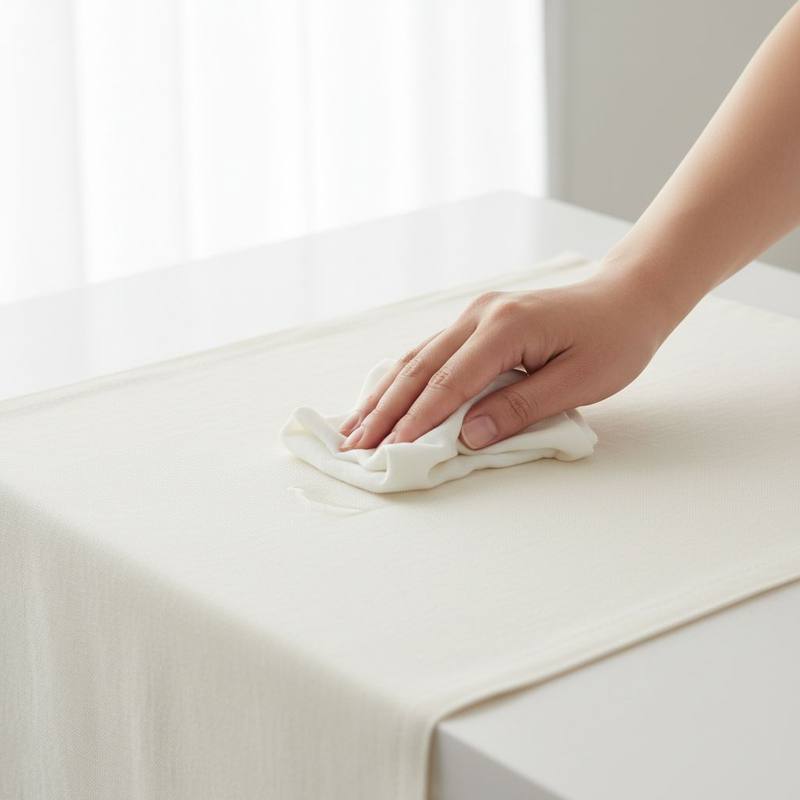
Place the fabric in lukewarm water for several minutes, optionally with a bit of hair conditioner. This relaxes the fibers and makes shaping easier.
- 2
Gently shape the wet fabric
While the fabric is still wet, carefully stretch it by hand to the target shape, working evenly from the center outward.
- 3
Dry flat on a towel
Lay the garment flat on a dry towel, away from a heater and sunlight. A flat position without gravity's pull protects against further stretching.
- 4
Check the result and repeat if needed
If the shape still isn't right, repeat the cycle. Don't redry at high temperature between attempts, as that locks in the current shape.
Do
- Gently stretch the wet fabric by hand to the target shape and dry flat
- Do a test on an unseen section before using any corrective measures
- Dry modal on a towel, not on a hanger
Don't
- Don't redry at high temperature, counting on “fixing” shrinkage
- Don't pull dry fabric aggressively, risking breakage of the fibers
- Don't wring wet modal, just gently press out the water
No method, home or professional, guarantees 100% reversibility of shrinkage that has already happened. Modal, despite its advantage over ordinary viscose, remains a fiber requiring more care than cotton or polyester, and prevention is a better strategy than repair.
How to wash and dry modal to prevent shrinking and stretching
Washing
A low temperature limits the fiber relaxation responsible for shrinkage. A gentle program also protects against friction.
Tumble drying
High tumble dryer heat is the most common cause of modal shrinkage.
Drying
Dry flat, never on a hanger. Wet fabric hung vertically stretches under its own weight.
Ironing
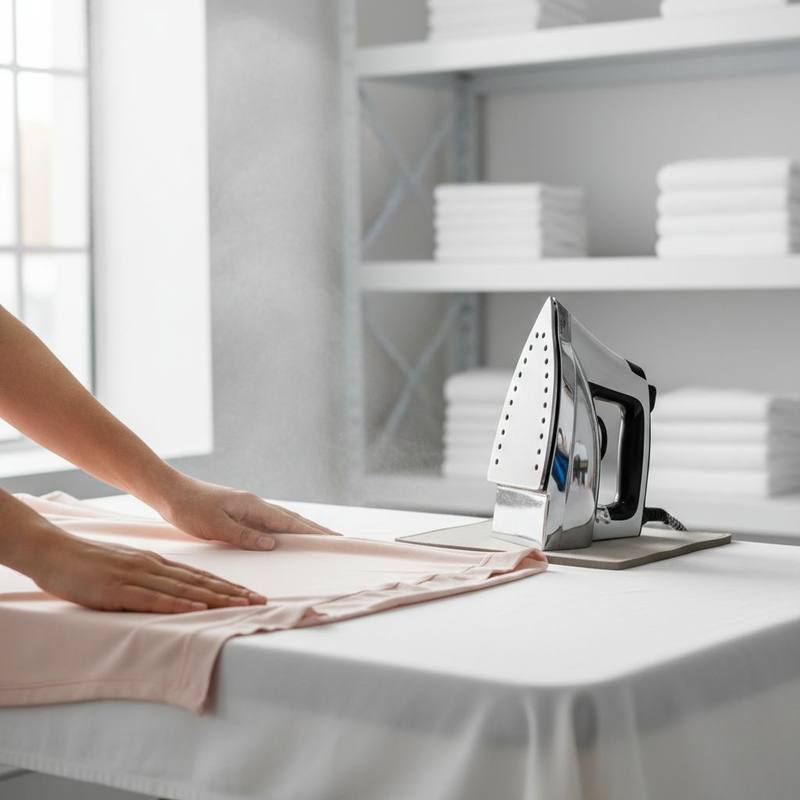
A low to medium iron temperature is enough to smooth modal without risking further deformation.
Before washing a new modal item
Always do a test wash on a small, unseen section or at the lowest available temperature before washing a modal item for the first time. This lets you gauge how that specific fabric reacts before you risk your favorite shirt or pajamas.
When to hand modal to a laundry
when home rescue is no longer enough
Home methods work for minor shrinking or stretching, but they have limits. If the fabric has lost shape over a large area, has prints or lace sensitive to soaking, or you've already tried rescuing it without success, another home attempt likely won't help and may further weaken the fiber.
In that case, it's better to hand the item to a professional laundry, where they'll match the method and temperature to the fabric's current condition instead of repeating the same home approach on already weakened material.

Now you know the theory. Practice can be less forgiving.
If you would rather not risk your favourite piece, leave it to the specialists at Gorące Żelazko laundry in Lublin.


Frequently asked questions
Yes, typically 2 to 5% after the first wash, noticeably less than ordinary viscose (5 to 10%), but enough to make the garment fit differently at too high a temperature.
Soak the fabric in lukewarm water, gently stretch it by hand to the target shape and dry flat. Don't redry at high temperature expecting to fix it, as no method guarantees full reversal of shrinkage.
Modal is made by the same process as viscose but with a modified final stage: a different coagulation bath composition and slower coagulation. The result is higher wet strength, less shrinkage after washing and the ability to wash at higher temperature.
No method, home or professional, guarantees full reversal of shrinkage. Soaking and gently stretching to shape before drying flat gives the best odds, especially right after you notice the problem.
Wash at a low temperature, dry flat instead of tumble drying, and do a test wash on an unseen section the first time you handle a new item.
About the author
Małgorzata Małecka
Owner of the Gorące Żelazko laundry
Małgorzata Małecka runs the Gorące Żelazko laundry in Lublin. Together with her team, she makes sure customers' clothes, shoes and fabrics come back clean and in the best possible condition.