When Jeans Shrink or Stretch
Diagnosis of the cause and rescue steps to recover the original size

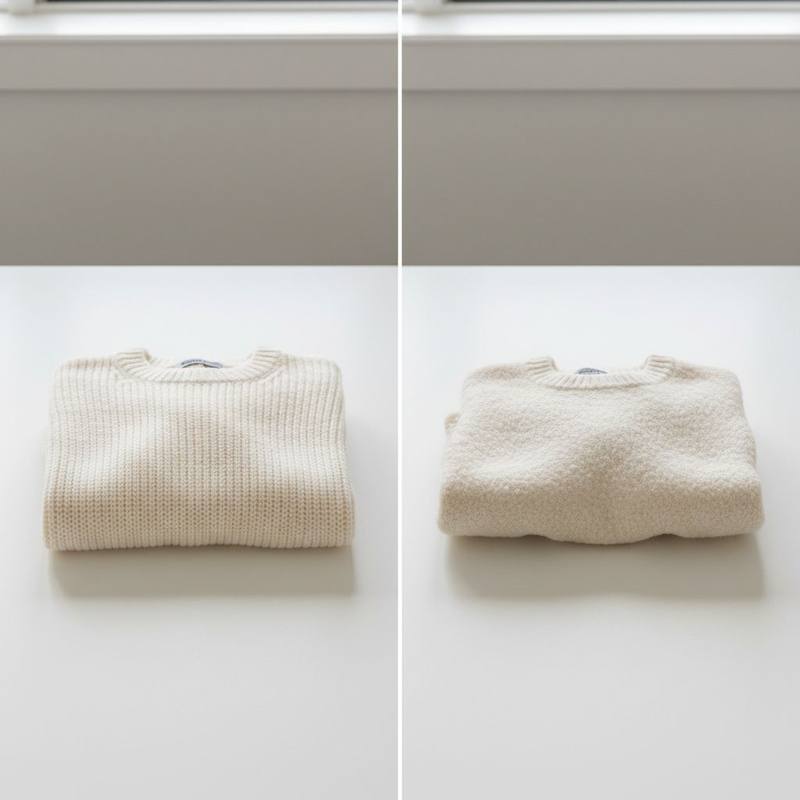
Shrinkage on first contact with water is a natural physical phenomenon, not a sign of bad washing. During weaving on looms, cotton fibers are held under tension, and water plus heat let them relax and move closer to their natural length. The exact same mechanism, only on a smaller scale, causes the further, minor shrinking of jeans over subsequent washes.
Stretching works the opposite way and mostly affects jeans with stretch, meaning denim with an added elastane content. The elastane fiber gradually loses part of its elasticity from heat, moisture, and repeated stretching during wear, which leaves the pants looser at the knees or waist and unable to return to their original shape.
Sanforization and the scale of denim shrinkage
what decides whether jeans shrink by one percent or by more than ten
The scale of shrinkage depends heavily on whether a given batch of denim has gone through a process called sanforization. Sanforized denim, subjected to a mechanical fabric compression patented by Sanford Cluett in 1930, has residual shrinkage typically limited to under 1 to 3 percent on first wash. This is the type of denim that dominates mass jeans production today.
Unsanforized denim, meaning raw, unwashed denim, behaves completely differently: shrinkage on first wash can run from 3 percent up to as much as 10 percent, depending on weight and weave construction. That's why premium raw denim makers often recommend buying a size larger, anticipating this unavoidable first-wash shrinkage.
Shrinkage in cotton fabrics is measured using the ISO 6330 standard, which describes washing and drying procedures for assessing dimensional change, combined with ISO 5077, which covers the actual measurement of that change after washing and drying. This isn't a rough guess: the entire textile industry relies on the same repeatable test procedures.
Denim shrinkage in numbers
Shrinkage under 1 to 3% on first wash
Shrinkage from 3 to 10% on first wash
ISO 6330
ISO 5077
Rescuing shrunken jeans step by step
four steps before you write the pair off as a loss
- 1
Check the label: sanforized or not
Sanforization, or the lack of it, determines the range of shrinkage to expect, from under 1 to 3 percent up to 3 to 10 percent. This is the first diagnostic step before any rescue action.
- 2
Dampen the jeans in lukewarm water
Submerge the jeans in lukewarm water or dampen them thoroughly, to relax the tensioned cotton fibers again. This is the same mechanism that causes shrinkage on first wash.
- 3
Stretch by hand along the seams
Gently stretch the wet fabric along the seams, focusing on the areas where you want to regain a few centimeters. Work gradually and without yanking, so you don't strain the fibers.
- 4
Dry flat to the target size
Lay the jeans flat on a towel, in a stretched position matching your target size, and leave to dry completely without any additional tension in another direction.
Rescuing jeans: do and don't
Do
- Wash and stretch jeans in lukewarm, not hot, water
- Stretch gradually, returning to the same spot several times
- Dry flat, laid out on a towel, instead of in a tumble dryer
- Check the label before any rescue attempt
Don't
- Don't tumble dry shrunken jeans on high heat, it makes the problem worse
- Don't yank the wet fabric with force, you can strain the fibers
- Don't expect a full return to size with unsanforized denim
When jeans stretch out: bagging out and elastane fatigue
a different mechanism and different handling than shrinkage
The opposite problem, so-called bagging out at the knees or waist, mostly affects jeans with stretch. The elastane fiber loses elasticity gradually, from dryer heat, moisture, and repeated stretching with every wear, until it finally stops returning to its original shape.
If you notice the first signs of stretching, wash the jeans in cold water and dry them flat, without any additional tension on the fabric. Cold water and the absence of dryer heat limit further material fatigue in the elastane, though they don't undo damage that has already occurred.
How to prevent it going forward
Wash jeans less often than other clothes and always at a low temperature, and dry them flat instead of in a tumble dryer. This habit limits both the risk of further shrinkage in sanforized denim and the pace of elastane fatigue in stretch models.
What can't be undone
It's worth being honest: no home method reverses 100 percent of unsanforized shrinkage, nor rebuilds fatigued elastane to its state before first wear. These steps can partially improve things, recovering a few percent of lost size or tautness at the knees, but they aren't a fix from scratch. Clarity about this limit saves disappointment.
When home methods aren't enough anymore
If jeans still haven't recovered their size after several attempts, or the fabric at the fold lines gets thin and worn, stop trying at home. Repeated soaking and stretching weakens fibers already under strain. In that case, hand the jeans over for professional cleaning, which matches temperature and handling to the type of denim instead of risking another, less effective attempt.

Now you know the theory. Practice can be less forgiving.
If you would rather not risk your favourite piece, leave it to the specialists at Gorące Żelazko laundry in Lublin.


Frequently asked questions
Dampen them in lukewarm water and gently stretch by hand along the seams, then lay flat on a towel at your target size and leave to air dry. Full shrinkage of unsanforized fabric can't be 100 percent reversed.
Dampen the jeans in lukewarm water, gently stretch along the seams, and dry flat at your target size, without additional tension. The method works partially, especially with sanforized denim that shrank under 3 percent.
Not 100 percent. Sanforized denim usually shrinks under 1 to 3 percent, and part of that can be recovered by dampening and stretching along the seams. Full shrinkage of unsanforized denim, up to 10 percent, or fatigued elastane, cannot be reversed.
It's the result of the elastane fiber gradually fatiguing from heat, moisture, and repeated stretching during wear. Over time the elastane stops returning to its original shape, which shows up most often at the knees and waist.
Wash jeans less often and at a low temperature, and dry them flat instead of in a tumble dryer. This habit limits both further shrinkage in sanforized denim and the pace of elastane fatigue in stretch models.
About the author
Małgorzata Małecka
Owner of the Gorące Żelazko laundry
Małgorzata Małecka runs the Gorące Żelazko laundry in Lublin. Together with her team, she makes sure customers' clothes, shoes and fabrics come back clean and in the best possible condition.