How surfactants work: from a greasy plate to clean clothes
Water and grease don't mix. Learn the molecular structure that changes everything.

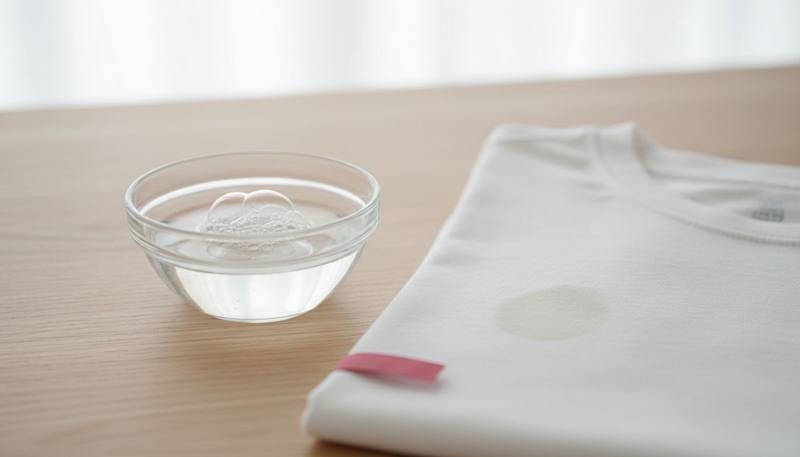
Ever washed a greasy plate with just water? Usually it doesn't work. Grease clings to the surface no matter how much you scrub.
The same problem appears on clothes: an oil stain persists even after washing in hot water. The problem isn't washing power, it's the molecular structure of the detergent. We explain how surfactants work and why without them, grease simply won't come off your clothes.
A simple rule of chemistry governs this: like dissolves like. Water is polar, grease is non-polar (hydrophobic), so they don't mix.
Pure water has a surface tension of about 72 mN/m at 20°C, too high to penetrate under a layer of grease. Scrubbing temporarily loosens the grease, but without lowering surface tension, it returns to the fabric. This is where surfactants come in, bridging two incompatible worlds.
What are surfactants
Chemical origins and the molecular structure behind every detergent
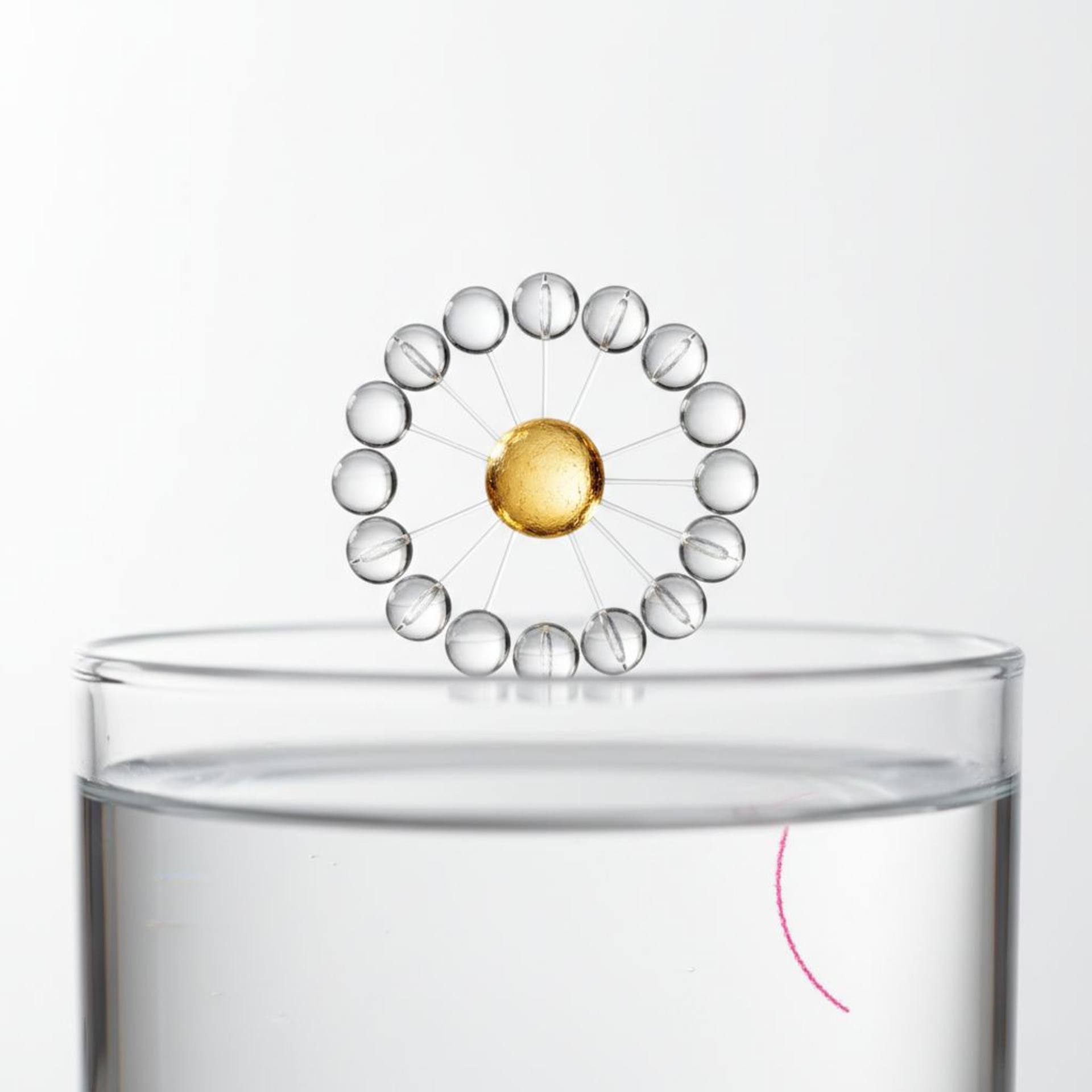
A surfactant molecule has a hydrophilic (polar) head and a hydrophobic hydrocarbon tail, typically a C10-C18 chain. In water it positions itself at the phase boundary and lowers surface tension.
Above the CMC, the critical micelle concentration, molecules organize themselves into micelles: tails hide inside, heads face the water. The interior of the micelle acts like a tiny oil droplet where grease from fabric dissolves and becomes trapped.
- 1
Wetting
Surfactant lowers the surface tension of water, making it easier to penetrate the fiber structure.
- 2
Roll-up
Hydrophobic tails penetrate the layer of grease on the fiber, the stain curls into a ball and separates from the surface.
- 3
Emulsification
Detached grease droplets are surrounded by micelles and remain suspended instead of settling back onto the fabric.
- 4
Rinsing
The washing machine drum spins and flushes the micelles with dirt out of the clothes.
This is not loose analogy, the mechanism has measurable thresholds. Below are the numbers that determine whether it works in practice.
Key parameters of the mechanism
approx. 72 mN/m in pure water at 20°C, distinctly lower after adding surfactant above CMC
approx. 8×10⁻³ mol/l for SDS in water, below this threshold surfactant performs poorly
linear alkylbenzenesulfonate sodium (LAS), CAS 68411-30-3
Kinetics and fat melting
What molecular processes change with temperature and water hardness in home laundry
Animal fats solidify below their melting point: butter about 32-35°C, lard 30-40°C, beef tallow even 45-50°C. In cold water, roll-up slows down, surfactant cannot penetrate the hardened fat layer.
The second factor is water hardness. Calcium ions react with anionic surfactants, forming insoluble calcium soap that deposits on the fabric instead of rinsing away with the dirt. Water in Lublin is very hard, averaging about 19.7°dH according to MPWiK Lublin, ranging 16-22°dH depending on the area. This is a common cause of fabric greying when too little powder is used.
That is why detergents contain builders, like sodium citrate (CAS 68-04-2), which bind these ions instead of the surfactant.
How to avoid wasting surfactant's power
Do
- Match water temperature to the type of grease, don't assume hotter is always better.
- Act on fresh grease stains immediately, before the grease hardens.
- Adjust detergent dose to water hardness, otherwise surfactant will be spent binding calcium instead of grease.
Don't
- Don't increase the dose beyond recommended: above CMC effectiveness doesn't increase, only the risk of poor rinsing.
- Don't mix softener with detergent in one cycle, cationic and anionic surfactants partially neutralize each other.
- Don't assume hot water always helps: protein stains like blood or milk, it sets them.
Understanding the mechanism lets you assess your own situation. A fresh stain, properly chosen temperature, and soft water are the conditions where home washing usually suffices.
An old, set-in stain and delicate fabric like silk or wool is a different story. Similarly with very hard water: in these situations, chemistry alone won't compensate for the constraints of home laundry. Professional washing adds what you can't recreate at home: the choice of product and method tailored to the specific fabric and type of dirt.
Surfactants and skin: what to watch out for
SDS is classified as skin and eye irritant (Skin Irrit. 2, Eye Dam. 1). At high concentrations it damages the skin's lipid barrier, hence contact dermatitis in people who hand-wash without gloves. Cocamidopropyl betaine carries ratings H315/H319/H400, irritant to skin and eyes, toxic to aquatic environment. For atopic dermatitis, choose non-ionic detergents without perfumes or dyes.

Now you know the theory. Practice can be less forgiving.
If you would rather not risk your favourite piece, leave it to the specialists at Gorące Żelazko laundry in Lublin.


Frequently asked questions
Soap is made from fatty acid salts and is especially vulnerable to hard water: calcium ions immediately form insoluble precipitates with it. Synthetic detergents (LAS, SDS) are also anionic surfactants and similarly react with calcium, which is why they contain additional builders, like sodium citrate, that neutralize these ions.
Water is polar and grease is non-polar. Water's high surface tension, about 72 mN/m, prevents it from wetting grease without a surfactant.
Yes. Animal fats solidify below their melting point (30-50°C depending on the type), and cold water slows the roll-up process.
Yes. Water in Lublin is very hard, about 19.7°dH according to MPWiK, and calcium ions deactivate anionic surfactants, forming insoluble calcium soap.
About the author
Małgorzata Małecka
Owner of the Gorące Żelazko laundry
Małgorzata Małecka runs the Gorące Żelazko laundry in Lublin. Together with her team, she makes sure customers' clothes, shoes and fabrics come back clean and in the best possible condition.